Carpet Area vs Super Built-up Area in Devanahalli 2026 — What Buyers Should Know
Published 29 Jun 2026 · Last updated 30 Jun 2026
When you shop for a flat on the Devanahalli corridor in North Bengaluru, the size on the brochure is rarely the size you actually live in. A quoted apartment area usually means the super built-up or saleable area, which is larger than the carpet area you can walk on. Understanding the difference between carpet area, built-up area and super built-up area — and the loading factor that links them — is the single most useful skill for comparing flats fairly and not overpaying for shared space. This 2026 guide explains each term in plain language and shows how to read a quote honestly.
Treat every figure here as indicative. Exact areas, the loading factor and legal definitions depend on the specific project and its paperwork, so use this as a framework and confirm the registered carpet area on the floor plans, the price list and with the developer before you decide.
Carpet vs Built-up vs Super Built-up at a Glance
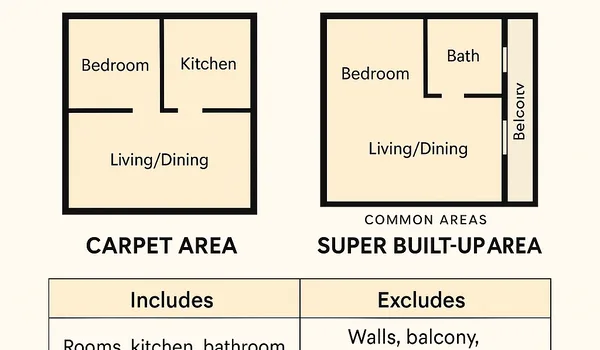
The table below sets the three common area terms side by side so you can see what each one includes and where it is used. These are general definitions for the Devanahalli corridor, not an offer; your actual figures depend on the project.
| Term | What It Includes | Typical Use |
|---|---|---|
| Carpet Area | Usable floor area within the inner walls of the flat | The real space you live in; the RERA-disclosed figure |
| Built-up Area | Carpet area plus the walls and the balcony | Construction footprint of your unit |
| Super Built-up Area | Built-up area plus a share of common areas (lobby, stairs, clubhouse) | The saleable area often used to quote the per-sq-ft price |
Bottom line: carpet is what you use, built-up adds the walls and balcony, and super built-up adds shared space — so the saleable number is always the biggest of the three.
What Is Carpet Area?
Carpet area is the actual usable floor area inside your apartment, measured within the inner faces of the walls — literally the area on which you could lay a carpet. It covers your bedrooms, living room, kitchen and internal passages, but excludes the thickness of the outer walls, common lobbies, stairs and the proportionate share of amenities. Under RERA, carpet area is the defined and disclosed measure, so it is the most honest indicator of how much room you are really buying. Two homes quoted at the same overall size can offer noticeably different carpet area once shared space is stripped out.
Because carpet area is the space you live in and furnish, it is the figure worth anchoring on when you walk a show flat or read a layout. When you study the Prestige Devanahalli floor plans, look for the carpet area against each unit rather than only the saleable size, and confirm it is the RERA-registered figure.
Bottom line: carpet area is the real usable space inside your walls and, being the RERA-defined measure, the fairest figure to judge a flat on.
What Is Super Built-up Area?
Super built-up area is the carpet area plus a proportionate share of the building's common spaces — lobbies, staircases, lift shafts, corridors and amenities such as the clubhouse and gym. It is also called the saleable area, and it is usually the figure on which a builder quotes the headline per-sq-ft price, because spreading the price over a larger area makes the rate appear lower. The richer the shared amenities in a project, the larger this loaded area tends to be relative to the carpet you actually occupy.
None of this is dishonest in itself, but it means a quoted size and rate can mislead if you do not translate them back to usable space. A project with a generous clubhouse and wide lobbies may show an attractive rate on super built-up area while delivering less carpet than a plainer building quoting a similar number.
Bottom line: super built-up area is the saleable figure that bundles your carpet with shared space, so it flatters the per-sq-ft rate and must be read with care.
Built-up Area & the Loading Factor
Built-up area sits between the two: it is the carpet area plus the area taken up by the walls and the balcony of your own unit, but before any share of common space is added. The jump from carpet to super built-up is captured by the loading factor, calculated as the super built-up area minus the carpet area, divided by the carpet area. On the Devanahalli belt the loading factor commonly runs an indicative ~25–40%, though it varies widely by project and by how lavish the shared amenities are.
- Carpet to built-up: add the walls and balcony of your own flat.
- Built-up to super built-up: add the proportionate share of lobbies, stairs and amenities.
- Loading factor: a ~30% loading means a 1,000 sq ft super built-up flat has roughly 770 sq ft of carpet, indicative only.
A higher loading factor means a bigger slice of what you pay for is shared rather than private floor, so it is worth asking the builder for the exact loading on the specific unit you are considering.
Bottom line: built-up area adds your walls and balcony, and the loading factor — commonly an indicative ~25–40% here — shows how much shared space inflates the saleable figure.
Why It Matters for Price & RERA
Area definitions drive money in two direct ways: the price you pay and the protections you rely on. Because a per-sq-ft rate is usually quoted on super built-up area, a lower headline rate paired with a heavy loading can cost more per usable foot than a higher rate with a lean loading. The same logic flows into statutory costs, since charges like stamp duty and registration charges are computed on the area or value recorded in the agreement, so the figures you accept on paper matter.
On the legal side, RERA defines carpet area and requires registered projects to disclose it, which is why you should read the registered carpet figure rather than rely on the saleable number alone. For any project, verify the registration and the disclosed carpet area on the K-RERA portal as the application progresses, and confirm what the sale agreement states. You can review indicative rates on the price list while keeping in mind which area each rate is quoted on.
Bottom line: price and statutory charges follow the area you accept, and RERA's carpet-area disclosure is your check — so read the registered carpet figure, not just the saleable one.
How to Check the Real Usable Area
Checking the genuine usable space takes only a few deliberate steps, and they are worth doing before you sign anything. Ask the builder which area each quote uses, request the carpet area for the specific unit, and confirm it against the RERA filing and the agreement rather than the brochure alone. An established developer such as Prestige Group will be able to show the carpet figure against each layout when you ask.
- Ask the basis: confirm whether a quoted size and rate are on carpet or super built-up area.
- Get the carpet figure: request the RERA-disclosed carpet area for the exact unit, not a typical one.
- Compute the loading: use super built-up minus carpet over carpet to see how loaded the unit is.
- Cross-check: match the floor plan, the price list and the agreement so the numbers agree.
These checks sit naturally within a wider pre-purchase review — see the broader list of things to check before buying an apartment so the area question is part of a complete diligence rather than an afterthought.
Bottom line: ask which area a quote uses, get the registered carpet figure for your exact unit, compute the loading and cross-check the paperwork before you commit.
Which Area Should You Compare On?
When you weigh two flats against each other, compare on carpet area, because it is the one constant that reflects the real space you will live in. Use super built-up area to understand the quoted price, but translate it back to a per-carpet-sq-ft figure so a heavy loading cannot hide behind a low headline rate. This is especially useful when you are sizing configurations against each other, for example when reading a 2 BHK vs 3 BHK comparison, since the usable gap between configurations is what your family actually feels.
Taking Prestige Devanahalli at Poojanahalli as an honest example, its 1 BHK is listed around ~600–680 sq ft as a saleable or built-up figure, from about ₹61.75 L at a base of roughly ₹9,500/sq ft; the actual carpet area is lower than that saleable number once the loading is removed and should be confirmed on the official floor plans and price list rather than assumed. Do not infer a precise carpet figure from the saleable size — ask for the RERA carpet area on the specific unit.
Bottom line: compare on carpet area, use super built-up only to read the price, and confirm the registered carpet figure for the exact unit before you buy.
Frequently Asked Questions
1. What is the difference between carpet area and super built-up area?
Carpet area is the actual usable floor area inside your flat, measured within the walls — the space you can lay a carpet on. Super built-up area is the carpet area plus a proportionate share of common spaces such as lobbies, staircases, lift shafts and the clubhouse, and it is the larger saleable figure on which a per-sq-ft price is often advertised. So two flats can quote the same super built-up area but offer different usable space, which is why carpet area is the fairer basis for comparison.
2. Does RERA require builders to sell on carpet area?
RERA defines carpet area and requires registered projects to disclose it, so buyers can see the actual usable space rather than only the inflated saleable figure. In practice many price quotes still reference super built-up area, so you should read both, check the registered carpet area in the project's RERA filing, and confirm what the agreement states. Always verify the figures on the official K-RERA record and in your sale agreement before you commit.
3. What is a loading factor and what is typical in Devanahalli?
The loading factor is the share added to carpet area to arrive at super built-up area, calculated as the super built-up minus carpet, divided by carpet. On the Devanahalli corridor it commonly runs an indicative ~25 to 40%, but it varies by project and by how generous the common areas and amenities are. A higher loading means more of what you pay for is shared space rather than your own floor, so always ask the builder for the exact loading on the specific unit.
4. Is the per-sq-ft price quoted on carpet or super built-up area?
Quoted per-sq-ft prices are most often advertised on the super built-up or saleable area, which makes the rate look lower than if it were stated on carpet area. To compare two projects fairly, convert the price to a per-carpet-sq-ft figure using each project's loading factor, because a lower headline rate with a heavy loading can cost more per usable foot. Confirm which area a quote uses before you read anything into the number.
5. What is the carpet area of a 1 BHK at Prestige Devanahalli?
The 1 BHK at Prestige Devanahalli is listed around ~600 to 680 sq ft as a saleable or built-up figure, from about ₹61.75 L at a base of roughly ₹9,500 per sq ft. The actual carpet area is lower than that saleable number once the common-area loading is removed, but the precise carpet figure should be confirmed on the official floor plans and price list rather than assumed. Ask for the RERA carpet area on the specific unit before you book.
6. Which area should I compare apartments on?
Compare on carpet area, because it is the real usable space you live in and the one constant that lets you weigh two flats fairly. Use super built-up area to understand the quoted price, but translate it back to carpet to see what you truly get. Check the loading factor, the RERA-disclosed carpet area and the agreement, and treat all figures as indicative until the developer confirms them in writing.
Conclusion
Carpet area, built-up area and super built-up area describe the same flat at three widening scopes, and knowing which one a quote uses is the difference between an informed purchase and an expensive surprise. Carpet area is the usable space you live in and the figure RERA defines and discloses; super built-up area bundles in shared space and usually carries the headline rate; the loading factor links the two and varies by project. Read all three, but anchor your judgement on carpet area.
Before you commit, ask which area each quote uses, get the registered carpet figure for your exact unit, compute the loading and confirm everything on the floor plans, the price list and the agreement. Treat the numbers here as indicative and verify them with the developer, so the space you pay for matches the space you actually get.
Prestige Devanahalli Blog