GST on Under-Construction Apartments in Devanahalli 2026 — What Buyers Pay
Published 01 Jul 2026 · Last updated 01 Jul 2026
When you book a new flat on the Devanahalli corridor in North Bengaluru, the sticker price is not the only tax-relevant number on your cost sheet. Goods and Services Tax, or GST, is a central tax that applies while a home is still under construction, and it sits alongside — not instead of — the state stamp duty you pay at registration. Getting the GST picture right matters most for a pre-launch home, because that is exactly the stage at which the tax bites. This 2026 guide explains when GST applies, the indicative 5% and 1% rates, when the tax falls to nil, and how it fits with your other buying costs.
Treat every rate and figure here as indicative. GST rates, the affordable-housing threshold and the exact computation can change and depend on the specific project and its paperwork. Use this as a framework and confirm the current GST rate with a CA or your builder's cost sheet before you commit.
GST at a Glance
The table below sets out the essentials of GST on a residential flat so you can see, at a glance, when it applies and at what indicative rate. These are general points for the Devanahalli corridor, not an offer or a tax opinion; your actual position depends on the project and your paperwork.
| Item | Position (Indicative) |
|---|---|
| Applies to | Under-construction / pre-OC residential flats (booked before Completion/Occupancy Certificate) |
| Not applicable | Ready-to-move flats with OC and resale homes — no GST |
| Standard rate | Indicative 5% of construction value, no input tax credit — confirm current rate |
| Affordable rate | Indicative 1% for qualifying affordable homes, no input tax credit — confirm limit |
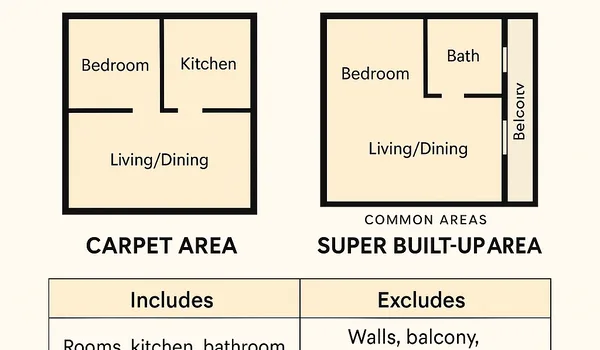
| Charged on | Construction value; undivided land share generally excluded from the taxable value |
| Who collects | The builder, who collects with your instalments and remits it to the government |
Bottom line: GST applies to under-construction homes at an indicative 5% or 1%, is nil once a flat is ready with OC, and every figure should be confirmed with a CA or your builder's cost sheet.
What Is GST on Under-Construction Property?
GST is a single central tax on the supply of goods and services, and the construction of a home for a buyer is treated as a taxable supply of service while the building is still going up. In practice this means that if you book a flat before the project receives its Completion Certificate or Occupancy Certificate (OC), the sale is treated as an under-construction supply and GST is charged on the construction value. Once the OC is issued and the flat is a finished property, that same sale is no longer a supply of service and GST no longer applies.
The builder is responsible for charging GST, collecting it as part of your payment schedule and remitting it to the government, so it appears as a line on your demand letters rather than something you pay separately at a counter. Because it attaches to the construction stage, GST is most relevant to buyers of new and pre-launch homes, which is the typical situation on the fast-developing Devanahalli belt. Confirm the current GST rate with a CA or your builder's cost sheet, as rates and rules can change.
Bottom line: GST is a central tax on the construction of an under-construction flat, charged and collected by the builder before the Occupancy Certificate is issued.
GST Rates: Standard vs Affordable (no ITC)
For residential flats, the widely-applicable indicative rates are 5% of the construction value for a standard, non-affordable home and 1% for a home that qualifies as affordable. In both cases the scheme does not allow the builder to pass on input tax credit (ITC) — the credit for tax paid on cement, steel and other inputs — which is why these rates are lower flat rates rather than the higher rates seen before the no-ITC scheme. Whether a specific unit is affordable turns on a carpet-area and price threshold that can be revised, so a flat that looks affordable on price alone may not qualify on area, or the reverse.
- Standard flats: indicative 5% of construction value, no input tax credit.
- Affordable flats: indicative 1% of construction value, no input tax credit, subject to the area and price limit.
- No ITC: under this scheme the builder cannot offset input taxes against your GST, which is already reflected in the low rate.
Given the ~₹9,500/sq ft base and configurations at Devanahalli, most new units are likely to fall under the standard rather than the affordable bracket, but that is a unit-by-unit question. Confirm the current GST rate and the affordable limit with a CA or your builder's cost sheet before you assume which applies to you.
Bottom line: the indicative rates are 5% standard and 1% affordable, both without input tax credit, and which applies depends on a changeable threshold you should confirm with a CA or your builder's cost sheet.
When GST Does NOT Apply (ready flats, resale, OC)
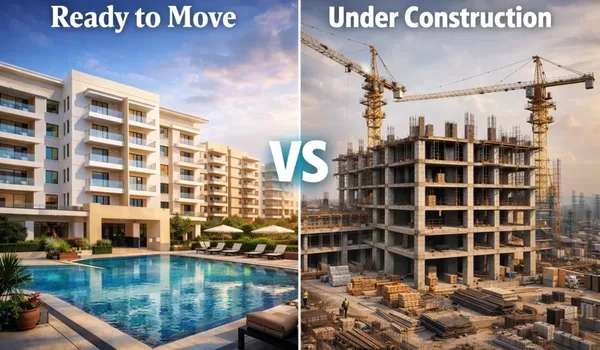
GST is tied to the construction stage, so it stops once a flat is a completed property. When a project has received its Occupancy Certificate and you buy a ready-to-move home, the transaction is a sale of finished property rather than a supply of construction service, and no GST is charged on it. The same is true of a resale flat sold second-hand between individuals: that transfer sits outside GST entirely. This is a genuine cost difference between buying under construction and buying ready or resale.
That does not automatically make a ready flat cheaper overall, because ready homes usually carry a higher headline price and you forgo the payment-linked schedule of an under-construction purchase. The trade-off between the two is exactly the kind of thing to weigh when you read a pre-launch vs ready-to-move comparison, since the GST saving on a ready flat can be offset by its price premium. Always confirm the OC status and the GST position of any specific flat with the seller and a CA before you draw conclusions.
Bottom line: ready flats with an OC and resale homes carry no GST, but their higher prices mean you should weigh the whole cost, not just the tax, and confirm the OC status with a CA.
How GST Is Calculated on a Flat (worked, indicative example)
To see how GST sits on a home, consider a purely indicative worked example, not a quote for any specific unit. Suppose an under-construction flat has a construction value of ₹1 crore for the purpose of illustration. At the indicative standard rate of 5% with no input tax credit, the GST would be about ₹5 L; at the indicative affordable rate of 1% it would be about ₹1 L on the same value. The tax is applied to the taxable construction value, with the scheme building in a deduction for the undivided share of land so the levy falls on the construction element rather than the land itself.
- Standard, indicative: ₹1 crore construction value at 5% ≈ ₹5 L GST, no ITC.
- Affordable, indicative: ₹1 crore construction value at 1% ≈ ₹1 L GST, no ITC.
- Land share: the taxable value is framed to exclude the undivided land portion, so GST targets construction.
These numbers are illustrative only and rounded for clarity; your actual GST depends on the real construction value on your cost sheet, the applicable rate and how the land share is treated. When you plan your instalments and any borrowing, factor GST into the total outflow, and see the broader home loan guide for how such costs sit alongside your loan. Confirm the exact GST amount with a CA or your builder's cost sheet.
Bottom line: multiply the construction value by the indicative 5% or 1% rate for a rough figure, but treat the example as illustrative and confirm the exact amount with a CA or your builder's cost sheet.
GST for a Pre-Launch Flat like Prestige Devanahalli
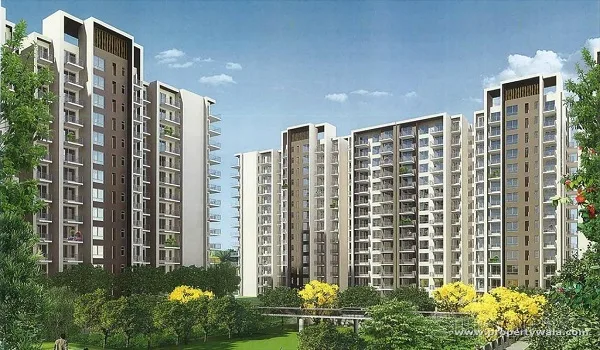
Prestige Devanahalli, developed by Prestige Group, is a pre-launch project at Poojanahalli with its K-RERA application in process and possession indicated from December 2030. Because a booking made now would be for a home that is still under construction, GST would typically apply on the construction value at the time you pay each instalment. On the indicative rates, that means about 5% for a standard unit or 1% if a unit qualifies as affordable, in both cases without input tax credit.
With a 1 BHK from about ₹61.75 L at a base of roughly ₹9,500/sq ft, most units are likely to fall under the standard bracket, but the affordable question is unit-specific and depends on the current area and price limit. You can review indicative figures on the price list, but the tax line that actually applies to you will be set out in the builder's demand schedule. State the GST plainly in your budget from the start, and confirm the exact rate and amount for your chosen unit in your own cost sheet with the builder and a CA before you book.
Bottom line: as a pre-launch home, a booking at Prestige Devanahalli would typically attract GST at the indicative 5% or 1% rate now, and you should confirm the exact rate and amount in your cost sheet with the builder and a CA.
GST vs Stamp Duty & Registration — the Full Tax Picture
GST is only one of the two tax layers on a new flat, and it is easy to confuse it with stamp duty. GST is a central tax on the construction of an under-construction home and disappears once the flat is ready with an OC; stamp duty and registration charges are a state levy paid when you register the sale deed, and they apply whether the home is under construction, ready or resale. They are separate line items rather than alternatives, so an under-construction purchase can carry both at once. For how the state side works, see the guide to stamp duty and registration charges.
To budget honestly, add the indicative GST on the construction value to the stamp duty and registration on the registered value, and treat the sum as the real tax cost of the purchase on top of the price. The two are computed on different bases by different authorities, so do not net them off against each other. Confirm the GST figure with a CA or your builder's cost sheet and the stamp duty and registration with the sub-registrar, so the full tax picture is clear before you sign.
Bottom line: GST and stamp duty are separate taxes that can both apply to an under-construction flat, so add them together for the full picture and confirm each with a CA and the sub-registrar.
Frequently Asked Questions
1. Do I pay GST on an under-construction flat in Devanahalli?
Yes, GST generally applies while a residential flat is under construction, that is before the builder receives the Completion or Occupancy Certificate. It is charged by the builder on the construction value of the home and collected along with your instalments, then remitted to the government. The widely-applicable indicative rate is 5% for a standard flat and 1% for an affordable one, both without input tax credit, but you should confirm the current rate and affordable limit with a CA or your builder's cost sheet before you budget.
2. What are the current GST rates on residential flats?
The widely-applicable indicative rates are 5% of the construction value for a standard non-affordable flat and 1% for a home that qualifies as affordable, and in both cases the builder cannot pass on input tax credit under this scheme. Whether a unit is treated as affordable depends on a carpet-area and price threshold that can change, so a flat that looks affordable on price may not qualify on area or the reverse. Always confirm the current GST rate and the affordable limit with a CA or your builder's cost sheet rather than assuming.
3. Is GST charged on ready-to-move or resale flats?
No. Once a project has received its Completion or Occupancy Certificate and the flat is ready to move in, a sale is treated as a transfer of a completed property and no GST is levied on it. Resale of a second-hand flat between individuals is likewise outside GST. This is a genuine cost difference between an under-construction booking and a ready or resale home, though a ready flat usually carries a higher headline price, so weigh the two together and confirm the OC status and GST position with the seller and a CA.
4. Is GST charged on the land portion of the price?
GST on a residential flat is designed to fall on the construction or service element rather than on the value of the land itself, and the scheme builds in a deemed deduction for the undivided share of land when arriving at the taxable value. In practice the effective rate you see, the indicative 5% or 1%, is already framed to reflect that treatment. Because the exact computation can be technical, confirm how the land share and taxable value are handled on your specific cost sheet with a CA or your builder.
5. Will I pay GST on a booking at Prestige Devanahalli?
Prestige Devanahalli is a pre-launch project with its K-RERA application in process and possession indicated from December 2030, so a booking made now would be for an under-construction home and GST would typically apply on the construction value at the time of payment. The indicative rate would be 5% for a standard unit or 1% if the unit qualifies as affordable, both without input tax credit. Treat these as indicative and confirm the exact rate and amount in your own cost sheet with the builder and a CA before booking.
6. How is GST different from stamp duty on a flat?
GST is a central tax on the construction of an under-construction home and stops applying once the flat is ready with an Occupancy Certificate, whereas stamp duty and registration charges are a state levy paid at the time you register the sale deed and apply whether the flat is under construction, ready or resale. They are separate line items, not alternatives, so an under-construction purchase can carry both. Add GST, stamp duty and registration together to see the full tax on your purchase and confirm each figure with a CA and the sub-registrar.
Conclusion
GST is the tax you meet when you buy a home while it is still being built, and it is easy to plan for once you know the rules. It applies to under-construction, pre-OC flats at an indicative 5% for standard homes and 1% for affordable ones, both without input tax credit, it targets the construction value rather than the land share, and it falls to nil once a flat is ready with an Occupancy Certificate or sold on resale. Because it is separate from stamp duty, an under-construction purchase can carry both, so add them together to see the true tax cost.
For a pre-launch home such as those on the Devanahalli corridor, GST would typically apply to a booking made now, so build it into your budget from the outset. Treat the rates and the worked example here as indicative, and confirm the current GST rate and the exact amount for your unit with a CA or your builder's cost sheet before you commit.
Prestige Devanahalli Blog