Rent vs Buy an Apartment in Devanahalli 2026 — Which Makes Sense?
Published 02 Jul 2026 · Last updated 02 Jul 2026

Rent or buy is one of the first questions anyone weighs when they decide to live on the Devanahalli corridor in North Bengaluru. Renting keeps your monthly cost low and your money mobile; buying commits a large sum upfront and a long stream of EMIs, but it builds equity and gives you a home you own. Neither is universally right — the sensible answer depends on how long you plan to stay, whether your down payment is ready, and how you value flexibility against ownership. This 2026 guide lays out both sides in plain numbers so you can decide for your own situation.
Every rupee figure below — rent, EMI, down payment and break-even — is an indicative illustration meant to show how the maths works, not a quoted market rate for any flat. Rents, interest rates and prices move, and each buyer's eligibility differs, so use this as a framework and confirm your own numbers with your bank and a CA before you commit.
Rent vs Buy at a Glance
The table below summarises the trade-off on the Devanahalli belt. These are general pointers with illustrative figures, not an assessment of any specific flat; your actual rent, EMI and break-even depend on the unit, the price and your loan terms.
| Factor | Renting | Buying |
|---|---|---|
| Upfront cost | Deposit of a few months' rent — indicative | Down payment ~10–25% of price plus stamp duty and charges — indicative |
| Monthly outgo | Monthly rent, often lower early on — illustrative | EMI, usually higher in early years — illustrative |
| Builds equity? | No — rent is a pure expense | Yes — each EMI repays principal you own |
| Flexibility | High — move on short notice | Lower — selling takes time and cost |
| Best for | Short stay, uncertain plans, saving the down payment | Long stay, ready funds, wanting to own |
| Pre-launch flat | Not applicable — you keep renting until handover | No immediate occupation; possession years away |
Bottom line: renting is cheaper and more flexible in the short run, while buying costs more upfront but builds ownership over a long horizon — so the right choice turns on your time frame and your funds.
The Rent vs Buy Question in Devanahalli
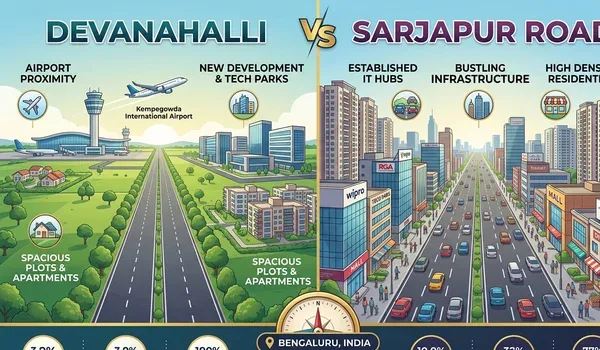
Devanahalli has moved from a quiet edge of Bengaluru to an active residential corridor beside Kempegowda International Airport and the KIADB Aerospace Park and SEZ. That shift is exactly why the rent-versus-buy question feels live here: there is a genuine rental market for people working around the airport and the tech and aerospace employers, and there is a steady pipeline of new apartments to buy. A renter can find a home near work without a large commitment, while a buyer is choosing to plant roots on a corridor that is still developing.
The decision is rarely about the flat alone; it is about your own horizon and cash position. If you expect to move cities or change jobs within a few years, the flexibility of renting usually wins because you avoid the transaction costs of buying and selling. If you intend to stay for the long term and have the down payment ready, buying converts what would be rent into equity in a home you own. Between those poles sit most real buyers, who have to weigh a big upfront sum against a lower but ownership-free monthly cost.
It also helps to separate the emotional pull of owning from the arithmetic. Owning a home is a genuine goal for many families, and there is nothing wrong with valuing it; the point of this guide is simply to make the numbers visible so the emotional choice is also an informed one. If you are still narrowing down the size of home you would buy, the 2 BHK vs 3 BHK comparison is a useful companion read before you fix a budget.
Bottom line: in a growing corridor like Devanahalli both a rental and a purchase are realistic, so the decision comes down to your time frame, your funds and how much you value ownership.
The Cost of Renting: What You Actually Pay
Renting looks simple — a monthly rent and a refundable deposit — but the real cost is a little wider than the headline figure. You typically pay a security deposit of a few months' rent at the start, the monthly rent itself, and often an annual escalation when the lease renews. On top of that a tenant usually covers society maintenance or a share of it, utilities, and any minor upkeep the agreement assigns to them. None of this builds ownership; it is the price of using someone else's flat.
- Security deposit: a refundable sum, often a few months' rent, blocked for the tenancy — indicative.
- Monthly rent: the core cost, which tends to rise on renewal — illustrative.
- Escalation: a periodic increase, commonly a single-digit percentage each year — indicative.
- Running costs: maintenance, utilities and small repairs as per the agreement.
The advantage is that renting keeps your outgo predictable and your capital free. The deposit aside, you are not locking a large sum into one asset, so the money can stay in savings or other investments and you can move when life requires it. The offsetting reality is that rent only ever buys use, never equity, and over a long tenancy the escalations add up while you own nothing at the end. As an illustrative point, a rent that rises even a few percent a year will be materially higher a decade later, which is the figure a long-stay renter should picture. Confirm actual rents and escalation for a specific flat with local sources rather than assuming a number.
Bottom line: renting means a deposit plus a rising monthly rent and running costs, with low commitment but no equity — so it is cheapest when your stay is short.
The Cost of Buying: Down Payment, EMI & Ownership Costs
Buying front-loads a large part of the cost. Lenders in India typically fund up to about 75 to 90 percent of the property value, so you usually arrange a down payment of roughly 10 to 25 percent from your own funds, and you also pay stamp duty, registration and other one-time charges on top. After that comes the EMI, which repays principal and interest over the loan tenure, and the recurring costs of ownership — property tax, society maintenance and upkeep — that a tenant would otherwise carry. For the full mechanics of eligibility, tenure and interest, the home loan guide for Devanahalli walks through the loan side in detail.
The offsetting benefit is that an EMI is not a pure expense the way rent is. A large part of each payment repays principal, which is equity you own and which grows every month; and if prices on the corridor appreciate over your holding period, that gain accrues to you as the owner. A let-out flat can also earn rent, and rental yield in the area is generally in the region of about 3 to 4.5 percent a year, which offsets part of the cost of ownership — the rental yield and ROI guide covers how that works.
As an illustrative sketch of the buy side, a 1 BHK on this corridor starts from around ₹61.75 L at a base of roughly ₹9,500 per sq ft; on a purchase of that order, a down payment of even 15 to 20 percent runs into several lakh rupees before charges, and the EMI on the balance over 20 years is a meaningful monthly commitment. These are indicative illustrations, not a quote — confirm the exact price on the price list and the exact EMI with your bank.
Bottom line: buying needs a large down payment plus charges and a higher monthly EMI, but each payment builds equity and any appreciation is yours — so it rewards a long hold.
The Break-Even Point: A Worked Example
The break-even point is where buying stops being more expensive than renting once you account for equity and appreciation. In the early years buying looks costlier, because the down payment, charges and a higher EMI all land upfront while a renter simply pays a lower monthly rent. Over time the picture reverses: rent keeps rising, a fixed-rate EMI stays broadly flat, and the principal you repay plus any price appreciation turn ownership into net worth. Break-even is the year those two lines cross.
| Item (illustrative) | Renting | Buying |
|---|---|---|
| Upfront outgo | Deposit of a few months' rent | Down payment ~15–20% plus stamp duty and charges |
| Monthly outgo, early years | Lower monthly rent | Higher EMI |
| Monthly outgo, later years | Rent risen with escalation | EMI broadly flat if fixed |
| What you own at the end | Nothing | The flat, plus any appreciation |
Putting rough numbers to it purely as an illustration: if renting a comparable flat costs a certain monthly rent that rises a few percent each year, and buying the same flat means a large down payment plus an EMI several times that early rent, the buyer is clearly out of pocket for the first few years. As rent escalates and principal builds, the gap closes, and many buyers find break-even somewhere in the region of several years to a decade — but the exact year swings widely with price, rent, interest rate and how prices move. Because it is so sensitive to those inputs, treat any break-even figure as illustrative and confirm your own with your bank or a CA.
Bottom line: buying tends to overtake renting only after a break-even of roughly several years to a decade, so the longer you will stay, the more the maths favours buying — run your own numbers to find your crossover.
When Renting Makes More Sense
Renting is the stronger choice when your horizon is short or uncertain. If there is a real chance you will change city, switch jobs or need to relocate within a few years, the transaction costs of buying and then selling — stamp duty, registration, brokerage and the time a sale takes — can wipe out any benefit of ownership over such a short hold. Renting lets you move on short notice without carrying an illiquid asset you may have to sell at an inconvenient time.
It also makes sense while you are still assembling the down payment or want to keep your capital flexible. Rather than lock a large sum into one flat and take on a long EMI, a renter can keep that money in savings or other investments and stay liquid. This is often the right call early in a career, for a household not yet settled on where it wants to live long term, or for anyone who would be stretched thin by both the upfront payment and the monthly EMI.
- Short or uncertain stay: a horizon shorter than a likely break-even favours renting.
- Down payment not ready: renting while you save avoids overstretching.
- Need flexibility: easy relocation matters more than owning.
- Prefer liquid capital: keeping funds mobile suits some financial plans.
Bottom line: rent when your stay is short or uncertain, your down payment is not ready, or flexibility and liquidity matter more than ownership.
When Buying Makes More Sense
Buying is the stronger choice when you intend to stay for the long term and have the funds in hand. Once your expected holding period comfortably exceeds the break-even point, the EMIs you would have paid as rent instead build equity in a home you own, and any appreciation on the corridor accrues to you. Owning also gives stability that renting cannot — no escalations imposed by a landlord, no notice to vacate, and the freedom to treat the home as your own. For a settled household with a ready down payment, these are real advantages.
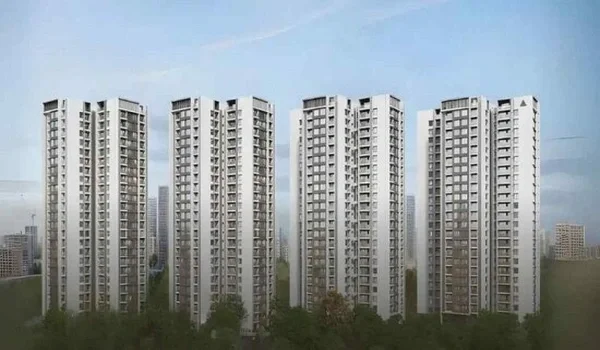
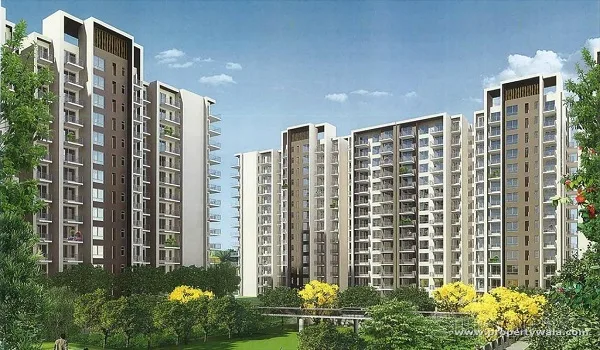
A pre-launch purchase is a special case that deserves an honest note. Prestige Devanahalli, by Prestige Group, is a pre-launch project at Poojanahalli with possession indicated from Dec 2030, offering 1, 2 and 3 BHK homes. Buying pre-launch means you cannot move in or earn rent until handover, so a buyer today would typically keep paying their current rent or EMI elsewhere in the meantime — a genuine factor in the rent-versus-buy maths. As a matter of prudence, buy only RERA-registered projects and verify the registration on the K-RERA portal; Prestige Devanahalli's K-RERA application is in process, so confirm its status before you commit.
Weighed against that wait is the case for entering early: launch-stage pricing for a long hold, on a corridor next to the airport and aerospace park that is still building out. For a buyer with a long horizon and ready funds, that can justify the delay to possession; for a buyer who needs a home to live in now, a ready-to-move flat or continued renting may fit better. Whichever way you lean, confirm timelines with the builder and your numbers with your bank or a CA.
Bottom line: buy when you will stay well beyond break-even and have the funds ready — and for a pre-launch flat, factor in the wait to possession and buy only RERA-registered projects.
Frequently Asked Questions
1. Is it better to rent or buy an apartment in Devanahalli in 2026?
There is no single answer; it depends on how long you will stay, whether you have the down payment ready, and whether you value flexibility or ownership more. Renting keeps your monthly outgo lower and your money mobile, which suits a short horizon; buying locks in a home and builds equity over a long horizon but needs a large upfront sum and steady EMIs. A useful rule of thumb is that the longer you plan to stay in one home, the more buying tends to make sense. Treat every figure here as indicative and confirm your own numbers with your bank or a CA.
2. Roughly how does a home-loan EMI compare to monthly rent?
In the early years an EMI is usually much higher than the rent for a similar flat, because you are repaying principal plus interest while a tenant only pays for use. As an illustrative example, a large loan at a typical rate over 20 years can carry an EMI several times the monthly rent for the same unit. Over a long horizon, however, rent tends to rise while a fixed-rate EMI stays broadly flat, so the gap narrows. These are illustrative comparisons only; confirm the actual EMI with your bank and the actual rent with local sources.
3. How much down payment do I need to buy an apartment here?
Lenders in India typically fund up to about 75 to 90 percent of the property value, so a buyer usually arranges a down payment of roughly 10 to 25 percent of the price from their own funds, plus stamp duty, registration and other charges on top. On a higher-value flat that upfront sum can be substantial and is money that leaves your savings at the start. The exact loan-to-value, eligibility and charges vary by lender and buyer, so treat these percentages as indicative and confirm with your bank.
4. How many years does it take to break even on buying?
Break-even is the point where the total cost of owning, including the upfront down payment and charges, is offset by the rent you would otherwise have paid plus any equity and appreciation you build. As a purely illustrative range, buyers often look at something in the region of several years to a decade before ownership clearly wins, depending on price, rent, interest rate and how prices move. Because it is highly sensitive to those inputs, run your own numbers and confirm them with a CA rather than relying on a general figure.
5. Does buying make sense for a pre-launch flat like Prestige Devanahalli?
A pre-launch purchase is a different decision from buying a ready flat, because you cannot move in or earn rent until the project is handed over. Prestige Devanahalli is a pre-launch project with possession indicated from Dec 2030 and its K-RERA application in process, so a buyer today would typically keep paying their current rent or EMI elsewhere until possession. That can still suit a buyer entering early at launch pricing for a long hold, but the wait and the lack of immediate occupation are real factors, so weigh them and confirm timelines with the builder.
6. What rental yield can I expect in Devanahalli?
Rental yield in the Devanahalli area is generally in the region of about 3 to 4.5 percent a year, meaning the annual rent as a share of the property value, which is typical for residential apartments in Bengaluru. That yield matters on the buy side because it shows how much of the cost of ownership rent can offset if you let the flat out. Actual yield depends on the specific project, rent and price, so treat the range as indicative and confirm current figures locally or with a CA.
Conclusion
Rent versus buy in Devanahalli is really a question about time and money. Renting keeps your outgo low and your capital free, which is the right answer for a short or uncertain stay and while you are still saving the down payment. Buying costs far more upfront and carries a higher EMI, but each payment builds equity, any appreciation is yours, and the maths tips in its favour once your stay comfortably exceeds break-even — often somewhere in the region of several years to a decade on illustrative numbers.
For a pre-launch home the extra factor is the wait: you cannot occupy or let the flat until possession, so a buyer keeps their current housing cost in the meantime and enters for the long hold. Whichever way you lean, the figures in this guide are indicative illustrations, not quotes — confirm the rent locally, the price on the price list, and the EMI, down payment and break-even with your bank or a CA so the decision rests on your own numbers.
Prestige Devanahalli Blog