How to Sell Your Apartment in Devanahalli 2026 — Step-by-Step
Published 03 Jul 2026 · Last updated 03 Jul 2026

Selling a flat is a project with a clear sequence: price it right, get your papers in order, find a genuine buyer, agree terms in writing, register the sale, take your money and hand over the keys. Done in that order it is straightforward; done out of order it stalls, because a buyer who likes the flat but cannot verify a document walks away, and a price set on hope rather than evidence sits on the market for months. This 2026 guide walks through each step of selling an apartment on the Devanahalli corridor in North Bengaluru so you know what is coming and what to prepare.
Every figure below — price bands, charges, taxes — is an indicative pointer to show how the process works, not a quoted rate for your flat or a statement of current law. Rates, thresholds and rules change, and each sale is different, so use this as a framework and confirm the specifics with a lawyer for the paperwork, a CA for the tax, and local sources for the price before you commit to anything.
How Selling Works at a Glance
The table below lays out the whole sale as a sequence, with the point of each step and who usually drives it. It is a general map of the process, not a schedule for any one flat; your timeline depends on the buyer, the paperwork and whether a loan is involved on either side.
| Step | What happens | Confirm with |
|---|---|---|
| 1. Price | Set an asking price from local comparables — indicative | Local market / an agent |
| 2. Documents | Assemble title chain, Khata, EC, tax receipts, NOCs | A lawyer |
| 3. Find a buyer | List, market and negotiate the price and terms | Buyers / an agent |
| 4. Agreement to sell | Buyer does due diligence; terms fixed with a token | A lawyer |
| 5. Register & hand over | Sale deed executed and registered; payment; keys | Sub-registrar / a lawyer |
| 6. Taxes & costs | Capital gains, TDS, brokerage and fees settled | A CA and a lawyer |
Bottom line: selling runs in a fixed order from pricing to handover, and each step has a professional you should confirm it with — get the sequence right and the sale moves smoothly.
Getting Ready to Sell: Pricing Your Flat
Price is the single biggest lever in how fast your flat sells and for how much. The right starting point is not what you paid, nor what you would like to get, but what comparable flats around you have actually transacted at recently — the same configuration, similar area, a similar building age and a similar part of the corridor. Asking prices in listings tell you what sellers hope for; closed transactions tell you what buyers actually pay, and it is the latter that anchors a realistic number.
From that base you adjust for the things that make your unit better or worse than the comparables: floor and view, facing and light, the condition of the flat and any premium fittings, covered parking, and the amenities and reputation of the society. Devanahalli sits on an indicative base of roughly ₹9,500 per sq ft for new stock, and a 1 BHK in the area starts from around ₹61.75 L on that basis, but a resale flat prices off local comparables rather than a headline launch rate — a well-kept unit in a sought-after project can command a premium, while a tired one has to price to move. You can sense-check the corridor's new-launch numbers on the price list, but confirm resale comparables locally.
Set the asking price with a small, deliberate margin for negotiation rather than a large cushion that signals the number is soft. Overpricing is the most common reason a flat lingers: buyers filter it out, it grows stale, and you often end up accepting less than a sharp initial price would have fetched. Presentation matters too — a clean, decluttered, minor-repairs-done flat photographs better and shows better, which supports your number without discounting it.
Bottom line: price off real transacted comparables, adjust for your unit's strengths and condition, and leave only a small negotiation margin — a realistic figure sells faster and often for more than an inflated one.
Documents You Need to Sell
A sale moves at the speed of your paperwork. A serious buyer and their lawyer will scrutinise the chain of ownership and the statutory records before they part with money, so having a clean, complete file ready is what separates a quick sale from a stalled one. Gather these before you go to market rather than scrambling once a buyer is keen, because a missing or outdated document is the classic deal-killer.
- Sale deed: the registered deed in your name showing you own the flat.
- Mother deed / title chain: the earlier deeds tracing ownership back over time.
- Khata: the property record in your name, plus a Khata certificate and extract.
- Property tax paid receipts: up-to-date receipts showing no arrears.
- Encumbrance Certificate (EC): to show the property is free of undisclosed charges.
- Approved plan and OC/CC: the sanctioned plan and occupancy or completion certificate where applicable.
- Loan NOC: if you had a home loan, the no-objection and original papers released once it is closed.
- Society NOC: a no-dues and no-objection letter from the apartment association where required.
The exact set varies with the property and the buyer's bank, and this is not an exhaustive legal checklist, so confirm your list with a lawyer early. Two records are worth understanding in depth because buyers care most about them, and the Khata, EC and property documents guide for Devanahalli explains what each one proves and how to obtain a current copy. If your loan is still running, start the closure and document-release process early, because banks take time to return originals and issue the NOC.
Bottom line: assemble the title chain, Khata, EC, tax receipts and the relevant NOCs before you list, and confirm the exact set with a lawyer — clean papers are what keep a keen buyer from walking.
Finding a Buyer & Negotiating
With a price and a document file ready, you can go to market. You have two broad routes, and most sellers use both. Selling directly — on property portals, through building and society networks, and by word of mouth — saves brokerage and gives you full control, but it puts the marketing, buyer-screening and coordination on you. Using an agent widens your reach and offloads the legwork of viewings and follow-ups, in exchange for a brokerage that is a matter of negotiation between you and the agent; agree the rate and what it covers in writing before you engage one, and do not bake an assumed brokerage figure into your maths.
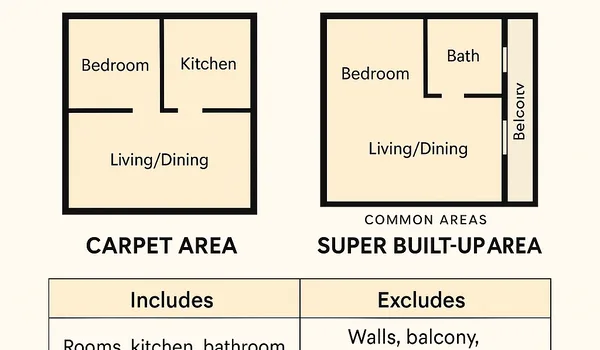
Good listings do the early filtering for you: clear, honest photos, the true carpet and built-up area, floor, facing, parking, the society's amenities, and a straight statement of the price and what is negotiable. Genuine buyers respond to specifics; vague listings attract time-wasters. When enquiries come in, qualify them before investing hours in viewings — is the buyer funding the purchase with a loan or cash, what is their timeline, and are they comparing seriously or just browsing? A pre-approved loan or ready funds is a strong signal.
Negotiation then turns on your homework. Because you priced off real comparables, you can hold a reasoned line rather than caving to the first low offer or clinging to an inflated one. Expect to move somewhat on price, but also negotiate the terms that matter — the token amount, the payment schedule, who bears which cost, and the handover date. Keep every agreed point in writing as you go, so nothing is disputed when it is time to draft the agreement to sell.
Bottom line: market with honest, specific listings, qualify buyers before you spend time on them, and negotiate from your comparables on both price and terms — putting each agreed point in writing as you go.
Buyer Due Diligence & the Agreement to Sell
Once you and a buyer agree on price and terms, the buyer does their due diligence and the deal is formalised in an agreement to sell. Expect the buyer — and, if they are taking a loan, their bank's legal team — to examine your title chain, EC, Khata, tax receipts and approvals closely. This is normal and healthy; the cleaner your file, the faster it clears. A buyer will also check the project itself, and if it is a RERA-registered development they will verify its registration on the K-RERA portal before committing, so be ready for that scrutiny rather than surprised by it.
The agreement to sell is the document that records the agreed price, the payment schedule, the handover date and the obligations of both sides, usually accompanied by a token or advance from the buyer. It is important to be clear that ownership does not pass on this agreement — it fixes the terms both parties will be held to and sets the path to the sale deed. Because it binds you, do not use a generic downloaded template; have a lawyer draft or review it so that conditions, timelines and any default clauses protect you as the seller.
It also helps to understand the transaction from the buyer's side, because anticipating their checks lets you clear objections before they stall the deal; the things to check before buying an apartment in Devanahalli guide sets out exactly what a careful buyer verifies. If the buyer is funding through a home loan, factor their bank's processing and valuation time into the schedule, since the sale cannot register until their disbursement is in place.
Bottom line: expect close scrutiny of your papers and the project, formalise the deal in a lawyer-drafted agreement to sell with a token — and remember ownership only passes later, at the registered sale deed.
Registration, Payment & Handover
Registration is where ownership actually transfers. The sale deed is executed and registered at the jurisdictional sub-registrar office, both parties (or their authorised representatives) attend with identity proof and the supporting documents, and the deed is signed, stamped and recorded. Stamp duty and registration charges are payable on the transaction — typically the buyer's cost by convention, though who bears what is ultimately as the parties agree — and the exact rates apply as notified, so confirm them for the transaction value with the sub-registrar or your lawyer rather than assuming a figure.
Payment and registration are choreographed together so neither side is exposed. In practice the balance consideration is paid at or immediately around registration, often by the buyer's bank disbursing a home loan directly, and you should ensure funds are actually received or irrevocably committed before or as the deed is registered. If you still have a loan on the flat, part of the buyer's payment usually goes to close your outstanding balance so the bank releases its charge and hands back the original documents — coordinate this closure timing carefully so the release lines up with registration.
Handover follows once the deed is registered and payment is settled: you give vacant possession, hand over the keys, all sets of original documents, and any society, parking and utility papers, and you help transfer the Khata, electricity, water and maintenance accounts into the buyer's name. Settle and document any outstanding society dues and utility bills up to the handover date so nothing follows you afterwards. A short written handover note listing what was transferred protects both sides.
Bottom line: ownership transfers only on the registered sale deed at the sub-registrar, with payment and any loan-closure choreographed around it — then hand over keys, originals and account transfers cleanly, dues settled.
Taxes & Costs When You Sell
Selling is not all proceeds; a few taxes and costs come out of the deal, and it pays to know them upfront so your net figure is realistic. The main tax that falls on you as the seller is capital gains tax on any profit you make between what you paid (and spent on the property) and what you sell for. Whether it is treated as short-term or long-term, how it is computed, and which exemptions you can claim all depend on current rules and your holding period — these have changed in recent Budgets, so this is squarely a question for a CA. The mechanics are covered in full on the capital gains tax on selling property in Devanahalli guide.
Beyond capital gains, a buyer paying above a specified threshold is generally required to deduct TDS from your payment and deposit it against your PAN, which you then reconcile when you file your return — the threshold and rate apply as notified, so confirm the current position with a CA. On the cost side, brokerage (if you used an agent) is by negotiation, any loan-closure or foreclosure charges depend on your lender, and legal and documentation fees fall where the parties agree. Stamp duty and registration are usually the buyer's cost, but confirm the split in your agreement.
| Item | Usually borne by | Confirm with |
|---|---|---|
| Capital gains tax | Seller (on any profit) | A CA |
| TDS on the payment | Deducted by buyer, credited to seller | A CA |
| Stamp duty & registration | Buyer, by convention | Sub-registrar / a lawyer |
| Brokerage | As negotiated | Your agent |
| Loan-closure charges | Seller, if a loan is open | Your bank |
One case needs its own note: selling a pre-launch or under-construction flat before possession. Prestige Devanahalli, by Prestige Group, is a pre-launch project at Poojanahalli with possession indicated from Dec 2030, so a resale there today is not the sale of a completed, registered flat — it is a transfer or assignment of your allotment, governed by the builder agreement and the developer's transfer policy, which may set conditions, timing and a transfer fee. Confirm the assignment terms with the builder and have a lawyer review the paperwork before you proceed, and route every tax and cost figure to a CA and a lawyer rather than assuming a number.
Bottom line: budget for capital gains, possible TDS and your share of brokerage and loan-closure costs, and treat a pre-launch resale as an assignment on the builder's terms — confirm every figure with a CA and a lawyer.
Frequently Asked Questions
1. How do I decide the right asking price for my flat in Devanahalli?
Price off what comparable resale flats nearby have actually sold for – not listing prices – adjusted for your floor, view, condition and fittings. Leave a small negotiation margin and confirm current rates locally.
2. What documents do I need to sell my apartment?
You'll typically need the sale deed, the mother deed or title chain, Khata, up-to-date tax receipts, an Encumbrance Certificate, the approved plan and OC/CC, plus loan and society NOCs. The exact set varies, so confirm your list with a lawyer.
3. Do I need a broker to sell my apartment?
No, a broker is not mandatory – you can sell directly on portals and through your own network. An agent widens your reach for a negotiable brokerage; agree the rate in writing first rather than assuming a figure.
4. What is an agreement to sell and how is it different from the sale deed?
An agreement to sell fixes the price and terms with a token, but ownership does not pass on it — that happens only when the sale deed is registered and paid in full. Have a lawyer draft or review it.
5. What taxes and costs do I face when I sell?
The main seller tax is capital gains on any profit, and a buyer paying above a threshold may deduct TDS. Stamp duty and registration are usually the buyer's cost. Route every tax and cost figure to a CA and a lawyer.
6. Can I sell a pre-launch or under-construction flat like one at Prestige Devanahalli before possession?
Selling before possession is an assignment of your allotment, not a registered sale deed, governed by the builder agreement and transfer policy. Prestige Devanahalli is pre-launch with possession from Dec 2030, so confirm the terms with the builder and a lawyer.
Conclusion
Selling an apartment in Devanahalli is manageable when you take it in order: price off real transacted comparables rather than hope, get your title chain and statutory records clean before you list, market honestly and qualify your buyers, and formalise the deal in a lawyer-drafted agreement to sell before the sale deed is registered and the money changes hands. Ownership only transfers on that registered deed, so choreograph payment, any loan closure and the handover of keys and originals around it, dues settled.
On the money side, plan for capital gains, possible TDS and your share of brokerage and closure costs, and treat a pre-launch resale as an assignment on the builder's terms rather than a normal sale. Every price, rate and threshold in this guide is an indicative pointer, not a quote or a statement of current law — confirm the price locally, the paperwork with a lawyer, and the tax with a CA, so your sale rests on your own verified numbers.
Prestige Devanahalli Blog