Property Inheritance, Will & Succession for Apartments — Devanahalli 2026
Published 07 Jul 2026 · Last updated 07 Jul 2026
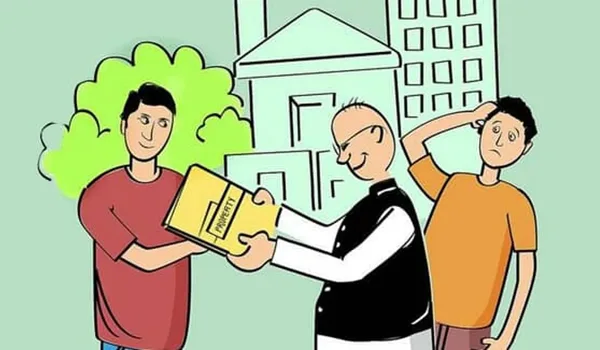
An apartment is often the largest asset a family owns, so it matters how it passes to the next generation when an owner dies. For a flat on the Devanahalli corridor the mechanics are the same as anywhere in India: ownership moves either by a will the owner leaves behind, or, if there is no valid will, by the succession rules of the personal law that applies to the family. Along the way there are supporting documents — a nomination, a legal-heir or succession certificate, the transmission and mutation of records — and separate lifetime instruments like a gift deed or a relinquishment deed. This 2026 guide walks through each of these in plain terms so you know what each does and, just as important, what it does not do.
One honest caveat runs through the whole page. Which personal law governs a family, who the heirs are, what share each takes, and how a will or gift must be executed, stamped and registered are all specific to the individual and are set by law that can change. Nothing below states a religion-specific share as a fixed rule or quotes a stamp or fee figure, because those depend on your facts and the current rates. Treat everything here as a general map of the instruments involved, and confirm the specifics that apply to your family with a lawyer before you act on them.
Inheritance & Succession at a Glance
The table below is a quick orientation to the instruments that appear when property changes hands on death or by lifetime transfer. These are general pointers, not a statement of your rights; what actually applies depends on your personal law, the documents in place and the current rules.
| Instrument | What it does (indicative) |
|---|---|
| Nomination | Names a person to receive and hold the flat as a trustee for the heirs — not a transfer of ownership |
| Will | Lets the owner direct who inherits after death (testamentary succession) — execution and probate rules as applicable |
| Intestate succession | Where there is no valid will, property passes to heirs under the applicable personal law — law and shares are case-specific |
| Legal-heir certificate | Identifies the legal heirs for many routine transfers and claims — issued by the designated authority |
| Succession certificate | Often needed to collect debts and securities of the deceased — granted by a court on application |
| Gift deed | Transfers your share to another person as a gift during your lifetime — registration and stamp apply |
| Relinquishment deed | Gives up your share in a co-owned or inherited property in favour of the other co-owners — registration and stamp apply |
Bottom line: nomination, will, succession, the two certificates and the gift or relinquishment deed each do a different job — getting the right one for your situation, confirmed with a lawyer, is what keeps the title clean for your heirs.
How Property Passes On: The Basics
When an owner dies, the flat does not simply belong to whoever is living in it or whose name is on a utility bill. Ownership passes in one of two broad ways. If the owner left a valid will, the property goes to the people named in it — this is testamentary succession. If there is no will, or the will does not cover the flat, the property passes by intestate succession to the heirs recognised under the personal law that governs the family. Which law that is, and how it ranks the heirs, is specific to the individual, so it should be confirmed with a lawyer rather than assumed.
It helps to separate three ideas that are often confused. First, who is entitled to inherit — decided by the will or by succession law. Second, the paperwork that proves that entitlement — certificates, the will itself, or a court order. Third, the step that actually updates the records to show the new owners — transmission and mutation. All three are needed for an heir to hold clear, marketable title; having one without the others leaves gaps that surface later when the family tries to sell or mortgage the flat.
A common misunderstanding is the role of a power of attorney. A POA is an authority one person gives another to act on their behalf, but it generally lapses on the death of the person who gave it, so it cannot be used to transfer a flat after the owner has died. The uses and limits of that instrument are set out in the guide on power of attorney in property transactions. For anything that happens after death, the route is a will or succession, not a POA — confirm the correct path for your case with a lawyer.
Bottom line: property passes either by a valid will or, without one, by succession under the applicable personal law — entitlement, proof and the record update are three separate steps, and a power of attorney does not survive death.
Nomination vs Will vs Succession
These three words are used loosely in everyday conversation, but they mean very different things, and mixing them up is the single most common source of family disputes over a flat. A nomination, which a society or a builder often asks you to record, names a person who is authorised to receive and hold the flat when you die. Crucially, a nominee is a trustee or custodian, not the owner. The nominee holds the property for the benefit of the legal heirs and is expected to pass it to them; nomination is a convenience for the society or institution, not a substitute for inheritance.
A will is the instrument that actually decides who inherits. In a will the owner sets out who is to take the flat after death, and that direction — testamentary succession — generally prevails over the default succession rules, provided the will is valid and, where required, proved. A will can prevent the uncertainty of intestacy and let an owner make specific arrangements, but its execution formalities, and whether probate is needed, depend on the law and the place, so both should be confirmed with a lawyer.
Succession, in the sense of intestate succession, is what happens when there is no valid will. Here the personal law that governs the family decides who the heirs are and in what shares they take. Because those rules differ across communities and turn on the exact family circumstances, this guide does not state any community's shares as a fixed rule — that is precisely the kind of specific that must be checked. The practical takeaway is a clear hierarchy: a will speaks first, succession law fills the gap where there is none, and a nomination is only a holding arrangement over the top of both. Confirm how they interact for your family with a lawyer.
Bottom line: nomination merely appoints a custodian, a will decides who actually inherits, and succession law fills in when there is no will — never treat a nomination as ownership.
Legal-Heir & Succession Certificates
Once an owner has died, heirs usually need a document that formally establishes who they are before institutions will deal with them, and two certificates commonly do this work. They sound similar but serve different purposes, and using the wrong one causes delay. A legal-heir certificate identifies the legal heirs of the deceased and is used for many routine matters — updating records, claiming benefits and supporting transfers — and is issued by the authority designated for the purpose in the state.
A succession certificate is a different, generally weightier instrument. It is typically granted by a court on a formal application and is often required to collect the debts, deposits and securities of the deceased, giving the holder authority to receive those assets and give a valid discharge. Whether a given transfer needs a legal-heir certificate, a succession certificate, a probated will, or some combination depends on the nature of the asset and the institution involved, so the requirement should be confirmed for each case rather than assumed.
For an apartment specifically, the certificate is usually one supporting document in a larger bundle that also includes the death certificate, proof of relationship, and the title chain of the flat. The court or authority process, the documents to file and any objections invited from other claimants are set by procedure and can vary, so this page does not quote timelines or fees. Establish which certificate your situation actually needs, and how to obtain it, with a lawyer before you start.
Bottom line: a legal-heir certificate identifies heirs for routine transfers while a succession certificate is often needed for debts and securities — which one an apartment transfer requires depends on the case, so confirm with a lawyer.
Transmission & Mutation of Title to Heirs
Establishing who the heirs are is only half the job; the records that show ownership still have to be brought up to date, and this happens in two linked steps. Transmission is the process by which the title to the flat moves from the deceased owner to the heirs on the strength of the proof of inheritance — the will, the certificates and the supporting documents. Unlike a sale, transmission is a transfer by operation of law rather than a fresh bargain, but it still has to be evidenced properly so that the heirs can show an unbroken chain of title.
Mutation is the follow-on step that updates the public and civic records to reflect the new owners. In practice this means correcting the khata and the municipal and society records so that tax bills, maintenance demands and future transactions are raised in the heirs' names. Mutation does not by itself confer ownership — it records a change that has already happened — but leaving it undone creates a mismatch between who owns the flat and who the records say owns it, which stalls any later sale. The wider set of records involved is explained in the guide on khata and property documents.
The exact documents each office asks for, the forms to file and the sequence between transmission and mutation are procedural and can differ between authorities, so it is worth getting the checklist confirmed before you begin. What does not change is the principle: complete both steps, keep the death certificate, the proof of heirship and the registered documents together, and make sure the khata and municipal records finally name the heirs. Confirm the precise process for your flat with a lawyer and the concerned office.
Bottom line: transmission moves the title to the heirs on proof of inheritance and mutation updates the khata and civic records to match — do both, or a later sale will stall on mismatched records.
Gift Deed & Relinquishment Deed
Not every transfer waits for death; owners often want to pass on a share during their lifetime, and two registered instruments are commonly used for this. A gift deed transfers your interest in the flat to another person as a gift, without consideration. It is a voluntary transfer that, once validly executed and registered, moves ownership of the gifted share to the recipient. Because it is an immediate transfer of a real asset, a gift deed has its own execution, stamp and registration requirements, and those depend on the relationship between the parties and the current rules — so they must be confirmed rather than guessed.
A relinquishment deed does something narrower. It is used where a property is co-owned or jointly inherited and one co-owner wishes to give up their share in favour of the other co-owners. Rather than transferring to an outsider, the relinquishing owner releases their portion so that it accrues to the remaining co-owners — a frequent step when a family consolidates an inherited flat into fewer hands. Like a gift, a relinquishment is generally a registered instrument with its own stamp treatment, which again turns on the facts and the current rates.
The choice between them, and whether either is the right tool at all, depends on what the family is trying to achieve: a gift to a specific person points to a gift deed, while tidying up shares among existing co-heirs points to a relinquishment. Both are irrevocable once done in the ordinary course, so they should not be signed casually. If the eventual plan is to sell the consolidated flat, the separate mechanics of a sale are set out in the guide on how to sell your apartment. Confirm which deed suits your intention, and its exact stamp and registration, with a lawyer.
Bottom line: a gift deed transfers your share to a chosen person and a relinquishment deed releases your share to co-owners — both are registered, largely irrevocable, and their stamp and formalities must be confirmed with a lawyer.
Succession Planning for a Pre-Launch Flat like Prestige Devanahalli
A pre-launch home adds one twist to all of the above, because at the booking stage you do not yet hold a registered title to a flat — you hold a contractual interest under the builder's agreement. Prestige Devanahalli, by Prestige Group, is a pre-launch project at Poojanahalli on the NH-44 corridor, offering 1, 2 and 3 BHK homes with possession indicated from Dec 2030. Until the sale deed is executed on possession, a booking is generally an assignable interest governed by the builder's terms, so how it passes on the death of the buyer is dealt with through the agreement, not through a registered flat that does not yet exist.
What this means in practice is that succession planning for a pre-launch booking runs on two tracks. On one track, the nominee or heirs deal with the builder to have the booking assigned or transmitted into their names, following whatever the builder's documentation requires. On the other, the wider succession position — a will covering the booking, or the intestate route if there is none — still governs who is ultimately entitled to it. Getting these two to line up, so that the builder's transfer and the legal entitlement point to the same people, is exactly where a lawyer's input is worth having.
Two points of prudence round this out. First, deal only with a RERA-registered project and verify the status on the K-RERA portal before you commit; Prestige Devanahalli's K-RERA application is in process, so confirm its status rather than assuming a number. Second, keep the booking agreement, receipts, nomination form and any will together, because these are what a nominee or heir will need. To sense-check the outlay against corridor rates you can consult the price list, and above all confirm the assignment-on-death route and your succession plan with the builder and a lawyer.
Bottom line: a pre-launch booking passes as an assignable contractual interest under the builder's terms until the sale deed, so align the builder's transfer with your will or succession and confirm the route with the builder and a lawyer.
Frequently Asked Questions
1. Does nomination make someone the owner of my flat?
No. A nominee is a trustee or custodian who receives and holds the flat for the legal heirs; ownership itself passes by a valid will or by succession law. Confirm the position with a lawyer.
2. What is the difference between a will and intestate succession?
A will lets the owner direct who inherits; if there is no valid will, the property passes by intestate succession under the applicable personal law. Which law and shares apply is case-specific — confirm with a lawyer.
3. Do I need a legal-heir certificate or a succession certificate?
A legal-heir certificate identifies the heirs for many transfers, while a succession certificate is often needed for debts and securities. Which one applies depends on the asset — confirm with a lawyer.
4. How is an inherited flat transferred into the heirs' names?
Through transmission of title based on proof of inheritance, followed by mutation to update the municipal and khata records. Confirm the exact documents with a lawyer and the sub-registrar.
5. What is the difference between a gift deed and a relinquishment deed?
A gift deed transfers your share to someone as a gift, while a relinquishment deed gives up your share in a co-owned or inherited property in favour of the other co-owners. Registration and stamp apply — confirm with a lawyer.
6. What happens to a pre-launch booking like Prestige Devanahalli if the buyer dies?
A booking is an assignable interest governed by the builder's terms until the sale deed, so the nominee or heirs deal with the builder to transfer it. Confirm the process with the builder and a lawyer.
Conclusion
Passing an apartment to the next generation comes down to a short chain: a will decides who inherits, or succession law fills in where there is none; a nomination only appoints a custodian and never confers ownership; a legal-heir or succession certificate proves entitlement; transmission and mutation update the title and the khata records; and gift or relinquishment deeds handle lifetime transfers among family. Each instrument has a distinct job, and using the right one at the right moment is what keeps a flat's title clean and marketable for the heirs.
The one thing to carry away is caution about specifics. Which personal law governs your family, who the heirs are, what shares they take, and how a will, gift or relinquishment must be executed, stamped and registered all depend on your facts and on current rules, so this guide deliberately gives you the mechanics rather than fixed shares or figures. For a pre-launch home the practical point is that a booking passes as an assignable interest under the builder's terms until the sale deed. Keep your agreement, nomination, certificates and any will together, and confirm the route that applies to your family with the builder and a lawyer before you act.
Prestige Devanahalli Blog