RERA Buyer Rights & How to File a Complaint — Devanahalli 2026
Published 07 Jul 2026 · Last updated 07 Jul 2026
Buying an apartment on the Devanahalli corridor is a large, long-term commitment, and the single law that does most to protect you when you make it is RERA. The Real Estate (Regulation and Development) Act was created to bring order and accountability to a market that buyers once entered largely on trust, and it gives you a defined set of rights against the developer along with a forum to enforce them. Understanding those rights before you sign anything is what turns you from a hopeful buyer into an informed one, especially when the home is still under construction or being sold at the pre-launch stage.
This 2026 guide explains, in plain terms, what RERA is and why it protects you, the specific rights it gives a buyer, how it treats carpet area and possession, how to verify a project on the Karnataka portal, how to file a complaint if something goes wrong, and how all of this applies to a pre-launch flat. One honest caveat runs through the whole page: RERA is a real framework, but the precise limits, periods, interest rates and penalties under it are set by the Act and its state rules and are amended from time to time. So no fixed figure is asserted below. Treat every right here as a description of the mechanism, and confirm the current rule that applies to your case with a lawyer or on the K-RERA portal before you rely on it.
RERA Buyer Rights at a Glance
The table below is a quick orientation to the core protections RERA gives a homebuyer. These are general pointers to how the framework works, not a statement of exact periods or amounts; the specifics that apply to your project depend on the Act, the Karnataka rules and the terms of your own agreement.
| Right | What it means (indicative) |
|---|---|
| Registration & disclosure | The project should be registered with the authority and its key details disclosed before it is marketed or sold — verify on the portal |
| Carpet-area basis | Sale and pricing are generally on the defined carpet area, so the usable space you pay for is transparent — confirm in your agreement |
| Timely possession | The developer commits to a possession timeline in the registered project and agreement, giving you a date to hold them to |
| Defect-liability period | Structural or specified defects noticed within a set period after handover are the developer's responsibility to rectify — period as notified |
| Deposit in escrow | A portion of buyer funds is meant to be kept in a separate account and used for that project's construction — as prescribed |
| Right to complain | You can approach the state authority and, on appeal, the appellate tribunal to seek relief for a breach — process as notified |
Bottom line: RERA gives you registration transparency, carpet-area pricing, a possession commitment, defect cover, ring-fenced funds and a place to complain — but the exact periods and amounts are set by the Act and rules, so confirm them with a lawyer or on the portal.
What RERA Is and Why It Protects Buyers
RERA stands for the Real Estate (Regulation and Development) Act, a central law that each state implements through its own authority and rules. In Karnataka that authority is commonly referred to as K-RERA. The Act was introduced to correct a long-standing imbalance in property transactions, where buyers committed large sums early but had limited recourse if a project was delayed, mis-sold or changed after booking. By requiring developers to register projects and follow disclosure and conduct standards, RERA shifts a meaningful part of the risk back to the party building the home.
The protection works on a simple principle: information and accountability. Before a covered project can be advertised or sold, the developer is expected to register it with the authority and place key details on the public record — the approved plans, the land title position, the promised timeline and the project's progress. That transparency lets you check what you are buying against an official source rather than a brochure. Alongside disclosure, the Act sets standards of conduct, such as selling on carpet area and keeping a share of buyer money for the project it was collected for, so that your payments are used as intended.
Just as important as the rights is the forum. RERA creates a dedicated authority to receive and decide buyer complaints, with an appellate tribunal above it, so disputes have a specialised route rather than only the general courts. Before you commit to any home it is worth pairing this legal picture with a practical buyer's review; the companion guide on things to check before buying an apartment in Devanahalli walks through the due-diligence side. The scope of what RERA covers and the thresholds that apply can vary, so confirm whether and how it applies to a specific project with a lawyer.
Bottom line: RERA protects buyers by forcing project registration, public disclosure and standards of conduct on developers, and by giving disputes a dedicated authority — but whether and how it covers a given project is worth confirming with a lawyer.
Your Key Rights as a Buyer Under RERA
Once a project is within RERA, the Act translates its principles into concrete rights you can point to. The first is the right to accurate information: you are entitled to the disclosed project details, the sanctioned plans and specifications, and truthful representations, so that what is advertised matches what is delivered. If the developer makes a false or misleading claim that you relied on when booking, that is a breach you can act on rather than a disappointment you must absorb.
A second cluster of rights concerns the money and the product. You generally have the right to be sold on carpet area, to be told of the sanctioned plan and any changes to it, and to have a defined share of your payments applied to the project you bought into. RERA also contemplates that material alterations to the plans or the flat should not be made without the required consent, which protects you from a project quietly changing shape after you have committed. If a specified structural or workmanship defect appears within the defect-liability period after handover, you have the right to have it rectified.
The third right is the one that gives the others teeth: the right to a remedy. If the developer breaches an obligation — whether on disclosure, quality, plan changes or the handover date — you can approach the authority for relief, which may take the form of directions, compensation or a refund depending on the situation. The precise measure of any relief, and the interest or penalty attached to it, is determined under the Act and the rules and by the authority on the facts, so no fixed amount should be assumed. Confirm the relief that fits your situation with a lawyer.
Bottom line: under RERA you have rights to accurate information, to carpet-area sale and honoured plans, to defect rectification and to a remedy for breach — but the exact relief in any case is decided under the rules, so confirm it with a lawyer.
Carpet-Area, Possession & Delayed-Possession Protections
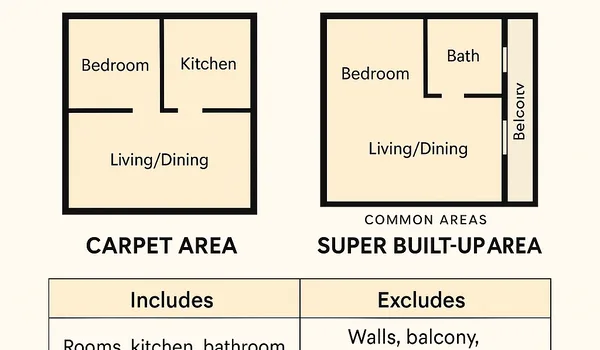
Two of RERA's most tangible protections concern how your flat is measured and when it is handed over. On measurement, the Act defines carpet area and generally requires that sale and pricing be expressed on that basis. This matters because older practices often quoted a larger super built-up figure that bundled in common areas, making it hard to compare the real usable space between projects. Selling on carpet area brings that comparison into the open. If you want to understand exactly how the two measures differ and why the gap between them can be large, the guide on carpet area vs super built-up area in Devanahalli sets it out; always confirm the carpet-area figure stated in your own agreement.
On timing, the developer commits to a possession date in the registered project and in your agreement to sell, and that date becomes a benchmark you can hold them to rather than an informal aspiration. RERA's framework treats a failure to hand over by the agreed time as a breach for which the buyer has remedies. Those remedies can differ by situation — broadly, a buyer may be able to seek compensation for the delay while continuing with the project, or, where the delay is such that the buyer wishes to exit, seek a refund with interest. Which remedy is available, and the rate or amount involved, is governed by the Act, the rules and your agreement, so it must be confirmed rather than assumed.
Because possession is where many disputes crystallise, it helps to know what a proper handover involves and what to inspect before you accept the flat. The companion guide on the apartment possession and handover process in Devanahalli covers the checklist side of taking delivery. On the legal side, do not rely on remembered figures for delay compensation or interest; these are set under the rules and applied on the facts, so confirm the exact entitlement with a lawyer or on the portal.
Bottom line: RERA pins your flat to a defined carpet area and your developer to a committed possession date, with remedies for delay — but the precise compensation, interest or refund is rule-driven, so confirm it rather than assume a number.
How to Verify a Project on the K-RERA Portal
One of the most useful things RERA gives you is a way to check a project for yourself before you pay anything. Registered projects and their details are placed on the state authority's public portal, so verification does not depend on the developer's own paperwork. The habit worth forming is simple: before you book, look the project up on the official portal and read what has been filed, rather than accepting the registration status on a hoarding or a sales sheet at face value.
When you search a project, the portal typically lets you see whether it is registered, the registration particulars, and the documents and periodic updates the developer has filed — things like the approved plan position, the declared timeline and progress reports. The specific fields, the search process and what is displayed can change as the portal is updated, so treat the portal itself as the source of truth for exactly what is shown. If a project you are considering is not yet registered, or the details on the portal do not match what you have been told, that is a signal to pause and ask questions before committing money.
Verification is not a one-time box to tick. It is also worth re-checking the portal during construction, because the periodic disclosures give you an official view of whether the project is progressing as declared. For a purchase decision, combine the portal check with independent legal review of the title and approvals rather than relying on either alone. If anything on the portal is unclear or seems inconsistent, confirm what it means with a lawyer before you draw conclusions from it.
Bottom line: verify a project yourself on the official K-RERA portal before you pay — check its registration and filed details, re-check during construction, and confirm anything unclear with a lawyer rather than trusting a brochure.
How to File a RERA Complaint — Step by Step
If a developer breaches an obligation and does not put it right, RERA lets you take the dispute to the state authority. The broad shape of the process is consistent even though the fine detail is set by the rules. You begin by identifying the specific breach and the relief you want — for example, rectification of a defect, compensation for a delay, or a refund — because a well-defined ask is easier to pursue than a general grievance. Gather your paperwork first: the agreement to sell, payment receipts, the developer's representations, and any correspondence showing the problem and your attempts to resolve it.
You then file a complaint with the authority in the prescribed manner, which is generally done through the K-RERA portal using the required format and paying the prescribed fee. The complaint sets out the parties, the facts, the breach and the relief sought, supported by your documents. After filing, the matter typically proceeds to a hearing where both sides are heard and the authority passes an order; if either party is dissatisfied, the Act provides for an appeal to the appellate tribunal within the framework's timelines. The exact format, fee, hearing procedure and time limits are as notified, so read the current requirements on the portal rather than working from memory.
You are allowed to file a complaint yourself, and many buyers do, but engaging a lawyer helps where the dispute is complex, high in value or likely to be contested, because framing the relief and presenting the evidence well affects the outcome. Whichever route you take, do not rely on assumed limitation periods, fees or timelines; these are set under the rules and can change, so confirm the current position on the K-RERA portal or with a lawyer before you file.
Bottom line: to complain, define the breach and relief, gather your documents, file through the authority in the prescribed format and fee, attend the hearing and appeal if needed — and confirm the current procedure, fee and timelines on the portal or with a lawyer.
RERA Rights When Buying a Pre-Launch Flat like Prestige Devanahalli
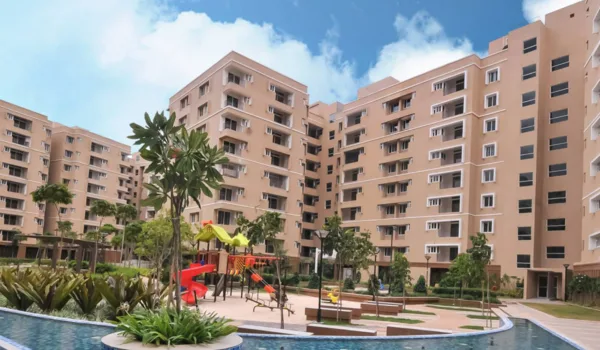
Pre-launch is exactly the stage at which RERA's registration rule matters most, because the Act is designed so that a covered project is registered before it is marketed or sold. Prestige Devanahalli, by Prestige Group, is a pre-launch project at Poojanahalli on the NH-44 corridor, offering 1, 2 and 3 BHK homes with possession indicated from Dec 2030. Its K-RERA application is in process, so confirm its registration status on the portal before you commit any money, and do not treat any registration number as assumed until you have verified it there.
For a pre-launch buyer, the practical value of RERA is that your rights attach to what is registered and agreed. The disclosed carpet area, the sanctioned plan and the committed possession timeline become the reference points against which delivery is judged, and the delay remedies discussed above apply if the developer does not hand over on the agreed terms. This is why it is prudent, at the booking stage, to make sure the details you are relying on are those on the official record and in your agreement, rather than only in marketing material, so that you can enforce them later if needed.
A few closing points of prudence. Buy only once you have verified registration, keep every receipt and the agreement in order, and read the possession and defect-liability terms carefully before you sign. To sense-check the quoted price against corridor rates, the price list gives an indicative benchmark, but treat that as a reference rather than a valuation. Because the exact rights, periods and remedies under RERA are set by the Act and the Karnataka rules and are applied on the facts of each case, confirm anything specific to your purchase with a lawyer and on the K-RERA portal before you rely on it.
Bottom line: at pre-launch, RERA's registration rule is your first safeguard — verify Prestige Devanahalli's in-process K-RERA status on the portal, tie your rights to what is registered and agreed, keep your paperwork, and confirm specifics with a lawyer.
Frequently Asked Questions
1. What is RERA and how does it protect homebuyers?
RERA is the Real Estate (Regulation and Development) Act, which requires developers to register projects, sell on a carpet-area basis and disclose key details, and gives buyers a forum to complain. The exact rules apply through the state authority — confirm with a lawyer or on the K-RERA portal.
2. Does RERA cover a pre-launch project like Prestige Devanahalli?
RERA generally requires a project to be registered before it is marketed or sold; Prestige Devanahalli's K-RERA application is in process, so confirm its registration status on the K-RERA portal before you commit.
3. Is a flat sold on carpet area under RERA?
Yes, RERA defines carpet area and generally requires sale on that basis so pricing and size are transparent. For how carpet area differs from super built-up, confirm the figures in your agreement with a lawyer.
4. What can I do if possession is delayed?
RERA provides remedies for delayed possession, which may include compensation or a refund with interest depending on the case and your agreement. The applicable amount and period are as set by the rules — confirm with a lawyer.
5. How do I file a RERA complaint in Karnataka?
You file a complaint with the state authority through the K-RERA portal, following its prescribed format and fee. The exact steps, fee and timeline are as notified — confirm on the K-RERA portal or with a lawyer.
6. Do I need a lawyer to file a RERA complaint?
You can file a complaint yourself, but a lawyer helps frame the relief you seek and handle the hearing, especially for complex or high-value disputes. Confirm the current procedure on the K-RERA portal.
Conclusion
RERA gives a Devanahalli homebuyer a coherent set of protections: a project that must be registered and disclosed before it is sold, a sale expressed on carpet area, a committed possession date, cover for specified defects after handover, buyer funds that are meant to be ring-fenced for the project, and a dedicated authority to hear complaints with an appellate tribunal above it. Used well, these rights let you buy on the strength of an official record rather than a brochure, and they give you a real remedy if a developer falls short.
The one thing to carry away is discipline about specifics. The periods, interest rates, penalties and procedures under RERA are set by the Act and the Karnataka rules and are amended over time, so this guide gives you the mechanics rather than fixed figures. For a pre-launch home the first step is always to verify registration on the K-RERA portal — Prestige Devanahalli's application is in process — and to tie your rights to what is registered and agreed. Keep your agreement and receipts in order, verify before you pay, and confirm anything specific to your case with a lawyer or on the portal before you rely on it.
Prestige Devanahalli Blog