Credit Score & CIBIL for a Home Loan — Devanahalli 2026
Published 10 Jul 2026 · Last updated 10 Jul 2026
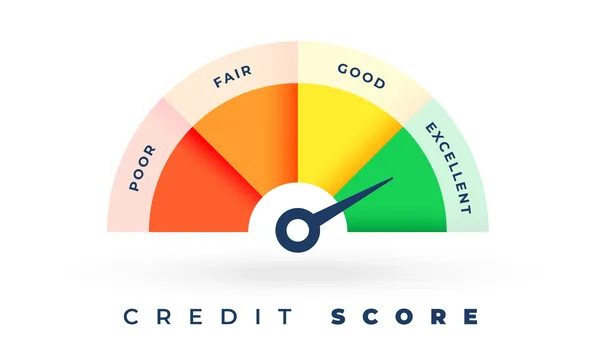
When you set out to buy a flat on the Devanahalli corridor, the single number that quietly shapes your home-loan journey is your credit score. Long before a lender looks at the property, the floor plan or the amenities, it pulls your credit report to gauge how reliably you have repaid past borrowing. That three-digit score can decide whether your loan is approved at all, how large a loan you are offered, and — increasingly — what interest rate you pay. For a purchase running into tens of lakhs, even a small difference in rate compounds into a large sum over the life of the loan, which is why your score is worth understanding and improving well before you apply. This 2026 guide explains what a credit score is, how it drives eligibility and pricing, what feeds into a CIBIL score, how to check and improve it, the mistakes that quietly damage approval, and how to get credit-ready for a pre-launch home.
One honest caveat runs through the whole page. There is no universal cut-off score and no guaranteed approval: every lender sets its own credit policy, weighs the score alongside your income and obligations, and revises those rules over time. The score bands, rate hints and timelines below are indicative and meant to show how the mechanics work, not to promise an outcome. Bureaus such as CIBIL, Experian, Equifax and CRIF each compute a score on their own model, so the figure can differ between them. Treat everything here as orientation and confirm the actual requirement, the report used and the rate offered with your lender before you rely on it.
Credit Score Bands at a Glance
The table below is a quick orientation to how lenders may broadly read different score ranges. These bands are indicative only — the numbers, the language and the treatment are illustrative, not a rule, and each lender sets its own policy on where its lines fall. Use it to understand direction, not to predict a decision.
| Score band (indicative) | How lenders may view it (indicative — confirm each lender's policy) |
|---|---|
| ~750 and above | Generally seen as strong; may support smoother approval and access to a lender's better rates — confirm each lender's policy |
| ~700–749 | Often viewed as fair to good; may be approved but terms can vary by profile — confirm each lender's policy |
| ~650–699 | May be treated with more caution; some lenders may ask for more scrutiny or price differently — confirm each lender's policy |
| Below ~650 | Often seen as higher risk; approval is not assured and improving the score first usually helps — confirm each lender's policy |
Bottom line: a higher score generally reads as lower risk and can help both approval and pricing, but the bands are indicative and every lender draws its own lines — so treat this as direction and confirm each lender's policy.
What a Credit Score Is and Why Lenders Use It
A credit score is a three-digit summary of your credit history, usually expressed on a scale that runs to around 900, that estimates how likely you are to repay borrowed money on time. It is calculated by licensed credit information bureaus — CIBIL is the best known, alongside Experian, Equifax and CRIF — from the record of your loans and credit cards that lenders report to them. Every equated monthly instalment you pay, every card bill you clear or miss, and every new borrowing feeds into that history, and the bureau distils it into the score and a fuller credit report that sits behind it.
Lenders lean on the score because it gives them a fast, standardised read on repayment risk before they commit a large sum for a long tenure. A home loan may run for fifteen or twenty years, so a lender wants evidence that you handle credit responsibly, and your track record with past borrowing is the best available proxy. The score does not look at your salary, your savings or the property itself; it speaks only to how you have managed credit. That is why two applicants with similar incomes can be treated very differently on the strength of their scores alone.
It helps to see the score as one input among several rather than the whole decision. Alongside it, a lender assesses your income, your existing obligations, the loan-to-value on the property and its own policy of the day. The score opens or narrows the door; the rest of the assessment shapes the final offer. Understanding this early is part of getting your finances in order before you buy, which is one of the themes in the broader guide on things to check before buying an apartment in Devanahalli.
Bottom line: a credit score is a bureau-calculated summary of how reliably you repay credit, and lenders use it as a quick risk signal before a long home loan — but it is one input among income, obligations and lender policy, so build it early.
How Your Score Affects Eligibility and Interest Rate
Your score works on a home loan in two distinct ways: whether you qualify, and on what terms. On eligibility, many lenders apply an internal threshold below which an application is unlikely to proceed without extra conditions, a co-applicant or a larger down payment. A stronger score, by contrast, tends to smooth the path — fewer questions, quicker processing and a better chance of the loan amount you are seeking. There is no single industry-wide cut-off, though; each lender decides where its line sits and can move it with market conditions, so a score that clears one lender may fall short at another.
The second effect, on interest rate, has become more pronounced as lenders adopt risk-based pricing. In that approach, a lender reserves its most competitive rates for the strongest scores and prices higher-risk profiles a little dearer to offset the added risk. Because a home loan is large and long, even a modest rate difference driven by your score can translate into a meaningful sum over the full tenure. That is the practical reason a good score is worth cultivating: it can lower not just the odds of rejection but the lifetime cost of the loan.
None of this is a guarantee, and the rate you finally see depends on more than the score — income stability, tenure, loan-to-value and the lender's policy all feed in. The score improves your negotiating position rather than fixing the outcome. To see how the score sits within the full borrowing picture, from eligibility maths to documentation, the companion home loan guide for Devanahalli walks through the wider process; for the actual rate you would be offered, confirm it directly with your lender.
Bottom line: your score shapes both whether you qualify and the rate you are offered, with many lenders pricing stronger scores more keenly — but there is no fixed cut-off and the final rate depends on your full profile, so confirm it with your lender.
What Goes Into a CIBIL Score
A CIBIL score is not a single figure plucked from nowhere; it is built from several strands of your credit behaviour, each pulling the number up or down. The heaviest strand is your repayment history — whether you have paid your loan instalments and card bills on time. A consistent record of on-time payments is the strongest positive signal, while missed payments, defaults or accounts marked as settled or written off weigh heavily against you and can linger on the report for years. This is why punctuality matters more than almost anything else you can control.
The next major strand is your credit utilisation — how much of your available credit-card limit you actually use. Running your cards close to their limit month after month suggests strain and tends to depress the score, whereas keeping usage comfortably below the limit reads as disciplined. Alongside this sits the length and mix of your credit history: a longer track record gives the bureau more to judge, and a healthy blend of secured and unsecured borrowing, handled well, can read more favourably than a thin or one-sided file.
A final strand is your recent appetite for credit. Each time you formally apply for a loan or card, the lender makes a hard enquiry on your report, and a cluster of such enquiries in a short span can look like you are hunting for credit under pressure, nudging the score down. Checking your own score, by contrast, is a soft enquiry and does not hurt it. The exact weighting of these factors is the bureau's own model and is not published to the decimal, so treat the picture as directional and focus on the behaviours — pay on time, keep utilisation low, avoid a rush of applications.
Bottom line: a CIBIL score is built mainly from repayment history and credit utilisation, plus the length and mix of your credit and how many recent enquiries you have — the exact weighting is the bureau's, so focus on paying on time and keeping usage low.
How to Check and Improve Your Score
The first move is simply to look. You can obtain your credit report and score directly from the bureaus — CIBIL, Experian, Equifax and CRIF each provide access, and the framework generally entitles you to at least one free report a year from each — and many banks now surface your score inside their own app. Pull the report, read it carefully, and check that every loan and card listed is really yours and correctly reported. Errors do happen, and an account that is not yours or a payment wrongly marked late can drag the score down; if you spot a mistake, raise a dispute with the bureau to have it investigated and corrected.
Improving the score is less about tricks and more about steady habits sustained over months. The most powerful lever is paying every instalment and card bill on or before the due date, without exception, since repayment history carries the most weight. Next, bring your credit utilisation down by not running cards near their limit — paying more than the minimum, or spreading spending, both help. Avoid making several fresh credit applications in a short window before a home-loan application, and think twice before closing an old, well-managed card, since a longer history and available limit can be working in your favour.
The crucial expectation to set is that this takes time. A score reflects a pattern of behaviour, so a few months of disciplined repayment and lower utilisation is what moves it — there is no instant fix, and any service promising an overnight jump deserves scepticism. The practical implication is to start early: if you know a purchase is on the horizon, begin tidying your credit well in advance so the score is in good shape by the time you apply. Getting your money side in order in parallel — tax planning included — is worth doing too, and the guide on home loan tax benefits in Devanahalli covers that side of the picture.
Bottom line: check your report with the bureaus, fix any errors by raising a dispute, then improve the score through on-time payments, lower utilisation and fewer fresh applications — it takes months, so start well before you apply.
Common Credit Mistakes That Hurt Home-Loan Approval
Some of the most damaging credit habits are also the most avoidable, and knowing them helps you sidestep a rejection you never saw coming. The clearest is missing or delaying payments: a single missed EMI or a card bill left unpaid past its due date is recorded and can weigh on the score for a long time, and a pattern of it signals real risk to a lender. Closely related is leaving a past dispute or a settled account unresolved — an account marked as settled rather than fully paid can read poorly, so it is worth clearing dues properly rather than negotiating them down where you can.
A second cluster of mistakes revolves around how you carry credit day to day. Running credit cards persistently near their limit inflates your utilisation and suggests you are stretched, even if you never miss a payment. Taking on a rush of new loans or cards shortly before a home-loan application adds hard enquiries and fresh obligations at exactly the wrong moment. And acting as a guarantor or co-signer for someone whose repayment then slips can quietly damage your own record, since the liability reflects on you too. Each of these is within your control if you plan ahead.
The final mistake is neglect — never checking your report, and so never noticing an error, a fraudulent account or a stale negative entry that is dragging you down. Because your credit standing feeds directly into the amount and rate a lender will offer, letting it drift can quietly shrink the loan you qualify for and inflate what you pay, which then feeds into your overall budget for the flat. Sense-checking that budget against realistic numbers matters; the indicative price list gives a benchmark for the corridor, but the loan you can actually raise rests on your credit as much as the sticker price.
Bottom line: the big credit mistakes are missed payments, unresolved settlements, high utilisation, a rush of new applications, risky guarantees and never checking your report — avoid these to protect both your approval odds and the rate you are offered.
Credit Readiness for a Pre-Launch Flat like Prestige Devanahalli
A pre-launch purchase has one quiet advantage when it comes to credit: time. Prestige Devanahalli, by Prestige Group, is a pre-launch project at Poojanahalli on NH-44 in North Bengaluru, offering 1, 2 and 3 BHK homes with possession indicated from Dec 2030. Because a home like this is bought long before it is handed over, and the loan is typically disbursed closer to construction milestones and possession rather than all at once on day one, you often have a genuine runway to get your credit in order before the disbursement that matters. That lead time is an asset most ready-to-move buyers do not enjoy.
Used well, that runway means starting now: pull your report, correct any errors, keep every existing EMI and card bill current, hold utilisation down, and avoid loading up on fresh borrowing in the run-up to your home-loan application. If your score today is only fair, the months between booking and disbursement are exactly the window in which disciplined habits can lift it into stronger territory, potentially improving both your eligibility and the rate on offer when you formally apply. Treat the pre-launch stage as a preparation phase for your finances, not just a waiting room.
Two honesty notes round this out. First, none of this guarantees approval or a particular rate — eligibility is finally the lender's call against its policy at the time of disbursement, so confirm the current requirement and the rate closer to that stage. Second, buy only into RERA-registered projects and verify status yourself: Prestige Devanahalli's K-RERA application is in process, so check its status on the K-RERA portal before you commit, and do not assume a registration number until it is published. Keep your credit clean, keep your papers ready, and let the lead time work in your favour.
Bottom line: a pre-launch flat with possession from Dec 2030 gives you real lead time to build and protect your score before disbursement — use it, but confirm eligibility and rate with your lender near disbursement and verify K-RERA status yourself.
Frequently Asked Questions
1. What credit score do I need for a home loan?
There is no single fixed cut-off — a higher score (indicatively around 750+) generally helps, but each lender sets its own policy on the minimum and how it prices the loan. Confirm the current requirement with your lender.
2. Which credit bureau score do lenders use?
Lenders may look at scores from any of the licensed bureaus such as CIBIL, Experian, Equifax or CRIF, and different lenders may check different ones. Confirm which report your chosen lender relies on.
3. Does a higher credit score get me a lower interest rate?
Often yes — many lenders offer their better rates to stronger scores through risk-based pricing, but the rate also depends on income, tenure and lender policy. Confirm the actual rate offered with your lender.
4. How can I check my credit score?
You can check your report and score directly with the bureaus, which generally offer at least one free report a year, or through your bank's app. Review it for errors and raise a dispute with the bureau if anything is wrong.
5. How long does it take to improve a credit score?
Improving a score is gradual — it can take several months of on-time payments and lower utilisation, and there are no instant fixes. Start early so your credit is in good shape before you apply.
6. How does credit readiness apply to a pre-launch flat like Prestige Devanahalli?
A pre-launch home with possession indicated from Dec 2030 gives you lead time to build and protect your score before the loan is disbursed. Use that window and confirm eligibility with your lender closer to disbursement.
Conclusion
Your credit score is the quiet gatekeeper of a home loan in Devanahalli: it is a bureau-calculated read on how reliably you repay, and it shapes both whether you are approved and the rate you pay. The score is built mainly from your repayment history and credit utilisation, with the length and mix of your credit and recent enquiries adding to the picture, so the levers you control are clear — pay on time, keep card usage low, avoid a rush of applications, and check your report for errors. The mistakes that hurt most, from missed payments to unresolved settlements and neglecting the report altogether, are the same ones that are easiest to avoid with a little foresight.
The overarching point is that there is no magic number and no guaranteed approval — every lender sets its own policy, the bands here are indicative, and improving a score takes months of steady behaviour rather than any instant fix. For a pre-launch home like Prestige Devanahalli, with possession indicated from Dec 2030, that time is on your side: use the runway to get credit-ready before disbursement. Verify K-RERA status yourself, and confirm your eligibility, the report used and the rate you are offered with your lender before you rely on any of it.
Prestige Devanahalli Blog