TDS on Property Purchase — Section 194-IA in Devanahalli 2026
Published 13 Jul 2026 · Last updated 13 Jul 2026

When you buy a flat in Devanahalli and the consideration crosses ₹50 L, a statutory obligation falls squarely on you as the buyer: you must deduct a percentage of each payment to the seller and deposit it with the government. This is TDS under Section 194-IA of the Income Tax Act — a provision that transfers the collection burden from the seller to the purchaser. Unlike most TDS scenarios where an employer or a bank does the deducting for you, here you are the deductor, and the compliance steps — Form 26QB, the challan, Form 16B — are yours to complete. Failing to do so can attract interest, penalties and short-deduction notices. Understanding the mechanics before you begin paying your purchase tranches is therefore not optional; it is part of the transaction itself.
One honest caveat runs through this entire guide. The TDS rate, the threshold, the form numbers, the deposit timeline and the process are as generally understood at the time of writing, but Finance Acts and CBDT circulars can amend any of these. Nothing on this page should be treated as advice for your specific transaction. Before you make your first payment to a seller, confirm every detail — rate, threshold, applicability, deadline — with a qualified Chartered Accountant. The guide explains the framework so you know which questions to ask; your CA fills in the current, authoritative answers.
TDS on Property Purchase at a Glance
The table below is a quick orientation to how Section 194-IA TDS works on a property purchase. All figures and timelines are indicative as generally understood — confirm every item with a CA before transacting.
| Item | In short (indicative — confirm with a CA) |
|---|---|
| What it is | The buyer's duty to deduct 1% TDS from payment to the seller and deposit it with the government under Section 194-IA |
| Trigger threshold | Consideration of ₹50 L or more (indicative; confirm current threshold with a CA) |
| TDS rate | 1% of total consideration (indicative; higher if seller has no PAN — confirm with a CA) |
| How to deposit | File Form 26QB online on the Income Tax portal within 30 days of each payment to the seller |
| TDS certificate | Download Form 16B from TRACES and hand to the seller within 15 days of deposit |
| NRI seller | Different (higher) TDS rate under Section 195 — always engage a CA before transacting with an NRI seller |
Bottom line: TDS under Section 194-IA is the buyer's compliance obligation, not the seller's — deduct, deposit via Form 26QB, and hand Form 16B to the seller; confirm the current rate, threshold and timeline with a CA before you begin.
What TDS on Property Purchase (Section 194-IA) Is
Section 194-IA of the Income Tax Act creates a specific TDS obligation for buyers of immovable property. Ordinarily, a seller who receives consideration above a threshold would be expected to disclose that income and pay tax on it. The provision instead places the collection duty on the buyer: you deduct a percentage from what you pay the seller and remit that amount directly to the government. The seller then gets a credit for the tax so deducted when filing their own return. The intent is to bring high-value property transactions on the government's radar and secure a portion of the tax at source rather than waiting for the seller's return-filing cycle.
The obligation is triggered by the consideration itself, not by the type of buyer or the use the buyer plans for the property. Whether you are buying a residential flat for personal use, as an investment, or for rental purposes, the provision applies in the same way once the consideration crosses the threshold. Similarly, it is not restricted to resale transactions — buying an under-construction flat or a pre-launch unit from a builder also attracts the provision once the aggregate consideration meets the threshold, and with payment spread across tranches over a construction period the compliance repeats with each instalment. There is no TDS deduction at source requirement on the buyer's side when the consideration is below the threshold, which is an important boundary to pin down with your CA.
A common point of confusion is conflating this with other TDS provisions or with the seller's capital gains liability. TDS under 194-IA is a withholding at the buyer's end; the seller's capital gains tax on the profit from the sale is a separate computation the seller makes in their own return. The amount withheld goes to the seller's credit and reduces what they ultimately owe, but the two obligations run on different tracks. For the buyer, the practical focus is on deducting correctly and depositing on time; whether the seller has a gain or a loss is not your concern for 194-IA compliance, though it may matter to the seller's overall tax position. Confirm all this with a CA who can read the provision as it stands on the date you transact.
Bottom line: Section 194-IA places the TDS obligation on the buyer — you deduct a percentage of each payment to the seller and deposit it with the government; the seller gets the credit in their return — confirm all details with a CA.
Who Must Deduct TDS and at What Rate
The deductor under Section 194-IA is the buyer — the person or entity paying the consideration for the immovable property. There is no exemption for individual buyers, first-time buyers, or buyers below a particular income threshold. If the consideration for the property crosses the statutory threshold, the obligation to deduct attaches to you as the purchaser, regardless of how you are financing the purchase or whether you are using a home loan. In a co-purchase, where two or more buyers jointly acquire a property, the compliance may need to be handled by each buyer proportionately on their share of the payment; your CA can advise on how joint purchases are dealt with under the current position.
The rate of TDS under Section 194-IA is 1% of the total consideration, as generally understood at the time of writing. An important variation: if the seller does not furnish a valid PAN, the rate can be significantly higher. The higher-rate provision is a backstop designed to discourage sellers from withholding their PAN details. Collecting the seller's PAN before making any payment is therefore one of the first practical steps in a property purchase, and you should verify it through the Income Tax portal rather than relying on a copy provided by the seller. Confirm the current applicable rates — both the standard rate and the no-PAN rate — with a CA, since the Finance Act can revise them.
It is also worth noting that the builder or developer is the seller in an under-construction or pre-launch purchase, and they should have a valid PAN which you can verify. For a resale flat the seller is the individual from whom you are purchasing, and their PAN needs to be collected and verified in the same way. The TDS you deduct goes to the credit of whoever the seller is, so the PAN must correctly identify them. If there are multiple sellers — co-owners, for instance — the treatment may need to be split; again, a CA is the right person to walk through the specifics for your transaction.
Bottom line: the buyer is the deductor under Section 194-IA at an indicative rate of 1%, with a higher rate if the seller has no PAN — always collect and verify the seller's PAN, and confirm the current rate and any co-buyer or co-seller treatment with a CA.
The Threshold and What the Consideration Covers
The threshold that triggers the TDS obligation under Section 194-IA is a consideration of ₹50 L or more, as generally understood. Below that threshold the provision does not apply, and the buyer has no deduction obligation under this section. The ₹50 L figure is the total consideration for the property, not the down payment or any single instalment. If you are buying a flat whose agreed price is ₹80 L, the threshold is crossed even though you might pay in five tranches none of which individually exceeds ₹50 L; TDS applies from the first payment because the aggregate consideration meets the test. Confirm the current threshold with a CA, since it has been revised by Parliament in the past and could be again.
What counts as "consideration" for the purpose of this provision is an important boundary. The generally understood position is that consideration includes not just the basic sale price but potentially other amounts charged in connection with the purchase — club membership fees, car-parking charges, maintenance deposits, and similar components can be included depending on how they are described in the agreement. This is a nuanced area where the character of each component matters, and it is precisely the kind of question you should bring to your CA before signing the agreement or making the first payment. A builder's payment schedule may describe certain components separately, and getting the treatment right at the outset is easier than trying to correct it mid-construction.
For buyers comparing the cost of a flat in this corridor with the overall transaction costs, the companion guide on Stamp Duty & Registration Charges in Devanahalli 2026 covers what you pay to the state at registration separately from the TDS obligation. TDS is a central government withholding and runs independently of stamp duty; both are real outflows in a property purchase, and building both into your budget from the outset avoids liquidity surprises during the construction period.
Bottom line: the trigger is total consideration of ₹50 L or more — not any single instalment — and what counts as consideration may include components beyond the basic price; confirm the threshold and scope with a CA before signing the agreement.
How to Deduct and Deposit: Form 26QB and the Challan
Once you have established that the provision applies, the process for each payment works as follows, as generally understood. You calculate the TDS due on the amount being paid to the seller. You then pay the seller the net amount (consideration minus TDS) and separately deposit the TDS with the government. The deposit is made by filing Form 26QB on the Income Tax portal — this is a single-transaction TDS return specifically designed for property transactions under Section 194-IA. Form 26QB captures the buyer's details, the seller's details, the property details, and the payment amount, and generates a challan through which the tax is deposited. The timeline for depositing is generally understood to be within 30 days from the end of the month in which the deduction was made; confirm the current deadline with a CA.
A few practical points on the Form 26QB process. The form must be filed separately for each payment instalment on which TDS is deducted — if you make four payments over the construction period, you file four Form 26QBs. The PAN details of both buyer and seller must be entered correctly; errors can cause the credit to not flow through to the seller's Form 26AS. For a joint purchase or a purchase from joint sellers, there may be multiple Form 26QBs required; your CA can confirm the approach. After filing and paying the challan, a 15-digit acknowledgement number is generated, which you will need to download Form 16B. Keep every acknowledgement number safely; losing it can complicate the certificate-download step.
The home loan angle is worth flagging. If you are using a home loan, the bank disburses funds directly to the builder and you receive no cash in your hand from which to deduct. The TDS obligation nevertheless remains with you, the buyer — the bank's disbursement does not discharge it. In practice this means you need to have the TDS amount available separately, deduct it from each builder demand, and deposit it via Form 26QB before the builder receives the net amount. How exactly this works with a specific bank and a specific builder is worth working through with your CA well before the first disbursement. For a broader look at how home loans work in this corridor, see the guide on Home Loan Tax Benefits in Devanahalli 2026 — Section 24, 80C & 80EEA.
Bottom line: file Form 26QB on the Income Tax portal and pay the challan within 30 days of each deduction; do this separately for each instalment; keep acknowledgement numbers; and confirm the current process, timeline and any home-loan-specific steps with a CA.
The TDS Certificate (Form 16B) and the Seller's Credit
After you have deposited the TDS via Form 26QB and the challan has been processed, the next step is to obtain Form 16B, the TDS certificate for the seller. Form 16B is downloaded by the buyer from the TRACES (TDS Reconciliation Analysis and Correction Enabling System) portal, typically after the challan is reflected in the system, which takes a few days. The certificate sets out the amount deducted, the challan details and the period to which it relates, and it is the seller's documentary evidence that TDS was indeed deducted and deposited on their behalf. The indicative timeline for handing Form 16B to the seller is within 15 days of depositing the challan; confirm the current timeline with a CA.
From the seller's perspective, the TDS deducted by you flows through to their Form 26AS (now Annual Information Statement) as an advance credit against their total tax liability for the year. When the seller files their income-tax return, they claim that credit to offset whatever tax they owe on the proceeds of the sale, including any capital gains. If the TDS is not reflected correctly in their AIS — because the PAN was entered incorrectly, for instance, or the Form 26QB was not filed — the credit will not appear and the seller may face a demand for tax that they believe you should have withheld. Getting the Form 26QB details right at the outset protects both parties; the seller is inconvenienced if it goes wrong, and you as the deductor face liability for short deduction or non-deposit.
The seller's overall tax position on the disposal of the property is governed by capital gains rules, which are a separate matter from the TDS credit. The companion guide on Capital Gains Tax on Selling Property in Devanahalli 2026 covers how gains are computed and what exemptions may apply on the seller's side. As a buyer your role in that chain is limited to deducting and depositing correctly and handing over the Form 16B certificate; the seller's planning around the gains is their own affair.
Bottom line: download Form 16B from TRACES after the challan is processed and hand it to the seller as their TDS certificate; ensure PAN details in Form 26QB are correct so the credit flows through to the seller's AIS; confirm the download timeline and process with a CA.
TDS on a Pre-Launch Flat like Prestige Devanahalli
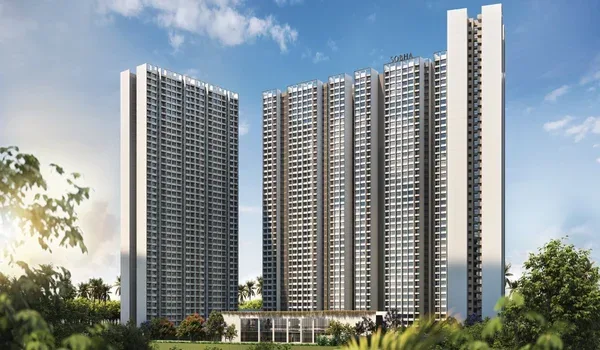
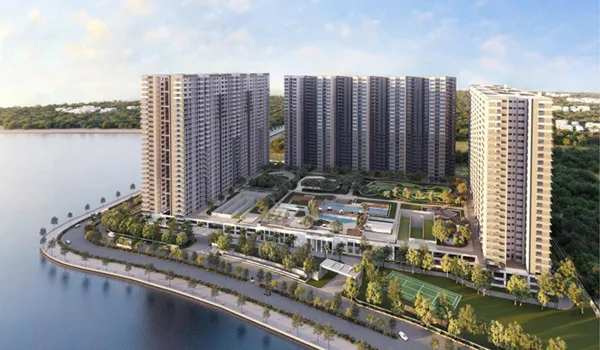
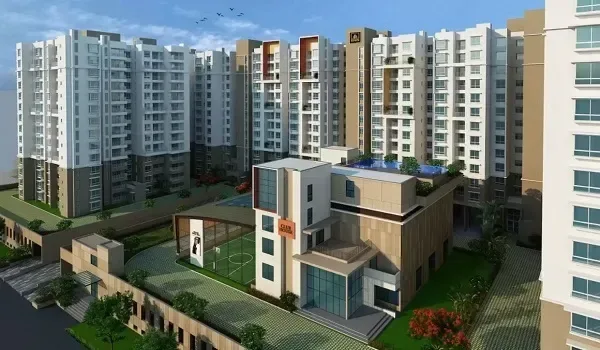
Prestige Devanahalli, by Prestige Group, is a pre-launch project at Poojanahalli on NH-44 in North Bengaluru, beside the Kempegowda International Airport and the KIADB Aerospace Park, offering 1, 2 and 3 BHK homes with 1 BHK from ₹61.75 L and possession indicated from Dec 2030. With a base price around ₹9,500 per sq ft, most configurations will cross the ₹50 L threshold that generally triggers Section 194-IA. What makes a pre-launch purchase different from an outright resale purchase is that the consideration is paid in multiple tranches over the construction period rather than in one shot at registration. The TDS obligation applies on each payment instalment once the aggregate consideration crosses the threshold — meaning you will likely file multiple Form 26QBs between booking and possession, spanning several financial years. Confirm the timing and method with a CA before making your first tranche payment.
The practical steps for a buyer of Prestige Devanahalli therefore start early: at the agreement stage, confirm with your CA how the consideration is defined, whether any components (car parking, club fees, maintenance deposits) are to be included, and what the correct TDS computation is for the first demand letter. Then, each time the builder sends a payment demand, the workflow repeats: calculate the TDS, pay the seller (builder) the net amount, file Form 26QB for that instalment, pay the challan, and download Form 16B for that payment. Over a four-year construction period from booking to the Dec 2030 possession, you will likely need to do this multiple times. Setting a reminder system — and engaging your CA early — is the safest way to stay compliant across all instalments.
The project's K-RERA application is in process and no registration number is available yet. Verify K-RERA status on the K-RERA portal before committing. The indicative price list gives a sense of the total outlay; add TDS (indicatively 1% of consideration per tranche) to your cash-flow model alongside stamp duty and GST so the construction-period payments are fully budgeted. For buyers who will eventually sell the flat, the capital gains treatment on the eventual disposal is a separate planning exercise covered in the guide on Capital Gains Tax on Selling Property in Devanahalli 2026. And if you are an NRI buyer, note that the TDS rules for your purchase may differ from those of a resident buyer — engage a CA specialising in NRI transactions before you proceed.
Bottom line: on a pre-launch flat like Prestige Devanahalli, TDS under Section 194-IA applies on each payment tranche across the construction period from booking to possession; file a separate Form 26QB for each instalment, verify K-RERA status, and engage a CA early to handle the multi-tranche compliance correctly.
Frequently Asked Questions
1. What is TDS on property purchase under Section 194-IA?
It is the buyer's statutory obligation to deduct 1% TDS from payment to the seller when the property consideration is ₹50 L or more and deposit it with the government — confirm the current rate and threshold with a CA.
2. Who is responsible for deducting TDS?
The buyer (purchaser) is responsible for deducting TDS from each payment to the seller and filing Form 26QB — confirm the obligation and deadlines with a CA.
3. How do I deposit TDS on a property purchase?
File Form 26QB online on the Income Tax portal and pay the challan within 30 days of deduction; then download Form 16B from TRACES — confirm the current process with a CA.
4. What if I am buying from an NRI seller?
An NRI seller attracts higher TDS under Section 195, not Section 194-IA; always engage a CA before paying or deducting when the seller is an NRI.
5. Does TDS apply on each instalment for a pre-launch flat?
Generally TDS is deducted on each payment once the aggregate consideration crosses the threshold; confirm the timing and method with a CA before making your first tranche payment.
6. What is Form 16B and what do I do with it?
Form 16B is the TDS certificate the buyer downloads from TRACES after depositing the challan; it must be handed to the seller as proof of the deduction — confirm the timeline with a CA.
Conclusion
TDS under Section 194-IA comes down to one clear idea: the buyer is the deductor. When the total consideration for an immovable property crosses ₹50 L (indicative — confirm with a CA), the buyer must deduct 1% (indicative) from each payment to the seller, deposit it with the government via Form 26QB, and hand Form 16B to the seller as the TDS certificate. The obligation is not discharged by the bank, the developer or the registration office — it rests with you, the purchaser, on each instalment, across the full payment timeline from first demand to possession.
For a buyer of a pre-launch flat the construction period means multiple Form 26QB filings spread over several years. Engaging a CA at the agreement stage — before the first payment — is the single most effective step you can take to stay compliant. The CA can confirm the current rate, threshold, what counts as consideration, the exact filing deadline, and any nuances for co-buyers or home-loan disbursements. Confirm all figures and process steps with a CA; no figure on this page should be relied on without that verification. And if your seller is an NRI, Section 194-IA does not apply — Section 195 governs instead, at different and higher rates, making a CA non-negotiable in that scenario.
Prestige Devanahalli Blog