Water Supply & Utilities in Devanahalli 2026
Published 13 Jul 2026 · Last updated 13 Jul 2026
When you are evaluating a flat in Devanahalli, the brochure will tell you about the clubhouse and the landscaping, but the questions that shape your day-to-day life are more basic: Will water reach my tap reliably? Will the lights stay on? What happens to the sewage? This guide works through each utility in turn — water supply, rainwater harvesting, power, sewage and the KIADB trunk infrastructure that underpins newer developments near the airport — and tells you what to look for and what to confirm before you sign anything. Because every project is different and government infrastructure timelines can shift, every indicative point here comes with an honest reminder to verify the details with the builder or the relevant authority before relying on it.
Utilities in Devanahalli at a Glance
The table below is a quick orientation to the main utility questions for a flat in the Devanahalli corridor. These are indicative pointers; your actual situation depends on the specific project, its approvals and the status of infrastructure in the micro-area where it sits.
| Utility | What to know (indicative — confirm with builder/authority) |
|---|---|
| Piped water (BWSSB) | Cauvery reach is limited in parts of North Bengaluru beyond Yelahanka; confirm BWSSB connection status with the builder |
| Borewell/groundwater | Most gated communities supplement with borewells; depth and water quality vary by pocket and season |
| Rainwater harvesting | Mandatory above a threshold built-up area in Karnataka; many gated projects build dedicated RWH pits — confirm capacity |
| Power (BESCOM) | BESCOM covers the Devanahalli circle; DG and/or solar backup provision varies by project — confirm kVA and who pays |
| Sewage treatment | Larger gated communities run their own STP; confirm capacity, STP type and discharge compliance with the builder |
| KIADB trunk infra | Airport City and Aerospace Park zones have trunk infra development underway — confirm current status with KIADB |
Bottom line: no single utility can be assumed — the mix of piped Cauvery water, borewell, rainwater harvesting, BESCOM grid, backup power and STP varies project by project, so confirm each one directly with the builder before you book.
Water Supply in Devanahalli — Cauvery, Borewell and What to Expect
Water supply is the utility that buyers in North Bengaluru most often underestimate, and it is worth spending a moment on the geography before looking at individual projects. The Cauvery-based piped network operated by the Bangalore Water Supply and Sewerage Board (BWSSB) has been extending northward over successive years, but the reach at the far end of the corridor — areas around and beyond Devanahalli, Poojanahalli and the zones flanking NH-44 near Kempegowda International Airport — is limited and varies by micro-area. Do not assume that because an area is within the Bengaluru Municipal Corporation limit it automatically has a BWSSB connection in place; confirm directly with the builder whether the specific project has a sanctioned and active BWSSB connection, and if so, what the daily supply quantum is expected to be.
Where piped Cauvery supply is unavailable or insufficient, gated communities in the corridor rely on borewell water, either as the primary source or as a supplement. Borewell depth, yield and water quality vary significantly by the local geology, aquifer levels and seasonal rainfall recharge. What a project 500 metres away reports is not a reliable guide to what your project will find; borewell water in one pocket may be potable after minimal treatment, while another may have higher dissolved solids that require more intensive treatment. Ask the builder for test reports, confirm the number of operational borewells, and understand the water treatment process in place. For a broader picture of how the locality compares to neighbouring areas, the guide on Neighbourhoods & Localities around Devanahalli 2026 covers micro-area differences that can affect infrastructure availability.
The practical takeaway for a buyer is that water supply for a new gated community in the Devanahalli corridor is almost certainly a mix: some combination of BWSSB connection (if sanctioned and active), borewells, rainwater harvesting recharge and treated water from a centralised system on site. Understanding that mix — what the primary source is, what the fallback is, and what the per-flat daily supply commitment is — is an important due-diligence question to ask before you sign the agreement. Confirm the current BWSSB connection status with both the builder and BWSSB directly; do not rely solely on brochure claims.
Bottom line: Cauvery piped supply through BWSSB is limited in parts of the Devanahalli corridor; most projects rely on a mix of BWSSB (where available), borewells and RWH — confirm the water-source mix, BWSSB connection status and daily supply quantum with the builder before booking.
Rainwater Harvesting and Groundwater Recharge in Gated Communities
Rainwater harvesting (RWH) is not optional at scale in Karnataka. The state mandates RWH systems for buildings above a certain built-up area threshold, which means that any large gated community being developed in the Devanahalli corridor is required to incorporate RWH as part of its building plan approval. In practice, most reputable developers building sizable projects go beyond the minimum and design dedicated recharge pits, percolation wells and storage infrastructure that can meaningfully supplement the project's water supply during and after the monsoon. The quality and capacity of that infrastructure, however, varies considerably from project to project.
What RWH actually achieves for residents depends on the design. A well-designed system captures rooftop and paved-surface runoff, channels it through settling and filtration, and feeds it into recharge pits that replenish the local aquifer — from which the project's own borewells draw. In a good monsoon year, this can substantially reduce dependence on piped supply. In a dry year or in a project where the RWH system is undersized or poorly maintained, the benefit is more limited. Ask the builder for the designed RWH capacity, the number and depth of recharge pits, and the compliance certificate from the relevant authority. Also ask whether treated RWH water is used for any purposes on site (common areas, flushing, landscaping) as this affects how much potable supply is preserved for domestic use.
Groundwater recharge from RWH also benefits the wider neighbourhood, not just the project, which is why it is increasingly factored into approvals by local authorities. For a buyer, the relevance is practical: a project with a robust RWH system is less vulnerable to water scarcity, especially in the North Bengaluru context where groundwater recharge from the Cauvery basin is less assured than in areas closer to the river intake. Confirm RWH capacity, system design and maintenance responsibility (builder during construction, then typically the residents’ association post-handover) before you commit.
Bottom line: RWH is mandatory for large projects in Karnataka and most reputable developers build dedicated systems; confirm the designed capacity, recharge pit design and maintenance responsibility with the builder to understand how it protects against water scarcity.
Power Supply, BESCOM Coverage and Backup
Electricity supply in the Devanahalli area falls under the Bangalore Electricity Supply Company (BESCOM), which is the licensed distribution company for Bengaluru and the surrounding districts. BESCOM coverage extends to the Devanahalli circle, and most established parts of the corridor receive grid power. However, reliability — in terms of outage frequency and duration — varies by feeder line, load on the local sub-station and season. The airport zone and KIADB industrial areas have attracted dedicated feeder upgrades over the years, and newer residential clusters tend to benefit from that improved infrastructure, but this is not uniform across the entire corridor. Confirm the specific feeder arrangement for the project with the builder and, if possible, with BESCOM.
Backup power provision varies substantially between projects. A premium gated community will typically provide DG (diesel generator) backup for common areas and for certain loads in the flat (lifts, lobby lighting, pumps), and some projects now incorporate solar panels that partially offset common-area consumption. The key questions for a buyer are: what is the backup kVA available per flat, which loads does it cover, and how is the cost of DG operation recovered from residents — through maintenance charges, a separate fuel surcharge, or both. These details should be in the cost sheet and the society bye-laws; review them before signing. For a broader read on how connectivity and road access interact with infrastructure in the corridor, the Road & Connectivity Guide to Devanahalli 2026 gives useful context.
Solar installations on gated communities are increasingly common and, where properly sized and maintained, can reduce common-area electricity bills noticeably. Whether the project has solar and what the installed capacity is are worth asking. BESCOM net-metering provisions allow projects to feed surplus solar generation back to the grid, which can offset bills further. None of this replaces grid power, but it reduces exposure to tariff increases and outage risk for common services. Do not confuse the builder’s marketing claim about solar with an operational solar system; confirm the sanctioned capacity and the commissioning plan with the builder. Do not rely on any specific BESCOM tariff or connection-fee figure from a third-party source — confirm both with BESCOM directly.
Bottom line: BESCOM covers the Devanahalli circle but grid reliability varies by feeder; confirm the specific feeder arrangement, DG backup kVA, what loads it covers, and how backup costs are charged — and check BESCOM directly for tariffs and connection fees.
Sewage, Drainage and Solid-Waste Management
For any large gated community in a peri-urban location like Devanahalli, the expectation of a public sewage network connected to a municipal sewage treatment plant is generally not realistic. The BWSSB’s underground drainage network, like its water supply network, thins out as you move beyond the inner city, and many locations in the North Bengaluru corridor do not yet have a functioning connection to the main sewage system. That makes an on-site sewage treatment plant (STP) essential, and most larger gated projects are required to include one as a condition of their building plan approval.
The key questions about the STP are: what is the designed capacity in kilolitres per day, does it match the peak occupancy load the project is designed for, what technology does it use (sequencing batch reactor, membrane bioreactor or conventional), and what does the builder propose to do with the treated effluent. Treated water from a well-run STP is suitable for flushing, irrigation and landscape use, which can substantially reduce the project’s freshwater demand for non-potable purposes. Ask for the STP compliance certificate and, after handover, the periodic testing reports that confirm the treated water meets discharge norms. The residents’ association will inherit responsibility for the STP, so understanding its condition and capacity at handover is important.
Stormwater drainage is a related concern in Bengaluru’s flat peri-urban topography. A project with good internal drainage that connects to an adequate external stormwater drain is less vulnerable to waterlogging, which in recent years has become a visible problem in parts of the city after heavy rain. Ask the builder about the stormwater drainage design and the status of the external drain connection, especially if the project is in a low-lying area or near a former lake bed. Solid-waste management in newer gated communities typically involves a dry-wet segregation system at source, composting of organic waste on site, and collection by the local civic body or a private contractor. Confirm the arrangement with the builder and the local panchayat or municipal authority.
Bottom line: an on-site STP is essential for a large gated community in the Devanahalli corridor; confirm STP capacity, technology, treated-water reuse plan and discharge compliance — and check stormwater drainage design and solid-waste management arrangements — before you buy.
KIADB Trunk Infrastructure and What It Means for New Projects
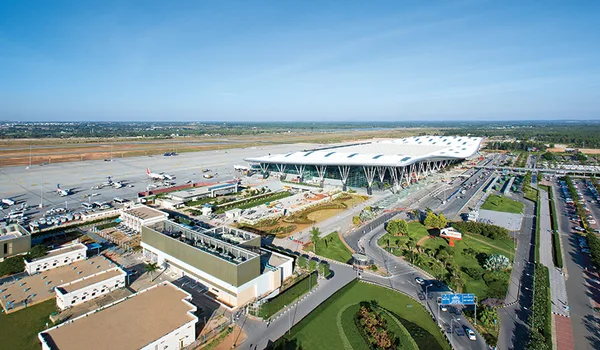
The Karnataka Industrial Areas Development Board (KIADB) is the agency that has developed and continues to develop the Aerospace Park and Airport City industrial and mixed-use zones flanking Kempegowda International Airport. One of KIADB’s key roles in these zones is developing what is called trunk infrastructure — the primary roads, water supply mains, power substations and sewage lines that individual projects then connect into, rather than each project having to create the entire utility chain independently. This trunk infrastructure approach is what makes large-scale planned development around the airport viable, and it is part of what distinguishes the KIADB zones from unplanned growth on the urban fringe.
For residential projects in or near the KIADB zones, trunk infrastructure matters in a practical way: a project that can connect to a KIADB water main, a KIADB-facilitated power sub-station or a KIADB drainage trunk is better placed in terms of utility reliability than one that has to rely entirely on its own resources or on an overstretched local civic body. The catch is that trunk infrastructure development in any planned zone is an ongoing, government-dependent process with timelines that can shift. Some segments of the trunk system may be complete while others are still underway; the status at the time of your purchase is what matters, not what the long-range plan says. Confirm the current commissioning status of KIADB trunk utilities for the specific project’s zone directly with KIADB and with the builder.
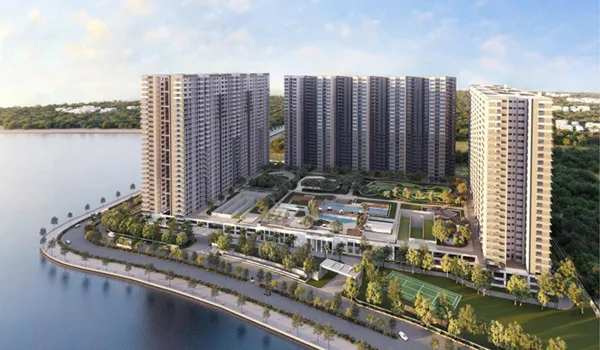
A project like Prestige Devanahalli, located at Poojanahalli beside the airport and the KIADB Aerospace Park, benefits from proximity to this trunk infrastructure environment, but proximity is not the same as connection. What matters for the buyer is confirmation that the project has the required utility connections in place or committed, and that the builder has factored the trunk infrastructure timelines into its own construction and handover plan. The Things to Check Before Buying an Apartment in Devanahalli 2026 guide covers the full due-diligence list of which documents and approvals to verify on exactly this kind of infrastructure question.
Bottom line: KIADB trunk infrastructure — roads, water mains, power and drainage in the Aerospace Park and Airport City zones — is planned and underway, which benefits nearby residential projects; confirm the current commissioning status and the project’s connection plan with KIADB and the builder, not from third-party sources.
Utilities and Infrastructure for a Pre-Launch Flat like Prestige Devanahalli
Buying a pre-launch flat means buying a set of commitments rather than a finished product, and utility infrastructure is one area where those commitments are particularly important to pin down. Prestige Group’s Devanahalli project at Poojanahalli on NH-44 — offering 1, 2 and 3 BHK homes with 1 BHK from ₹61.75 L and base pricing around ₹9,500/sq ft — has possession indicated from Dec 2030. At the booking stage the utility connections are not in place; they are arranged by the builder as part of project completion and are handed over to residents at possession. That is normal for any under-construction project, but it means your due diligence now is about understanding what the builder is committing to, not about inspecting existing infrastructure.
The specific items to pin down with the builder at the pre-launch stage for a project of this type include: whether a BWSSB connection has been applied for or sanctioned (and if not, what the confirmed water source is during construction and after handover), the number and designed depth of borewells, the designed RWH capacity and recharge pit layout, the STP capacity and technology, the BESCOM load sanctioned for the project, the DG backup kVA per flat and per common area, and whether any KIADB trunk infrastructure connection is part of the approved utility plan. Ask for these in writing as part of the builder’s specification documents. For the indicative price and payment plan, the cost sheet should also itemise any infrastructure-related levies or charges that fall on the buyer at registration or handover.
Verify the project’s K-RERA registration status on the K-RERA portal before you commit; the application is in process and no registration number should be assumed until it is published. A RERA-registered project is required to disclose its approved plans, specifications and utility commitments in the RERA filing, which gives you a cross-check for what the builder is telling you verbally. After possession from Dec 2030, utility connections should be live; confirm the handover checklist with the builder and ensure that the STP, borewells, RWH system and BESCOM meter are all commissioned and compliant before you accept handover. Any shortfall in utility infrastructure at possession is a legitimate ground for remedy under RERA.
Bottom line: for a pre-launch flat, utility infrastructure is a commitment on paper today and a reality at possession from Dec 2030 — confirm each utility in writing with the builder, verify K-RERA status on the RERA portal, and check the handover checklist carefully before accepting the keys.
Frequently Asked Questions
1. Does Devanahalli get Cauvery piped water?
BWSSB Cauvery supply reaches parts of North Bengaluru but is limited at the far end of the corridor; confirm whether the project has a BWSSB connection with the builder and BWSSB.
2. How do gated communities manage water in Devanahalli?
Most projects supplement Cauvery supply with borewells and rainwater harvesting pits; confirm the water-source mix, borewell depth and RWH capacity with the builder.
3. Is power supply reliable in Devanahalli?
Devanahalli falls under BESCOM and generally receives grid power; DG and solar backup provisions vary by project — confirm backup kVA and associated charges in the cost sheet.
4. How is sewage managed in apartments near Devanahalli?
Larger gated communities typically operate their own sewage treatment plant (STP); confirm STP capacity, type and discharge compliance with the builder before buying.
5. What is KIADB trunk infrastructure and why does it matter?
KIADB develops roads, water and power trunk lines in the Aerospace Park and Airport City zones, which benefits nearby residential projects; confirm current status and timelines with KIADB.
6. When will utilities like water and power be connected for a pre-launch flat?
Utility connections are arranged by the builder as part of project completion, typically at handover (indicated from Dec 2030 for Prestige Devanahalli) — confirm the utility plan with the builder.
Conclusion
Utility infrastructure in the Devanahalli corridor is a real and manageable consideration rather than a deal-breaker, but it rewards buyers who ask specific questions rather than assume. Cauvery piped supply through BWSSB is limited at the far end of the corridor and must be confirmed project by project; most gated communities supplement with borewells and rainwater harvesting, and a well-designed RWH system meaningfully reduces long-term water risk. BESCOM covers the area and grid power is generally available, but backup provision varies by project and the costs involved should be transparent in the cost sheet. An on-site STP is the norm for larger projects given the absence of a public sewage network in much of the zone, and its capacity and compliance status are worth verifying carefully. KIADB trunk infrastructure in the Aerospace Park and Airport City zones is underway and benefits proximate projects, but confirmation of current status should come from KIADB directly rather than from marketing material.
For a pre-launch flat with possession from Dec 2030, all of this translates into a due-diligence checklist rather than an inspection: confirm each utility commitment in writing, verify K-RERA status on the RERA portal once the registration number is published, and review the handover checklist carefully before accepting possession. The questions on this page are the right ones to take to the builder’s sales team and, where relevant, to the relevant authority — BWSSB, BESCOM or KIADB — before you commit.
Prestige Devanahalli Blog