Parking Norms & Charges for Apartments in Devanahalli 2026
Published 14 Jul 2026 · Last updated 14 Jul 2026
If you are buying a flat anywhere along the Devanahalli corridor, one question that surfaces quickly is parking: how many spots come with the flat, what type they are, what they cost, and whether that is clearly written into the agreement. Parking is not a minor detail - in a high-density gated community it directly affects daily convenience, resale value and what your maintenance bill eventually looks like. RERA has brought some structure to how parking is allotted and charged, but the specifics still vary enough between builders and projects that reading the cost sheet and the allotment letter carefully before you sign is the only safe approach. This guide walks through the key concepts - RERA position, parking types, pricing, EV provisions and possession documents - so you know what questions to ask. For any project-specific figures, always confirm with the builder and the cost sheet.
Parking Norms at a Glance
The table below is a quick orientation to the main parking concepts. These are general pointers; the actual terms for any project depend on the builder, local authority norms and what is written in your agreement.
| Aspect | In short (indicative) |
|---|---|
| RERA position | Parking is to be allotted with the flat and generally not charged separately as a distinct line item - confirm exact terms with builder |
| Covered parking types | Basement, stilt or podium - covered is preferable; confirm type, level and fixed/floating allotment |
| Open parking | Surface or stilt-open spots; may be priced separately or on a first-come basis - confirm availability and cost |
| EV charging | Many new projects include EV-ready conduit or charge points; confirm provision and charging tariff with builder |
| Parking at possession | Allotment letter at booking; typically recorded as annexure to the registered sale deed - confirm paperwork |
Bottom line: parking terms vary by project - confirm the type, allotment method, cost and EV provisions in writing before booking rather than assuming the standard.
What RERA Says About Parking for Apartments
The Real Estate (Regulation and Development) Act brought clarity to a practice that had caused disputes for years: builders selling parking spots as a separate, premium product on top of the flat price. Under the RERA framework, parking that is part of the project's sanctioned plan is to be provided to flat buyers and is not to be sold as an independent property or charged separately beyond what the allotment letter specifies. The general principle is that a buyer paying for a dwelling unit is entitled to the parking that accompanies it - the parking is treated as an appurtenance to the flat rather than a stand-alone product.
The practical implication is that if a builder has sanctioned parking in the project layout and you are being allotted a flat, the covered parking spot should be covered under the flat price or clearly specified in the cost sheet rather than added as a surprise charge at a later stage. This does not mean parking is free in all cases; it means the terms must be transparent and disclosed upfront. A project may legitimately charge for additional spots, for a premium level (such as a lower basement floor that is more convenient), or for open parking over and above the included covered spot - but these should all be in the cost sheet you receive before you book.
The detailed implementation of RERA parking rules is subject to state regulations and the specific project's approved plan, so a blanket statement that “parking is always free” would be inaccurate. What matters practically is that you read the cost sheet line by line, confirm exactly how many spots are allotted with your flat at what cost, and verify that what you are told verbally matches what is in the agreement to sell. The pre-purchase checklist for Devanahalli covers parking as one of the items to verify before signing. When in doubt about what RERA requires for your specific project, confirm with a lawyer or check the project's entry on the K-RERA portal.
Bottom line: RERA requires parking terms to be transparent and disclosed upfront; covered parking included with the flat should not be charged as a separate surprise - confirm the exact allotment and cost in the agreement to sell before you sign.
Types of Parking - Covered, Stilt, Podium and Open
Gated apartment communities in the Devanahalli area, as across Bengaluru, typically offer several categories of parking, and the type you are allotted matters both for daily use and for resale. Understanding the differences upfront prevents the disappointment of discovering that your “covered parking” is actually an exposed stilt spot rather than the basement bay you imagined.
Basement parking is the most secure and protected form: the parking deck is underground, shielded from weather, and access is controlled. Projects with a basement parking level are typically the most preferred because a car parked there is fully sheltered, and the structural context of a building above means the area is lit and reasonably managed by the lift lobby. In larger towers on the Devanahalli corridor, two or three basement levels are common, and not all levels are equally convenient - a spot on basement level one (nearest ground) is simpler to access than one on basement level three.
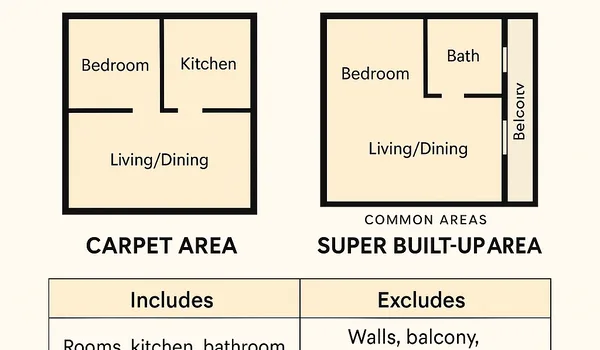
Stilt parking sits on the ground floor of the building under the living floors, with the building raised on stilts or columns. It is covered in the sense that the floor above provides shelter, but it may be exposed on the sides to rain and wind depending on the design. Podium parking is a variant where a multi-storey parking deck forms the plinth of the building; flats sit above the podium and parking is on the podium levels, typically covered. Both stilt and podium are common in mid-range projects and offer reasonable protection. Open or surface parking, by contrast, is an exposed ground-level bay with no overhead cover - least preferred for obvious reasons. The relationship between parking type and the amount of usable carpet area in a flat is worth reading about in the carpet area vs super built-up area guide, since parking decks are sometimes included in the super built-up area calculation.
Bottom line: basement parking is generally the most protected and convenient, followed by podium/stilt; open parking is the least preferred - confirm the exact type and level of your allotted parking before you sign the agreement.
How Parking Is Priced and What to Negotiate
Pricing for parking across the Devanahalli corridor varies by project, builder and the type of spot. For a covered basement or podium spot that is the first allotted spot with a flat, the cost is often bundled into the flat price or shown as a nominal charge that is disclosed in the cost sheet. For additional spots - if a buyer wants two covered spots for a 3 BHK flat, for instance - the second spot is typically priced separately, and that price can range from a few lakhs upward depending on the project and the level. For open spots, a smaller charge or a maintenance deposit is common. All of these are indicative patterns rather than fixed rules: confirm the exact pricing in the project's cost sheet.
A few things to negotiate or at least clarify before you commit. First, confirm whether the parking allotment is fixed (a specific bay number assigned to you permanently) or floating (you get one of a pool of spots, first-come first-served each day). Fixed allotment is clearly preferable and is what most premium projects offer for covered spots, but not all projects guarantee it. Second, ask whether the basement or podium level assigned is ground-access-friendly: a spot two or three basement levels down may be technically included but practically inconvenient if the lifts are slow or the ramp design is poor. Third, confirm whether the parking is recorded in your sale deed as an annexure, since parking that is not in the registered document can become a source of disputes at resale.
Bottom line: parking pricing ranges from bundled-into-flat to a separate charge depending on the project - confirm the cost, whether allotment is fixed or floating, and that the spot is documented in the sale deed before signing.
EV Charging Points and Future-Ready Parking
With electric vehicle adoption growing, EV-ready parking has become a meaningful consideration for apartment buyers in 2026. Projects in the Devanahalli corridor vary considerably in what they offer: some have installed dedicated EV charge points in basement bays, others have laid conduit (empty pipe or tray) so that a charger can be added without major civil work later, and some older designs have no provision at all. Whether a project is genuinely EV-ready is worth confirming rather than assuming, because retrofitting a basement for EV charging after construction is substantially more expensive and disruptive than laying the conduit during the build.
When evaluating a project, ask specifically what EV provision is included in your parking bay, not just in the common area. A project may have a common EV charging station near the parking entry without providing individual bay-level conduit, which means you queue for a shared charger rather than charging from your own spot. Individual bay conduit or a dedicated charge point per bay is the more future-proof provision. Also ask about the charging tariff: some societies pass through the electricity cost directly, others have a per-unit charge managed by the association, and the structure of that cost can affect what you pay to run an EV. The ongoing cost of EV charging will eventually feed into the society maintenance bill in some form, so it is worth understanding the model upfront.
Bottom line: confirm whether your specific parking bay has an EV charge point or conduit provision, not just a common-area charger, and ask how the charging cost is billed - individual bay-level provision is the most convenient future-proofing.
Parking Documents and Transfer at Possession
The paperwork trail for your parking spot matters nearly as much as the spot itself. At the time of booking, you should receive (or the allotment should be stated in) the agreement to sell, specifying the number of parking spots, their type and, where possible, the bay number. This is your primary record that parking is part of your purchase. Keep this document carefully, because at possession any discrepancy between what was agreed and what is offered becomes a dispute that is much easier to resolve when you have the written record.
At the time of registration of the sale deed, the parking allotment is typically recorded as an annexure or schedule to the registered document. This is the legally binding record of your right to that parking spot. Confirm with the builder that the parking details - spot number, type and level - will appear in the registered sale deed rather than only in a separate allotment letter that is not part of the registered document. A parking spot that is documented only in an informal letter but not in the sale deed can be harder to enforce, particularly at resale when the new buyer's bank may scrutinise the title documents.
After possession and society formation, the association typically maintains a parking register. In some projects, parking spots can be reassigned or swapped with mutual consent through the association, but the original registered allotment is the baseline from which any such arrangement proceeds. For a full picture of what to check and confirm during the possession process, the apartment possession and handover guide covers the full checklist including parking verification at the time of handover.
Bottom line: ensure parking details are stated in both the agreement to sell at booking and as a registered annexure to the sale deed at possession - documentation in the registered deed is what makes the allotment legally enforceable.
Parking for a Pre-Launch Flat like Prestige Devanahalli
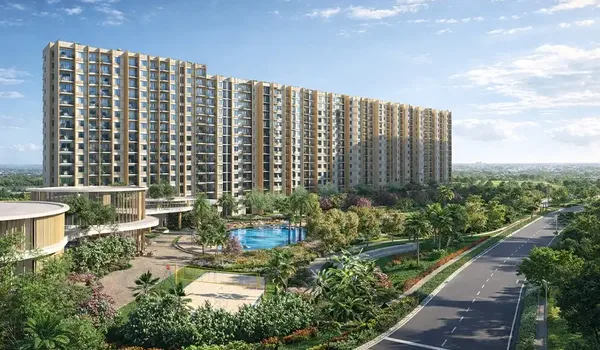
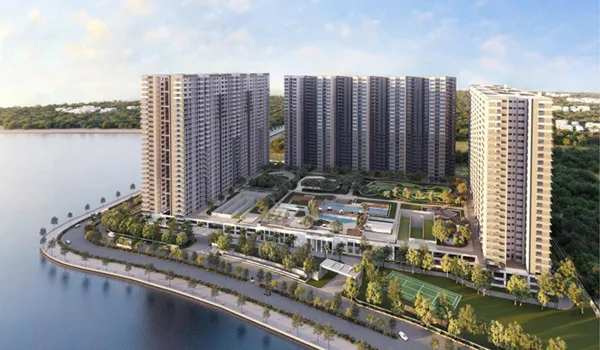
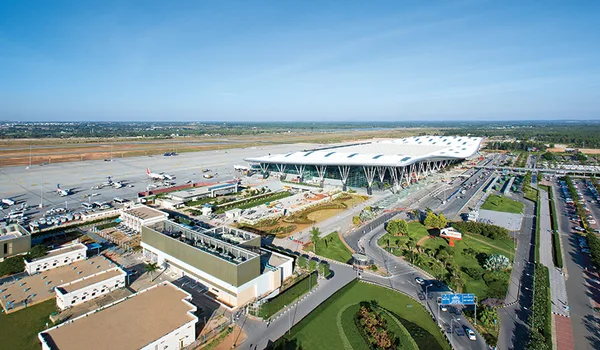
Prestige Devanahalli, by Prestige Group, is a pre-launch project at Poojanahalli on NH-44 in North Bengaluru, adjacent to Kempegowda International Airport and the KIADB Aerospace Park. It offers 1, 2 and 3 BHK homes with 1 BHK from ₹61.75 L and possession indicated from Dec 2030. The K-RERA application is in process - verify the current registration status on the K-RERA portal before you commit.
At the pre-launch or booking stage, parking details should be clearly set out in the cost sheet and the agreement to sell. For a project by a builder of Prestige Group’s scale, covered basement or podium parking is the norm and the allotment terms are typically structured. Confirm the number of spots per configuration (a 1 BHK may carry one spot; a 3 BHK may carry one covered and one optional open), the cost if any is charged separately, whether allotment is fixed to a bay number or floating, EV charging provisions in the basement, and how parking is documented at the sale-deed stage from Dec 2030. For indicative pricing context, the price list provides the current cost sheet reference point. At this pre-launch stage, everything including parking terms should be confirmed directly with the sales team rather than assumed from the general norms described on this page.
Bottom line: for a pre-launch flat like Prestige Devanahalli, confirm parking type, allotment method, cost, EV provision and documentation in the cost sheet and agreement to sell - and verify K-RERA registration status before committing.
Frequently Asked Questions
1. Is covered parking mandatory under RERA?
Under RERA, a builder cannot charge separately for the parking allotted with a flat, and one covered spot is generally expected for a bedroom unit - confirm the exact allotment terms with the builder and check the allotment letter.
2. Can a builder price open parking separately?
Open parking may be priced or allotted separately from the flat; the applicable rules differ - confirm the parking terms and cost in your cost sheet before booking.
3. What types of parking are common in Devanahalli apartments?
Projects in the area typically offer basement, stilt or podium parking and open surface parking; covered basement or podium parking is preferable - confirm the type, level and allotment process with the builder.
4. What do EV charging provisions mean for a flat buyer?
EV-ready parking includes conduit or charge points in the bay; some projects include it in maintenance, others may charge separately - confirm what is provided and what the charging tariff is with the builder.
5. How is parking transferred at possession?
The parking allotment is documented in your allotment letter and typically recorded as an annexure to the registered sale deed at possession - confirm the documentation process with the builder at handover.
6. What should I check about parking for a pre-launch flat?
Confirm the number of parking spots allotted, the type (covered or open), the cost if any, EV provisions and how allotment is done (fixed, lottery or choice) - these details should be in the cost sheet and the agreement to sell.
Conclusion
Parking for apartments in Devanahalli comes down to a few clear questions: how many spots are allotted, what type they are, what they cost, whether the allotment is fixed to a bay number, what EV provision exists, and whether all of this is written into the registered sale deed. RERA has made parking terms more transparent, but the details differ project by project - the only reliable source is the cost sheet and the agreement to sell for the specific flat you are buying. A covered, fixed-allotment basement spot that is documented in the sale deed is the most robust outcome; an informal floating arrangement that exists only in a separate letter is far weaker.
For a pre-launch flat like Prestige Devanahalli, parking details should be confirmed in the cost sheet before booking and in the agreement to sell before you commit funds. At possession from Dec 2030, check that the bay number and type match what was agreed and that the details appear in the registered sale deed as an annexure. On the broader due-diligence picture, verify K-RERA registration before committing.
Prestige Devanahalli Blog