Green Building & Eco-Friendly Apartments in Devanahalli 2026
Published 15 Jul 2026 · Last updated 15 Jul 2026
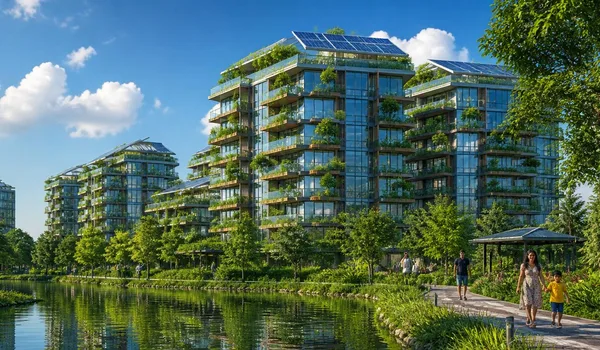
Sustainability has moved from a marketing tagline to a practical buying criterion in the Bengaluru apartment market. Buyers in 2026 increasingly ask about energy bills, water security and the long-term cost of living in a flat - and green building features directly determine the answers to those questions. In Devanahalli, the North Bengaluru corridor that has grown rapidly around Kempegowda International Airport, newer residential projects are incorporating sustainability features driven by a combination of regulatory requirements, builder differentiation and buyer demand. This guide explains the key green building concepts - IGBC and GRIHA ratings, solar power, rainwater harvesting, sewage treatment plants, EV charging and landscaping - and what a buyer should specifically ask a builder before committing to a flat in this corridor.
The water supply picture for North Bengaluru is covered separately in the water supply and utilities guide. This guide focuses on the design and sustainability features of the project itself rather than the external utility infrastructure.
What Is a Green Building? IGBC and GRIHA Ratings Explained
| Rating System | What It Assesses | Levels |
|---|---|---|
| IGBC (Indian Green Building Council) | Energy efficiency, water conservation, site selection, materials, indoor quality | Certified / Silver / Gold / Platinum |
| GRIHA (Green Rating for Integrated Habitat Assessment) | Site planning, energy, water, materials, indoor environment, innovation | 1 Star to 5 Star |
| BEE Star Rating (for buildings) | Energy efficiency of the building envelope and systems | 1 to 5 Stars |
A green building certification is a third-party assessment that a project has been designed and built to reduce its environmental footprint. IGBC and GRIHA are the two most commonly referenced systems in Indian residential real estate. Both evaluate a project across multiple dimensions - how efficiently it uses energy and water, what materials went into its construction, how well it manages waste and sewage, and how comfortable and healthy the indoor environment is. A higher rating generally correlates with lower monthly utility bills for residents (because common-area electricity and water costs are lower), lower maintenance charges over time, and a healthier living environment. It can also support resale value in a market where buyers increasingly weigh ongoing costs alongside the purchase price.
Not all projects in Devanahalli are formally rated, and some may incorporate individual green features without seeking a formal certification. What matters for a buyer is less the certification label and more the specific features - solar, STP, RWH, EV charging - that are actually in the project plan. Confirm the current certification status and the specific sustainability features with the builder, and check whether the certification is at the design stage or post-construction, since design-stage ratings can change during execution.
Bottom line: IGBC/GRIHA ratings indicate a project has been designed to sustainability standards - confirm the rating level, whether it is a design-stage or completed certification, and the specific features that underpin it, with the builder before booking.
Solar Power and Energy-Efficient Design in Residential Projects
Solar photovoltaic panels on rooftops and podium-top areas are now a near-standard feature in larger gated community projects in Bengaluru, driven partly by BESCOM incentives for net metering and partly by the direct economics: a well-sized solar system in a Bengaluru location with good annual sunshine hours can meet a meaningful share of the common-area electricity demand - lifts, corridor lighting, pump rooms, clubhouse - and reduce the society's monthly electricity bill materially. The saving is then passed through as a lower maintenance levy for residents, which makes the in-complex solar system a tangible financial benefit rather than just a green credential.
Beyond rooftop solar, energy-efficient design in the building itself matters: glazing that reduces heat gain (so units need less air conditioning), efficient LED lighting throughout common areas, variable-frequency drives on lifts and pumps, and - in better projects - building energy management systems that optimise consumption automatically. For a project in the Devanahalli corridor that will be handed over in late 2030, buyers should ask specifically what the solar system capacity is (in kWp), what it powers (common areas only, or individual flat provision as well), and whether net metering is proposed. They should also ask about the glazing specification and whether there is any certification of the building envelope's thermal performance.
Bottom line: rooftop solar for common areas is now a widely available feature in Bengaluru gated communities - confirm the system capacity (kWp), what it powers, whether net metering applies, and the building's energy-efficiency specifications with the builder.
Rainwater Harvesting, Water Recycling and STP in Apartments
Water security is one of the more acute concerns for apartment buyers in the Devanahalli-North Bengaluru corridor, where dependence on borewell supply and distance from the Cauvery network create a genuine water-reliability question. Green building features that address water internally - rainwater harvesting, sewage treatment plants and treated water recycling - are therefore more than sustainability credentials in this location: they are practical insurance against the utility supply variability that characterises peri-urban Bengaluru. A project with a well-sized rainwater harvesting (RWH) system and an STP that recycles treated water for flushing and landscaping is materially less dependent on external water supply than one without these systems.
Rainwater harvesting in an apartment complex collects rainfall from rooftops and paved areas, channels it through filters and stores it in sumps for reuse or allows it to percolate into the ground to recharge the borewell aquifer. Karnataka's BBMP/BDA building regulations require RWH for larger buildings, so it is a baseline expectation in new gated communities in this zone. A sewage treatment plant (STP) treats the complex's wastewater to a standard where it can be reused for toilet flushing (which accounts for roughly 30% of a typical household's water use) and landscape irrigation, significantly reducing the fresh water demand of the entire township. Confirm the RWH system's capacity (in litres per day of collection), the STP's treatment capacity (KLD - kilolitres per day), and what the treated water is used for, with the builder. Also ask about the borewell count and depth, since these remain the fallback source for most peri-urban Bengaluru projects.
Bottom line: RWH and STP are practical water-security features in the Devanahalli corridor, not just green credentials - confirm RWH collection capacity, STP treatment capacity (KLD) and the end-use of treated water with the builder.
EV Charging Provisions and Sustainable Parking in 2026
Electric vehicle adoption in Bengaluru has accelerated significantly over the past two to three years, and the question of EV charging in a new apartment complex is now a standard part of the apartment-buying conversation. For a project like Prestige Devanahalli with possession from late 2030, EV charging infrastructure is not an optional upgrade but a practical necessity: a meaningful fraction of the residents who take possession in 2030-2031 will own or plan to own an electric vehicle, and a complex without adequate charging infrastructure will face a retrofit challenge that is both expensive and disruptive.
The parking norms and what RERA mandates about parking allotment are covered in the parking norms and charges guide. From a green building perspective, the relevant questions are: does each parking bay have an EV charging provision (conduit and meter point, even if the charger unit is not installed), or are EV chargers limited to specific designated bays? What type of charger is being provided - an AC slow charger (typically 3.3 kW or 7.4 kW) that charges overnight, or a faster option? How is the electricity for EV charging metered and billed - through the society common meter or through an individual sub-meter for each bay? A conduit-ready design (where each bay has a conduit run for future charger installation, even without a charger at possession) is the practical minimum for a 2026 pre-launch project; dedicated charging bays with installed chargers are a stronger feature. Confirm all EV charging specifications with the builder, including the charger type, the ratio of EV bays to total parking and the billing arrangement.
Bottom line: EV charging infrastructure is a practical 2026 requirement for a project handing over in 2030 - confirm whether each bay is EV-ready or charger-installed, the charger type and capacity, and the billing arrangement, with the builder.
Green Cover, Landscaping and Air Quality in Devanahalli Projects
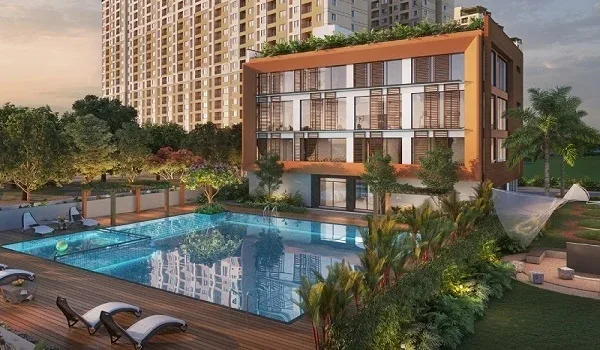
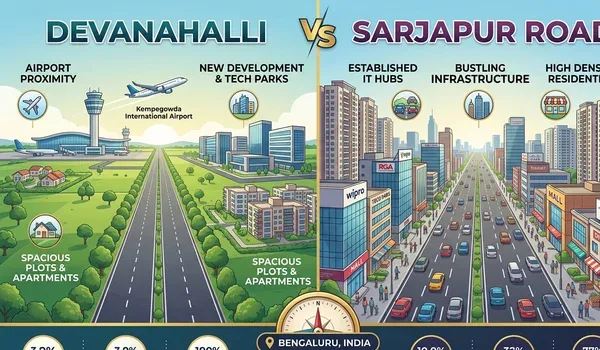
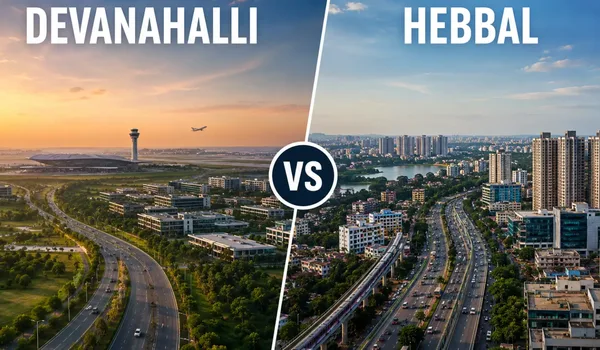
One of the underappreciated sustainability advantages of the Devanahalli corridor over denser inner-Bengaluru micro-markets is the land availability that allows genuinely generous green cover within project layouts. A gated community project at Poojanahalli or Devanahalli is likely to have a larger plot relative to the number of units than an equivalent project in Hebbal or Sarjapur, which translates to more open space, wider setbacks, more trees and a lower surface temperature within the complex. Surface temperature and tree cover directly affect the air conditioning demand of individual apartments and the thermal comfort of common areas and walkways - making green cover a material quality-of-life factor, not just a visual amenity.
Buyers should ask for the open-space-to-total-plot ratio, the number and type of trees planned in the landscape design, and whether the landscape specification uses native and drought-tolerant species (which require less irrigation) or exotic species that need intensive watering. Native trees also support local biodiversity and bird life, which is a livability factor that many buyers value for families with children. The air quality in the Devanahalli-NH-44 belt is generally better than in central Bengaluru, with lower vehicular exhaust density and more green buffer - a genuine advantage that is partly maintained by the relative lower density of construction in the zone. Confirm the landscape design, open-space ratio and species list with the builder, and ask whether there is a formal urban-forest or green cover commitment in the project's RERA documentation.
Bottom line: the Devanahalli corridor allows more generous green cover per unit than denser inner-city sites - confirm the open-space ratio, tree count and species list, and whether there is a formal green cover commitment in the RERA filings, with the builder.
What Buyers Should Ask About Green Features - Prestige Devanahalli
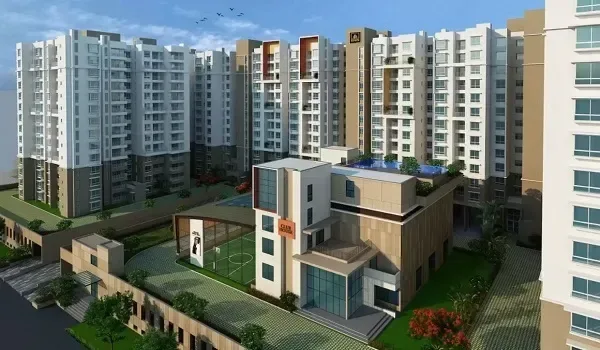
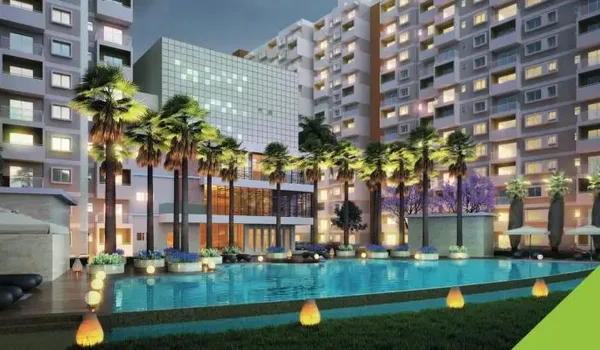
Prestige Devanahalli, by Prestige Group, is a pre-launch project at Poojanahalli on NH-44, adjacent to Kempegowda International Airport and the KIADB Aerospace Park, offering 1, 2 and 3 BHK homes from ~₹61.75 L with possession indicated from Dec 2030. The K-RERA application is in process - verify the current registration status on the K-RERA portal before you commit.
Prestige Group has a track record of incorporating green building features in its township projects, and buyers should ask specifically about the following before booking:
- Is the project targeting IGBC, GRIHA or another green certification? If so, at what rating level, and is it a design-stage or post-construction certification?
- What is the rooftop solar system capacity (kWp), what does it power, and does net metering apply?
- What is the STP capacity (KLD), and what is the treated water used for?
- What is the rainwater harvesting system's collection capacity?
- Is every parking bay EV-ready (conduit and sub-meter), or are EV chargers provided only at designated bays?
- What is the open-space ratio and the landscape species list?
These questions should be posed directly to the sales team and backed by written confirmation in the agreement to sell or the specifications document, since pre-launch marketing communication sometimes describes features at a level of generality that makes verification difficult at possession. For pricing details and flat configurations, see the price list.
Bottom line: confirm all green building commitments in writing with the builder - solar capacity, STP, RWH, EV charging specification, open-space ratio and any certification level - and verify K-RERA registration on the K-RERA portal before booking.
Frequently Asked Questions
1. What is an IGBC or GRIHA rating for a residential project?
IGBC (Indian Green Building Council) and GRIHA (Green Rating for Integrated Habitat Assessment) are voluntary sustainability rating systems that assess a building on energy efficiency, water conservation, materials and indoor air quality - a higher rating generally indicates lower operating costs and a smaller environmental footprint; confirm the current certification status and rating level with the builder.
2. Do apartments in Devanahalli have solar power?
Many newer gated community projects in the Devanahalli corridor include rooftop solar panels for common-area lighting; some also offer solar provision for individual apartments - confirm the solar system capacity, what it powers and how savings are shared, with the builder before booking.
3. What is rainwater harvesting in an apartment complex?
Rainwater harvesting collects and stores rainfall from rooftops and paved areas, which can be treated and reused for flushing, landscaping and groundwater recharge - reducing dependence on BWSSB or borewell supply; confirm the capacity and end-use with the builder.
4. Is EV charging available in Devanahalli apartments?
Newer residential projects in the Devanahalli corridor increasingly include EV charging provisions in parking bays; confirm the type of charger provided (AC slow or DC fast), the charging tariff and the number of charging points relative to flat count with the builder.
5. Why does green building matter for maintenance charges?
Energy-efficient design, solar power for common areas, LED lighting and efficient pumps reduce the society’s electricity bill and in turn lower monthly maintenance charges; a green-rated building typically has lower common-area running costs than a comparable non-rated building.
6. Is Prestige Devanahalli a green-rated project?
Confirm the current green certification status and rating level - IGBC, GRIHA or any other certification - directly with Prestige Group, as certification details may vary between the pre-launch communication and the final approved plan.
Conclusion
Green building features - IGBC/GRIHA certification, rooftop solar, rainwater harvesting, sewage treatment plants, EV charging provisions and native-species landscaping - are increasingly practical considerations for apartment buyers in Devanahalli, not merely aspirational ones. The corridor's water-supply situation makes RWH and STP more than sustainability credentials; the pace of EV adoption means EV-ready parking is a near-necessity for a project handing over in 2030; and solar panels for common areas directly lower the monthly maintenance bill that residents will pay for the life of the complex.
For a pre-launch project like Prestige Devanahalli, the key action for a buyer is to get all green commitments in writing - the certification target, the solar capacity, the STP and RWH specifications, the EV charging arrangement and the open-space ratio - before signing the agreement to sell. Verify K-RERA registration on the K-RERA portal, and for the broader utility infrastructure context refer to the water supply and utilities guide.
Prestige Devanahalli Blog