Resale Apartment Buying Guide for Devanahalli 2026
Published 17 Jul 2026 · Last updated 17 Jul 2026

Not every buyer in Devanahalli wants a pre-launch flat with a four-year wait for possession. Some buyers need to move in now, or want to see what they are buying before they pay. Others see value in an already-established building with a functioning society, a visible track record and a Khata already in the seller's name. The resale or secondary market for apartments in Devanahalli covers all of these scenarios - and it requires a different due-diligence checklist than buying a new flat from a builder.
This guide covers the entire resale buying process: what to expect from the Devanahalli secondary market, the legal and document checks that protect you from encumbrances or title defects, the physical inspection you should always do before buying a used flat, the financial mechanics of pricing and home loans, and how to compare a resale flat against a new or pre-launch option. For title-document checks, the Khata and property documents guide and the Encumbrance Certificate guide give full detail on those specific documents. For the pre-purchase checklist that applies to any Devanahalli flat purchase, see things to check before buying an apartment in Devanahalli. Confirm all steps, documents and costs with a property lawyer before you proceed - a resale purchase has more legal complexity than a new-project booking, and the cost of a lawyer's review is small relative to the cost of getting a step wrong.
Resale Apartment Market in Devanahalli - What to Expect
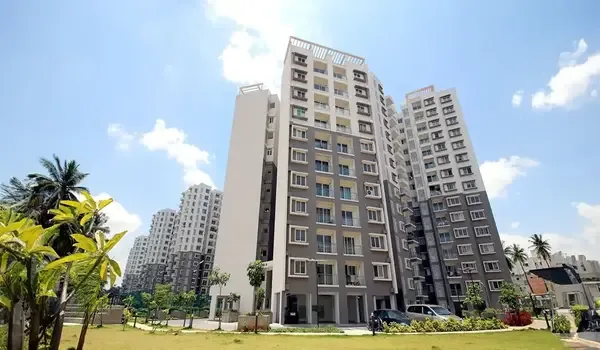
The resale market in Devanahalli in 2026 reflects the corridor's age profile. The oldest completed residential projects in the Devanahalli-Poojanahalli belt are roughly 8-15 years old, dating from the first wave of airport-corridor residential development. More projects have completed in the 2018-2024 period. This means resale buyers have access to flats in buildings that are established but not aged - most are in the early-to-mid part of their structural life, with functioning lifts, societies and common areas.
Resale prices in Devanahalli are typically higher per square foot than pre-launch pricing for equivalent configurations in new projects, for two reasons: the buyer gets immediate occupancy and a physical property they can inspect, and the location premium for established projects near the airport has been validated by actual demand. However, resale flats do not carry GST (since the first sale has already happened), which reduces the effective price difference somewhat.
The Devanahalli resale market is thinner than the resale markets in Hebbal, Yelahanka or Whitefield - fewer transactions happen, so prices can be more negotiable and the due-diligence process more important. There is less liquidity in this market, which means both that buyers can sometimes find good value and that sellers may have less comparable-sale data to anchor their pricing. Engage a local broker who knows the specific building and its transaction history, and confirm the fair market value with a licensed property valuer if you are taking a home loan (banks typically require their own valuation).
Title and Legal Checks for a Resale Flat in Devanahalli
The most important step in any resale purchase is establishing that the seller has clean, marketable title to the property and that no encumbrances (mortgages, court attachments, disputed claims) exist against it. This requires a title investigation by a qualified property lawyer, not a self-check. The lawyer will examine the chain of title documents from the builder's original land ownership through to the current seller, verify the Encumbrance Certificate (EC) from the sub-registrar, check for any court orders or attachments, and confirm that the property matches the approved building plan and has an Occupancy Certificate.
Key documents to check include:
- Title deed (sale deed) and mother deed chain - confirms the ownership history from the original land owner to the current seller
- Encumbrance Certificate (EC) for at least the past 15-30 years - confirms no mortgage, lien or attachment exists on the property; get this from the Kaveri online portal or sub-registrar office
- Khata certificate and extract - confirms the property is in the seller's name in civic records and that property tax has been paid
- Occupancy Certificate (OC) - confirms the building was completed as per approved plans and is legally fit for occupation
- Sanctioned building plan - confirms the building was constructed with valid approval
- RERA registration certificate of the project - confirms the project was RERA-registered; verify on the K-RERA portal
- Society share certificate and NOC - confirms your flat's share in the Resident Welfare Association and that the society has no dues outstanding against the seller
- No-due certificate from the builder (if applicable) - confirms the seller has no outstanding dues to the builder
- Bank NOC - if the seller has an existing home loan on the flat, you need the lender's No Objection Certificate confirming the loan will be closed before or at registration
Do not rely on the seller or broker to provide all of these - engage your own lawyer to independently verify each document. Confirm the full document list, the process for each verification, and the expected timeline with the lawyer before you sign the Agreement to Sell.
| Document | What It Confirms | Where to Get / Verify |
|---|---|---|
| Sale deed and mother deed chain | Ownership history, clear title | From seller; verify with lawyer |
| Encumbrance Certificate (EC) | No mortgage or encumbrance | Kaveri online portal / sub-registrar office |
| Khata certificate and extract | Civic record in seller's name, property tax paid | BBMP or gram panchayat office |
| Occupancy Certificate (OC) | Building legally fit for occupation | From builder / local planning authority |
| RERA registration | Project was RERA-registered | K-RERA portal (rera.karnataka.gov.in) |
| Society share certificate and NOC | No outstanding dues, membership confirmed | Resident Welfare Association / society |
| Bank NOC (if seller has existing loan) | Lender will not pursue the flat after sale | Seller's bank |
Physical and Structural Inspection Before Buying Resale
Unlike a new flat where you buy based on floor plans and builder representations, a resale flat can and should be physically inspected before you commit. This is one of the key advantages of the resale route - you see the actual flat, not a sample unit or a brochure. Make the most of this advantage by doing a thorough inspection before signing the Agreement to Sell.
A physical inspection of a resale flat should cover:
- Structural condition: look for cracks (especially diagonal cracks in walls, which can indicate structural stress), water stains on ceilings and walls (indicating leakage from above or from the slab), and dampness in corners
- Plumbing: run all taps and check water pressure and flow; check under-sink pipes for any leaks or staining; check the flush tanks and drainage speed
- Electrical: check all switches and points; check the consumer unit/MCB box for the flat; check if sufficient power points exist for modern appliances and WFH use
- Windows and doors: check for smooth operation, proper sealing against monsoon rain, and any warping or alignment issues
- Floor and tile condition: look for cracked or hollow tiles (tap gently - a hollow sound indicates the tile has come off the adhesive), uneven flooring, and grout deterioration
- Common areas: check lifts (service frequency, maintenance), fire-safety equipment, parking allocation and condition, and the general upkeep of the building - this reflects the society's management quality
- Age-specific concerns: for buildings over 10 years old, ask about waterproofing re-treatment history, terrace leakage repairs, and major common-area maintenance done
If you are not confident in your ability to assess structural or MEP (mechanical, electrical, plumbing) condition, engage a professional snagging inspector - a structural engineer or a reputed home inspection service. The cost is typically modest relative to the transaction value and can save you from inheriting hidden defects. Confirm the inspector's credentials and the scope of their report before you hire them.
Price Negotiation and Home Loan for a Resale Apartment
Resale flat pricing in Devanahalli is set by the seller (unlike new projects where the builder's price list governs). This creates room for negotiation, particularly if the seller is motivated (relocating, upgrading, or needs liquidity). Factors that strengthen your negotiating position include: a quick payment timeline, a pre-approved home loan, the seller's days-on-market (longer time on market = more flexibility), and visible defects discovered in the physical inspection that will require your expenditure to fix.
For price benchmarking, compare recent transactions in the same building or adjacent buildings through local brokers, the K-RERA portal's transaction records (where available), or government guidance value (the sub-registrar's notified floor price). The guidance value is the minimum on which stamp duty is calculated - if the market price is higher than guidance value, duty is paid on the market price. Confirm both the current market price and the guidance value with your broker and lawyer.
Home loans for resale flats are available from all major banks and housing finance companies. The key differences from a new-project loan: the bank conducts a legal appraisal of the title documents and a technical appraisal (physical inspection and valuation) before sanctioning. The LTV (loan-to-value) ratio on resale flats is typically similar to new flats but can be lower for older buildings - confirm with your lender. If the seller has an existing home loan, the purchase process involves the seller's bank issuing an NOC and your bank disbursing the loan amount partly to close the seller's outstanding loan and the balance to the seller. This "balance transfer" mechanism is standard but requires coordination between two banks; confirm the exact process with your lawyer and lender before you begin.
Registration costs (stamp duty and registration charges) for a resale flat are identical to a new flat purchase - Karnataka stamp duty plus the sub-registrar's registration fee, both on the higher of the transaction value and the guidance value. There is no GST on a resale flat (the first sale attracted GST, this secondary sale does not). Confirm the current stamp duty percentage with the sub-registrar or a lawyer.
Khata Transfer and Post-Purchase Steps for Resale Property
After the sale deed is registered in your name at the sub-registrar's office, a series of post-purchase administrative steps are required to establish your ownership in civic and utility records. The most important of these is Khata transfer.
Khata transfer is the process of getting the property's entry in the BBMP (or gram panchayat, depending on jurisdiction) records updated from the seller's name to yours. It is a separate process from registration - registration establishes legal ownership through the registered sale deed, while Khata establishes civic ownership (the basis for property tax assessment, utility connections and building permissions). Without Khata in your name, you cannot easily pay property tax, apply for a BWSSB water connection, or get building-modification permissions.
The Khata transfer process requires: the registered sale deed, a copy of the previous Khata (seller's), property tax payment receipts, and an application to the relevant civic authority. The process and timeline vary by jurisdiction (BBMP vs gram panchayat for Devanahalli's rural areas vs BWSSB areas) - confirm the exact process, document list and expected timeline with the relevant office and a property lawyer. Post-transfer, apply for mutation (change of name in revenue records) if applicable.
Other post-purchase steps include: obtaining a society share certificate in your name, updating the utility accounts (electricity/BESCOM, water) to your name, taking possession of original documents from the seller (the full title deed chain and OC should come to you as the new owner), and settling the society's advance maintenance deposit if the seller has not done so.
Resale vs New or Pre-Launch near Prestige Devanahalli
Prestige Devanahalli, by Prestige Group, is a pre-launch project at Poojanahalli on NH-44 offering 1, 2 and 3 BHK apartments from ~₹61.75 L with possession indicated from Dec 2030. K-RERA application is in process - verify on the K-RERA portal. For current pricing, see the price list.
The resale vs new/pre-launch question for a Devanahalli buyer comes down to four factors:
| Factor | Resale Flat | New / Pre-Launch (e.g. Prestige Devanahalli) |
|---|---|---|
| Occupation timeline | Immediate - move in after registration | Wait for possession (from Dec 2030 for pre-launch) |
| Price point | Higher per sq ft; no GST; stamp duty on full price | Lower entry pricing at pre-launch; GST on under-construction; stamp duty at registration |
| Appreciation potential | Moderate - already priced in part of the growth story | Higher - pre-launch buyers capture more of the corridor's appreciation |
| Physical verification | Can inspect the actual flat before buying | Buy on plans; verify builder track record and RERA compliance |
| Legal complexity | Higher - full title chain, EC, OC, existing loan checks needed | Lower for new projects - builder holds title until registration |
| Amenity access | Immediate access to existing clubhouse, pool, gym | Amenities completed with the project at possession |
| Building age | 8-15 years for established Devanahalli projects | New build; full structural life ahead |
For a buyer who needs to occupy the flat within the next 12-18 months, a resale flat is the practical option in Devanahalli - there are no new projects that can offer possession on that timeline in this corridor. For a buyer who can wait until 2030 and wants lower entry pricing, stronger appreciation potential and a brand-new building, a pre-launch project is the better fit. There is no universally correct answer - match the option to your own timeline, budget and risk tolerance.
Frequently Asked Questions
1. What is a resale apartment and how is it different from a new flat?
A resale apartment is a flat that has been previously owned and is being sold by the current owner rather than the builder - it is part of the secondary market. Unlike a new flat purchased directly from a builder, a resale flat has an existing title chain, may have an existing home loan, and does not attract GST but does attract full stamp duty and registration charges.
2. What documents should I check before buying a resale flat in Devanahalli?
Key documents to verify include the title deed and mother deed chain, the Encumbrance Certificate (EC) for the past 15-30 years, the Khata certificate and extract, the Occupancy Certificate, the approved building plan, the RERA registration of the project, and the society NOC - confirm the full list and their current validity with a property lawyer before signing any agreement.
3. Can I get a home loan for a resale apartment in Devanahalli?
Yes - home loans are available for resale apartments from most banks and housing finance companies; the lender will conduct their own legal and technical appraisal of the property before sanctioning the loan; confirm eligibility, LTV ratio and processing timeline with your preferred lender.
4. What is Khata transfer and why does it matter for a resale flat?
Khata transfer is the process of getting the civic authority's property record updated from the seller's name to your name after purchase; it is required to pay property tax, apply for utility connections and establish your ownership in the civic records - confirm the process and documents with the relevant BBMP or gram panchayat office and a property lawyer.
5. How is the price of a resale flat decided?
Resale flat prices in Devanahalli are determined by the market - factors include the building's age, floor, view, furnishing level, maintenance condition, remaining loan (if any), and proximity to key amenities; confirm the fair market value with a local property consultant or by comparing recent transactions in the same building or area.
6. Is a resale apartment better than buying a new pre-launch flat in Devanahalli?
Resale offers immediate occupancy, visible physical condition and an existing title chain but is typically priced higher per square foot than a pre-launch flat and has a shorter residual age; a pre-launch flat like Prestige Devanahalli offers lower entry pricing and appreciation potential but involves a wait for possession from late 2030 - the right choice depends on your occupation timeline, budget and risk appetite; confirm with a financial advisor.
Conclusion
Buying a resale apartment in Devanahalli in 2026 offers genuine advantages for the buyer who needs to occupy a flat immediately or wants to see and inspect what they are buying before committing. The corridor has a supply of established resale flats from the 2010-2020 build-up of the airport-area residential market, with buildings in the early-to-mid part of their structural life. The due-diligence process is more demanding than a new-project booking - title checks, EC verification, physical inspection, home loan coordination and Khata transfer all require attention and professional guidance.
The trade-off against a new or pre-launch flat is primarily one of timeline and price: resale flats offer immediate occupancy at a higher per-square-foot price with no GST, while pre-launch flats offer lower entry prices and stronger appreciation potential with a four-year wait for possession. Engage a property lawyer for the legal checks, a physical inspector for the structural assessment, and compare both routes honestly before you decide.
Prestige Devanahalli Blog