Work from Home Apartments - What to Look for near Devanahalli 2026
Published 17 Jul 2026 · Last updated 17 Jul 2026

The shift to hybrid and work-from-home arrangements has permanently changed the apartment buying checklist for a significant share of Bengaluru's IT and professional workforce. An apartment that was perfectly adequate for a resident who spent 8-9 hours at the office every day becomes inadequate quickly when that resident is working from the same four walls. The questions that matter have expanded: Is there a dedicated study room? Is fibre internet available here? What is the power backup scope during grid outages? How noisy is the building during working hours?
For buyers evaluating projects in Devanahalli and the NH-44 airport corridor, these WFH considerations have an additional dimension: the corridor is a growth area, not a mature neighbourhood, and some WFH-relevant infrastructure (fibre availability, service quality, building soundproofing standards) varies more widely here than in established Bengaluru localities. This guide covers what to specifically check when evaluating a WFH apartment in the Devanahalli corridor. For configuration decisions (2 BHK vs 3 BHK and whether you need a dedicated room), see the 2 BHK vs 3 BHK guide. For understanding how much space you are actually getting in a flat, see the carpet area guide. For fitting out a study room, see the interior design cost guide.
WFH Demand and the Devanahalli Airport Corridor
The Devanahalli corridor's residential demand has always been driven substantially by airport-adjacent employment - KIADB Aerospace Park, the airport operations workforce, and the logistics and aviation sector. But the second wave of demand has come from IT and knowledge-sector professionals who work for companies in Manyata Tech Park, Karle Town Centre, Kirloskar Business Park and the city's central business districts, and who are willing to live in a growth corridor 20-35 km from the office because they only commute 2-3 days a week.
For this buyer segment, the WFH environment quality inside the flat matters as much as the proximity to the office. They are evaluating two homes simultaneously: the office they go to 2-3 days a week, and the home office where they spend the other 2-3 working days. This guide is written for that buyer. The criteria below are in rough order of importance for a sustained WFH setup, though individual circumstances vary.
Dedicated Workspace and Study Room - What Matters
The single most important WFH upgrade in a flat is a dedicated workspace - a room or a clearly defined space that is separated from the bedroom, living room and kitchen. Working from the dining table or the bedroom creates the well-documented problem of never mentally leaving work; a physically separate space for work is the most effective thing an apartment can provide for a hybrid-worker's productivity and wellbeing.
In the context of Devanahalli apartments, this typically means:
- 3 BHK with a study: some builders offer 3 BHK layouts with a small separate study room (sometimes called a multipurpose room or utility room); this is the dedicated WFH space in the most practical form
- 3 BHK without a study: one of the three bedrooms becomes the study/home office; works well if the household does not need all three bedrooms for sleeping
- 2 BHK: a dedicated study within a 2 BHK is rare; most 2 BHK WFH setups use a corner of the master bedroom or a portion of the living room - functional but not ideal for long work days with video calls
- 1 BHK: WFH in a 1 BHK requires creative use of the single room or balcony - workable for single occupants with disciplined schedules, but difficult for households with more than one person at home
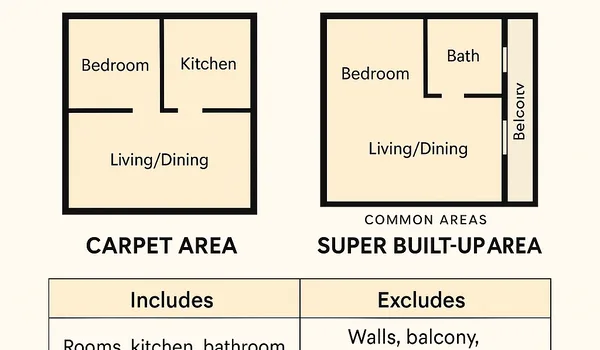
When evaluating a floor plan for WFH suitability, look at: the actual carpet area of the smallest bedroom (a room under ~90 sq ft of carpet area is tight for a desk, chair, monitor and bookshelves), the window position for natural light and ventilation, whether the room is on the street-facing or quieter side of the building, and whether the door seals well enough to muffle household noise during calls. Confirm the exact carpet area of each room with the builder's floor plans - see the floor plans page for current layout details.
| Configuration | WFH Suitability | Notes |
|---|---|---|
| 3 BHK with study room | Best | Dedicated space without losing a bedroom; ideal for 2+ person household |
| 3 BHK, bedroom as study | Very good | Works well if household has ≤2 regular sleeping rooms needed |
| 2 BHK, bedroom corner/living area | Adequate | Functional for 1-person WFH; crowded for 2 people WFH simultaneously |
| 1 BHK | Limited | Works for solo occupant with discipline; poor for couples both WFH |
High-Speed Internet and Fibre Connectivity in Devanahalli
A reliable, high-speed internet connection is non-negotiable for WFH. For most knowledge-sector workers, this means fibre broadband - not mobile data or a DSL connection - because video calls, large file transfers, VPN access and cloud-based tools together demand both high bandwidth and low latency that only fibre consistently delivers.
Fibre availability in the Devanahalli corridor has expanded substantially as the residential population has grown. Major ISPs - Jio Fiber, Airtel Xstream Fiber, BSNL FTTH and others - have been rolling out to the Poojanahalli, Devanahalli town and NH-44 corridor areas. However, building-specific availability can vary: an ISP's exchange may be nearby but the last-mile fibre drop to a specific building may not yet exist. The only reliable way to confirm fibre availability at a specific project is to call the ISP's provisioning team with the exact building address, not rely on the ISP's general coverage map (which is often optimistic for emerging corridors).
For new pre-launch projects, another angle is to check whether the builder has provisions for internet infrastructure in the building: conduit for fibre runs, a dedicated service room for ISP equipment, and a building-level agreement with one or more ISPs to connect all flats at handover. Some builders in gated communities negotiate bundle arrangements with ISPs; this is worth asking about in the project specification. Confirm the internet infrastructure provisions and ISP agreements with the builder's sales team.
For the gap between the flat's handover and the connection of residential fibre by a preferred ISP, have a 4G/5G mobile backup plan: a good mobile data router (from Jio, Airtel or Vi) provides a workable backup for days when fibre has a fault or during the setup period after possession. 5G coverage is growing in North Bengaluru - confirm your preferred carrier's 5G coverage at the project location with a coverage map check.
Power Backup and UPS Provisions for WFH
Power cuts are a reality in growing corridors. For a WFH resident, an unscheduled power outage during a client call or a critical work deadline is more than an inconvenience - it is a professional problem. Power backup planning is therefore an important WFH criterion when evaluating any apartment in Devanahalli.
Most gated community apartments in the corridor include DG (diesel generator) backup for common areas (lifts, lighting, pumps) and typically for flat circuits as well. However, the scope of flat backup varies significantly:
- Full flat backup: the DG covers all circuits in the flat including air conditioning; this is the most WFH-friendly option
- Partial flat backup: the DG covers specified circuits only (lights, fans, a few points); AC and heavy appliances are not covered; this is common in mid-segment projects
- Common areas only: the DG does not cover flat circuits at all; each flat handles its own backup (rare in new gated communities but exists in older buildings)
For a WFH resident, the minimum requirement is that the flat's internet router, computer and at least one AC (to work comfortably in Bengaluru's summer) are covered by backup power. If the building provides full flat DG backup, this is handled automatically. If it provides partial backup, verify that the relevant circuits (the room where you will work) are on the backed-up circuit - or plan for a UPS (uninterruptible power supply) for the computer/router and a separate inverter for the AC.
Also check: the DG backup's rated KVA per flat (higher KVA = more simultaneous load supported), the per-unit tariff for DG electricity (typically higher than grid power - confirm the rate in the project specifications), and the rated load duration before refuelling is needed. Confirm all of this with the builder's project specifications and the society's actual rules at possession - specifications can differ from what is delivered.
Noise, Natural Light and Ventilation for Work from Home
These three factors - noise, light and ventilation - are under-evaluated by most apartment buyers because they are easy to overlook on a show-flat visit during the daytime. But they profoundly affect the experience of working from home for 6-8 hours a day, five days a week.
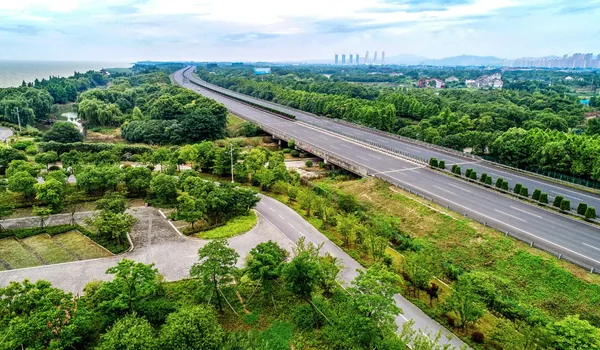
Noise: The Devanahalli corridor's primary noise source is NH-44 highway traffic. Projects on or immediately adjacent to the highway frontage will have meaningful traffic noise on the road-facing units, particularly in lower floors. Projects set back from the highway, on internal roads or with a buffer (commercial ground floor, podium parking, landscaping) between the building and the highway have materially lower noise levels in the residential units. Noise from neighbours and within the building (children, dogs, lifts, corridor activity) is a function of building construction quality - concrete slab thickness, wall quality, door and window sealing. Visit the project site during working hours on a weekday, not just on a weekend or evening show visit, to hear the actual noise environment. Ask to visit a unit on the floor and side of the building where you are considering buying.
Natural light: A workspace with good natural light reduces eye strain, improves alertness and reduces electricity consumption from artificial lighting during daylight hours. Look for a workspace room with a window facing east or north (east gives morning light for early starters; north gives consistent cool light without direct glare throughout the day). South-facing rooms in Bengaluru receive good afternoon light but can get warm; west-facing rooms get harsh afternoon sun that is uncomfortable on a monitor. Check the floor plan orientation and confirm the actual window size, direction and height with the builder.
Ventilation: A well-ventilated room allows for comfortable working without running AC continuously, which matters both for electricity costs and for the health effects of sealed indoor environments. Look for cross-ventilation: windows on more than one wall, or a layout where air can flow through the room. In apartments, ventilation is often the hardest feature to achieve - ask the builder about cross-ventilation design in the study or bedroom you plan to use as a WFH space.
| WFH Factor | What to Check | How to Verify |
|---|---|---|
| Noise level | Highway proximity, floor, side of building, construction quality | Site visit on a weekday during work hours |
| Natural light | Window direction (east/north preferred), window size, floor level | Check floor plan orientation; visit the actual unit or same floor |
| Ventilation | Cross-ventilation, window placement, open vs sealed layout | Ask builder about ventilation design; check floor plan |
| Workspace size | Carpet area of study/bedroom (>90 sq ft preferred) | Ask for carpet area breakdown from builder; check floor plans |
WFH Apartment Checklist near Prestige Devanahalli
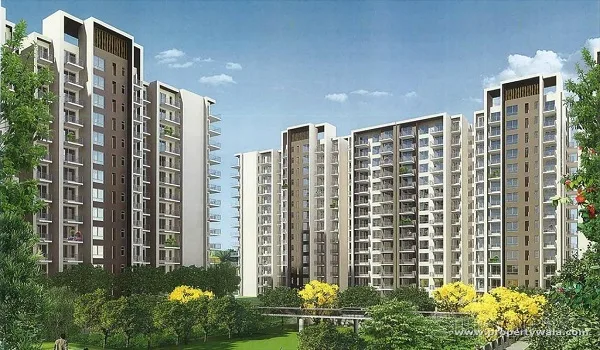
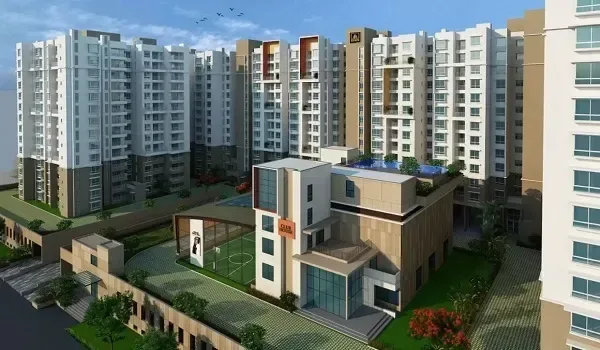
Prestige Devanahalli, by Prestige Group, is a pre-launch project at Poojanahalli on NH-44 offering 1, 2 and 3 BHK apartments from ~₹61.75 L with possession from Dec 2030. K-RERA application is in process - verify on the K-RERA portal. For current pricing, see the price list.
For any pre-launch project in the Devanahalli corridor, WFH buyers should ask the sales team and confirm in writing:
- Configuration and layout: Is there a dedicated study room or multipurpose room in your shortlisted configuration? What is the carpet area of the smallest bedroom? Confirm with floor plans.
- Power backup: What is the DG backup scope for flat circuits? Is AC covered? What is the per-unit tariff for DG power?
- Internet infrastructure: Does the building have conduit for fibre runs? Is there an ISP arrangement or agreement? Which ISPs currently have or plan to have presence at this address?
- Noise environment: Which building faces the highway? Is there a buffer between the highway and the residential towers? What floor and orientation is your flat on?
- Natural light: Which direction does your study or secondary bedroom face?
- Ventilation: Is cross-ventilation designed into the layout of the room you plan to use as a workspace?
- 5G/mobile backup: Confirm current mobile network coverage at the project site with your preferred carrier's coverage map.
None of these questions require the builder to commit to promises they cannot keep - they are factual questions about the project's design and specifications that any reputed developer's sales team should be able to answer. If a sales team is unable or unwilling to answer questions about power backup scope or internet infrastructure, treat that as information about how the developer approaches buyer queries.
Frequently Asked Questions
1. What should I look for in an apartment if I work from home?
Key WFH requirements are: a dedicated workspace or study room separate from the bedroom, reliable high-speed internet (fibre preferred), adequate power backup to cover the workspace and router during outages, low ambient noise during work hours, and good natural light and ventilation - confirm each with the builder and by visiting the site at different times of day.
2. Is fibre internet available in Devanahalli for WFH?
Fibre internet (Jio, Airtel, BSNL and other ISPs) is available in many parts of the Devanahalli corridor and is expanding as residential density increases; confirm availability at the specific project address with the ISPs before committing, as coverage varies by building location.
3. Do Devanahalli apartments have power backup for WFH?
Most gated community apartments in Devanahalli include DG (diesel generator) backup for common areas and apartments, but the scope varies - some projects provide full flat backup, others cover only certain circuits; confirm the exact backup scope, KVA capacity and per-unit tariff with the builder for WFH planning.
4. Is a 2 BHK or 3 BHK better for work from home in Devanahalli?
A 3 BHK gives you a dedicated bedroom-turned-study without disrupting family space, making it more comfortable for sustained WFH; a 2 BHK can work if the layout allows a separate work corner in a bedroom or living area; confirm the specific floor plan dimensions and layout with the builder - see the 2 BHK vs 3 BHK guide for a full comparison.
5. How important is noise level when choosing a WFH apartment?
Noise level is critical for WFH residents - sustained ambient noise from highway traffic, construction or street activity can make video calls difficult and reduce productivity; visit the project site during working hours and at multiple times to assess the actual noise environment, as brochures do not capture this.
6. Does Prestige Devanahalli have features suited for work from home?
Prestige Devanahalli is a pre-launch project - confirm the specific flat configurations, study room availability, power backup scope and internet infrastructure provisions with the builder; refer to the floor plans page for layout details and contact the sales team for current WFH-relevant specifications.
Conclusion
Work from home has shifted from a temporary arrangement to a permanent feature of how a significant share of Bengaluru's professional population works. For apartment buyers in the Devanahalli corridor, this means evaluating each project not just on connectivity to the office but on the quality of the home as a working environment. The key factors - a dedicated workspace, reliable fibre internet, adequate power backup, low noise levels, and good natural light - are all checkable and confirmable at the time of project evaluation if you ask the right questions.
Devanahalli's growth trajectory means that internet and power infrastructure will improve between now and possession (late 2030 for pre-launch projects); but the flat's orientation, noise exposure and layout are fixed at construction and cannot be improved after the fact. Prioritise getting the physical space right - dedicated room, right side of the building, right floor for noise - and plan the infrastructure (fibre, backup power) as a setup task at possession. Verify K-RERA registration on the K-RERA portal before booking, and confirm all WFH-relevant specifications in the agreement to sell.
Prestige Devanahalli Blog