Property Fraud Prevention Guide for Devanahalli 2026
Published 18 Jul 2026 · Last updated 18 Jul 2026
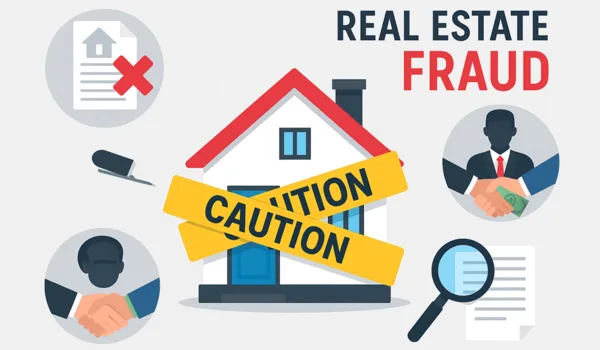
Property fraud causes serious financial loss to buyers and is more prevalent in high-growth real-estate corridors where new projects launch rapidly, buyer scrutiny varies widely, and some transactions happen under promotional time pressure. The Devanahalli corridor, like other fast-growing airport-belt localities near Bengaluru, is not immune to fraud risk. While K-RERA and the Kaveri registration system have substantially improved transparency since 2017, buyers who do not know what to check remain vulnerable.
This guide covers the most common fraud types in Bengaluru and Devanahalli, and what buyers can do to protect themselves through document verification, portal checks and legal review before signing anything or making a substantial payment. For a full pre-purchase due-diligence checklist, see things to check before buying. For property document verification, see the Khata and property documents guide.
Common Property Fraud Types in Bengaluru and Devanahalli
Understanding the most common fraud types helps buyers ask the right questions and recognise red flags early in the buying process.
1. Fake or unregistered projects: Marketing and selling flats for projects that are not registered under RERA (mandatory since 2017 for projects above a specified threshold). RERA registration requires builders to submit approved plans, land title, financial projections and other documents to the authority - an unregistered project has bypassed this scrutiny entirely.
2. Title fraud: Selling property with a disputed, encumbered, multi-party, or litigated title. The seller may not have the legal right to sell, the land may be mortgaged to a bank, or there may be a legal dispute about ownership pending in court. Title fraud is the most financially devastating category because the buyer may lose both the property and the money paid.
3. General Power of Attorney (GPA) misuse: Selling a property through a GPA holder rather than the actual owner, without executing a registered sale deed. The Supreme Court of India has held that a GPA sale does not transfer ownership - only a registered sale deed does. Buyers who accept a GPA in place of a sale deed may not legally own the property they paid for.
4. Advance payment traps: Collecting large advance payments before executing any legal agreement (agreement to sale or sale deed). Under RERA, builders are restricted in how much they can collect before a registered agreement; collecting large sums before this stage is both a regulatory violation and a fraud risk if the project does not materialise.
5. Misrepresentation of approvals: Marketing floors, configurations or amenities not covered in the approved building plan. A buyer who purchases a flat on an unapproved floor has no legal title to that unit and faces demolition risk.
6. Duplicate sale: Selling the same flat to two different buyers. This is enabled by poor record-keeping, cash transactions, or deliberate fraud. Kaveri registration of the sale deed is the legal protection against this, but only after the deed is executed.
How to Verify a Builder and Project Before Booking
Builder and project verification should happen before any payment - including before a token or booking amount - for projects where you have not already independently confirmed the basics.
Check the builder's track record:
- Look up the builder's delivered projects: how many have been completed, what was the delivery timeline compared to promised possession, and whether buyers have filed complaints about quality or possession delay
- Check for complaints or legal proceedings: a search of consumer court databases, RERA complaint records (on the K-RERA portal) and news archives can surface patterns
- Verify the builder's company registration on the Ministry of Corporate Affairs (MCA21) portal - confirm the company is validly incorporated and in good standing
Verify the project on K-RERA:
- Go to the K-RERA portal and search by project name or promoter name
- A registered project shows: the RERA registration number, the registered promoter's name and address, the project location and details, the approved number of floors and units, the project start and end dates, and the designated bank account into which buyer deposits must go
- Cross-check: the marketed project details (number of floors, unit mix, launch date) must match what is on the K-RERA record
- Red flag: if the builder says the project is "applied for" or "registration coming soon" and asks for a large advance before that, do not pay beyond a refundable token with a clear receipt
Confirm the building plan approval: Ask for the approved building plan from the competent authority (BDA, BBMP, or local panchayat/town planning authority depending on jurisdiction). Confirm the number of approved floors, approved use (residential), and the floor numbers on which flats are marketed. Any deviation from the approved plan is a risk - confirm with a lawyer and the relevant authority.
Title Fraud - How to Check Ownership History
Title fraud is prevented by verifying the seller's (or builder's) ownership of and right to sell the property before you pay. For a new flat in a registered project, the builder's title to the land is what matters - the buyer buys from the builder, not from prior landowners.
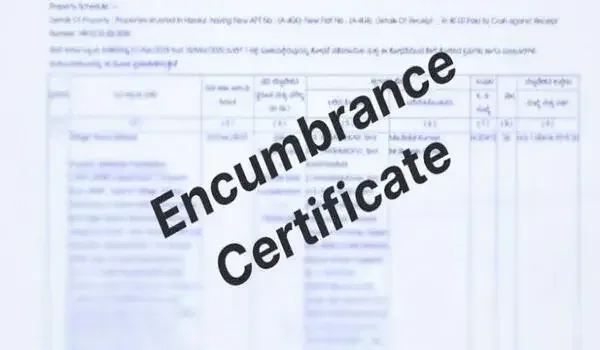
Encumbrance Certificate (EC) check: Search the EC for the land on which the project is built on the Kaveri Online portal. A clean EC shows no registered mortgages, liens, attachments or legal charges on the property for the period covered. An EC covering 13 or more years is the minimum; 30 years is thorough. See the encumbrance certificate guide for how to read and obtain an EC on Kaveri.
Parent deed and title chain: Ask the builder for the parent deed (the original document by which the builder acquired the land) and the chain of title (all ownership transfers going back at least 30 years). A property lawyer reviews this to confirm the title is clear and marketable.
Mutation and revenue records: For land that was previously agricultural, confirm that the land use conversion to residential is approved by the BDA or relevant authority. Unconverted agricultural land cannot be used for residential construction.
Court searches: A lawyer can search the relevant civil court records for any pending disputes, injunctions or attachments on the land. This is part of a complete title search and is distinct from the Kaveri EC search.
Key principle: an EC is not a complete title guarantee - it shows what is registered, but not court disputes or unregistered encumbrances. Always pair an EC check with a lawyer's title opinion for a purchase of this size.
Advance Payment Traps and How to Protect Yourself
Advance payment fraud is one of the easiest to prevent because it relies on the buyer making a large payment before any legal protection is in place. The rules are straightforward:
- RERA limit: Under RERA, a builder cannot collect more than 10% of the apartment cost as advance or application fee before executing a legally registered Agreement to Sale with the buyer. Any ask for more than this before a registered agreement is a regulatory violation.
- Registered Agreement to Sale: The agreement to sale (ATS) must be on stamp paper and registered at the sub-registrar's office to be legally binding. An unregistered ATS on plain paper or stamp paper without registration is not an enforceable contract under the Registration Act.
- No cash: Every payment must be by cheque, NEFT/RTGS, or demand draft - never cash. Cash payments cannot be traced, recovered, or used as evidence in a dispute.
- Demand receipts: A signed receipt on the builder's letterhead (or a bank receipt if the payment is into the RERA-designated account) for every payment. The receipt should state: amount, date, payment mode, project name, flat number, and what it is paid against (booking, initial instalment, etc.).
- Verify the RERA bank account: RERA requires builders to deposit buyer funds into a designated bank account; confirm the account number on the K-RERA portal before any bank transfer.
- Never pay to avoid documentation: If a broker or sales representative suggests paying in cash or to a personal account to "save on stamp duty" or "bypass registration fees", decline immediately. This is the setup for advance payment fraud.
Using K-RERA and Kaveri to Verify Before You Pay
Two public portals are the primary verification tools for Devanahalli buyers:
K-RERA (rera.karnataka.gov.in): The Karnataka Real Estate Regulatory Authority portal is searchable by project name, promoter name, or RERA registration number. For a registered project, you can verify: the registration number and validity, the registered promoter details, the project's approved details (total units, floor count, land details), the estimated and revised possession date (if updated), the project bank account number, and any complaints filed against the promoter. A project not appearing on K-RERA (for projects above the registration threshold) is a major red flag.
Kaveri Online (kaverionline.karnataka.gov.in): The Karnataka government's land registration portal allows EC searches by property location, survey number or registration details. The EC shows all registered transactions, mortgages, releases and charges on the property for the period searched. Both portals are publicly accessible without registration.
For most Devanahalli apartment buyers at new RERA-registered projects, the K-RERA verification takes 15 minutes and the EC search on Kaveri takes another 30 minutes. Together they provide the baseline confirmation that the project is registered and the land is clean. This is the minimum due diligence - a lawyer's title opinion adds the court-search layer that the portals do not cover.
Fraud-Prevention Checklist for Devanahalli Buyers
For buyers considering a flat at Prestige Devanahalli, by Prestige Group, or any project in the Devanahalli corridor, apply the following checks before committing to a purchase or making any payment above a refundable token. For the current price list, see the price page.
| Check | How to Verify | Red Flag if... |
|---|---|---|
| K-RERA project registration | Search rera.karnataka.gov.in by project/promoter name | Project not found, or registration number does not match marketed details |
| Builder company registration | Search MCA21 portal for company name | Company not registered or struck off |
| Building plan approval | Ask builder for BDA/authority approval letter; cross-check floor count | Marketed floors exceed approved plan |
| Encumbrance Certificate | Search Kaveri Online for the land survey number | Active mortgage, lien, or legal notice on the land |
| Parent deed/title chain | Engage a property lawyer to review the title documents | Title gaps, unresolved disputes, or unconverted agricultural land |
| Payment amount vs RERA limit | Confirm RERA 10% advance rule; verify designated bank account on K-RERA | Builder asks for more than 10% before a registered ATS |
| Agreement to Sale registration | Confirm ATS is on stamp paper and registered at the SRO | Builder offers an unregistered letter of allotment in lieu of ATS |
All these checks are standard buyer due diligence - no reputed builder will object to them. If any check meets resistance, treat that resistance as material information about the risk of the transaction. Confirm K-RERA status on the K-RERA portal before booking.
Frequently Asked Questions
1. What is the most common property fraud in Bengaluru?
Title fraud, fake or unregistered projects, and advance payment traps are the most common; verify the project on K-RERA and check the land's Encumbrance Certificate on Kaveri before paying anything beyond a token against a registered agreement.
2. How do I verify a builder's credentials in Devanahalli?
Check the builder's track record of delivered projects, verify the specific project on K-RERA, and confirm RERA registration before paying any booking amount; reputed builders provide documentation voluntarily - treat reluctance as a red flag.
3. Can I check if a property has a legal dispute on Kaveri?
Yes - search the Encumbrance Certificate (EC) on the Kaveri Online portal for the land; a clean EC shows no registered mortgages or charges; an EC is not a complete title guarantee - also verify with a property lawyer.
4. Is paying an advance before RERA registration safe?
Under RERA, builders may only collect above a limited amount after project registration; paying a large advance before RERA registration or before a registered agreement to sale carries significant risk - verify K-RERA status before paying.
5. What documents should I verify before booking a flat in Devanahalli?
Key documents: K-RERA registration certificate, land title and parent deed, building plan approval and commencement certificate, Encumbrance Certificate for the land, and the builder's previous project delivery record - verify each with a property lawyer.
6. Is Prestige Devanahalli safe to book?
Prestige Group is a large publicly-listed developer with a long track record of delivered projects in Bengaluru; verify the K-RERA application status on the K-RERA portal before booking and ensure your booking is against a legally registered agreement to sale.
Conclusion
Property fraud is a preventable risk for buyers who take the time to verify before paying. The three most powerful protections are: verifying the project on K-RERA before making any substantial payment, checking the land's Encumbrance Certificate on Kaveri, and engaging a property lawyer for a title search and review of the agreement to sale before signing. None of these is expensive or time-consuming relative to the size of the purchase.
For buyers in the Devanahalli corridor, the K-RERA and Kaveri Online portals are free public tools that together provide the baseline confirmation that a project is registered and a land title is clean. A few hours of due diligence and a lawyer's review fee are modest insurance against a potential loss that could run into lakhs or crores. Verify, document every payment, and confirm all commitments in a legally registered agreement before you pay.
Prestige Devanahalli Blog