Total Cost of Buying an Apartment in Devanahalli 2026 - All Charges Explained
Published 20 Jul 2026 · Last updated 20 Jul 2026
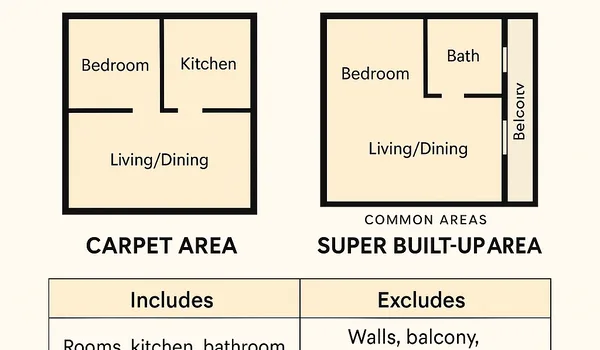
The price advertised for an apartment - the base rate per square foot times the carpet or super built-up area - is only the starting point of what you actually pay. By the time you take possession and move in, the total outflow is typically 20 to 30 per cent higher than the sticker price, and for buyers who are also taking a home loan, the cash requirement up front can be even more carefully planned. Understanding every cost head before you book is both better financial planning and a check against unpleasant surprises at the agreement or possession stage.
In Devanahalli, projects range from mid-segment to premium, so the exact charge mix varies. This guide covers every major cost head - from the charges that form part of the agreement value to the government levies, loan costs, and move-in expenses - so you can build a complete budget before signing. For the ongoing cost of living in the flat, see the apartment maintenance charges guide. For stamp duty rates and slabs in Karnataka, see the stamp duty guide.
Why the Total Buying Cost Exceeds the Base Price
The base price is the per-sq-ft rate applied to the unit size. But the final agreement value - before any government charges - already includes several additions to the base price that are charged as part of the same transaction:
- Floor rise premium: a fixed addition per floor or per slab of floors above a base floor, charged per sq ft. It is added to the base rate and becomes part of the agreement value.
- Preferential location charge (PLC): a per-sq-ft addition for corner units, park-facing, pool-facing or road-abutting units. Not all units attract PLC; confirm which do.
- Car parking: covered, stilt or podium parking is typically charged separately, usually between ₹5 L and ₹15 L per bay depending on the project and parking type. It is added to the agreement value or invoiced separately - confirm with the builder.
- Clubhouse or amenity membership fee: a one-time lump sum for access to the clubhouse and its facilities, charged at booking or agreement. Some builders waive this for early buyers.
- Infrastructure or development charge: a per-sq-ft levy for internal roads, utilities and common area infrastructure, charged by some builders as a line item separate from the base rate.
Once these are added to the base price, the resulting total is the agreement value. Stamp duty and registration are calculated on the higher of this agreement value and the government guidance value - not on the base rate alone. This is why the floor rise, PLC and parking charges directly affect your government levy.
One-Time Charges at Booking and Agreement Stage
Beyond the flat and parking price, you pay the following at or around the agreement stage:
- Booking amount: typically ₹1-5 L paid at the time of booking to block the unit. This is adjusted against the agreement value at the time of signing the agreement to sell.
- Legal and advocate fee: it is strongly advisable to have a property lawyer review the draft agreement to sell before signing. Advocate fees for this typically range from ₹10,000 to ₹50,000 depending on the scope; if you are separately hiring a lawyer for title verification, that is additional.
- Society formation or association deposit: some builders charge a nominal one-time amount for the resident welfare association formation corpus, in addition to the maintenance corpus paid at possession.
Government Charges - Stamp Duty, Registration and GST
These are the largest government levies and together can add 10-12% or more of the agreement value:
Stamp duty: Karnataka levies stamp duty as a percentage of the property value. The applicable rate depends on the property value band - confirm the current rate and applicable slab with the sub-registrar, the Kaveri portal and your lawyer. As an indicative order of magnitude, for properties above ₹45 L the combined stamp duty plus cess is typically in the range of 5-6% of the agreement or guidance value, whichever is higher. Confirm current slabs before planning your budget.
Registration fee: 1% of the agreement or guidance value (whichever is higher), subject to any applicable caps or exemptions - confirm the current limit with the sub-registrar or Kaveri.
GST on under-construction flats: for flats purchased before the builder obtains the occupancy certificate (OC), GST applies on the construction value (generally excluding the land component). The standard rate is 5% (no input tax credit), with a lower rate of 1% for affordable housing units - confirm the applicable rate and what the GST-inclusive amount is from the builder's cost sheet and a CA. GST is nil on completed flats where OC has been issued before sale and on resale transactions. Pre-launch flats like Prestige Devanahalli attract GST until OC is received. See the GST guide for a detailed breakdown.
| Charge | Basis | Indicative Rate | Who Pays |
|---|---|---|---|
| Stamp duty | Agreement or guidance value (higher of) | ~5-6% (confirm current slab) | Buyer |
| Registration fee | Agreement or guidance value (higher of) | ~1% (confirm current cap) | Buyer |
| GST (under-construction) | Construction value (excl. land) | 5% standard / 1% affordable | Buyer |
Home Loan Costs and Associated Charges
If you are financing the purchase with a home loan, factor in these additional costs - most of which are paid upfront or at sanction and cannot be rolled into the loan principal:
- Processing fee: most lenders charge 0.25-0.5% of the loan amount, sometimes capped at ₹10,000-25,000. GST at 18% applies on the processing fee - confirm with your bank.
- Technical and legal valuation fee: the bank independently values the property and verifies the title before sanctioning the loan. This fee typically ranges from ₹3,000-10,000 - confirm with your lender.
- CERSAI charge: a statutory registration fee for the mortgage created in favour of the bank, charged at a nominal rate per lakh of loan - confirm with your bank.
- Home loan insurance / loan protection cover: some lenders offer or require a term insurance cover linked to the loan. It is typically optional, though lenders may bundle it at sanction. Confirm whether it is mandatory and compare the premium before agreeing.
- Franking or e-stamping on the loan agreement: the home loan agreement itself requires stamping - confirm the applicable charge in Karnataka with your bank.
Also note: the loan-to-value (LTV) ratio means the bank typically sanctions 75-90% of the property value. The balance - the margin/down payment - plus all one-time charges must come from your own funds. Confirm the applicable LTV with your bank. See the home loan guide for eligibility and documentation details.
Move-In Costs - Corpus Deposit, Interior and Shifting
These costs arise at or after possession and are often the most underestimated by first-time buyers:
- One-time maintenance corpus / sinking fund deposit: at possession, buyers typically pay a lump sum that is held by the RWA as a corpus for future major repairs and replacements. This can range from ₹1-3 L for a 2 BHK or more for larger configurations, depending on the project's amenity set and the builder's decision. Confirm the exact amount from the builder's possession cost statement.
- Monthly advance maintenance (pre-possession): some builders charge 1-2 months' maintenance in advance at possession in addition to the corpus. Confirm what is due at handover.
- Interior fit-out: most Devanahalli projects hand over flats in a bare-shell or semi-finished state, meaning buyers bear the full interior cost - flooring, kitchen, wardrobes, painting, electricals, false ceiling and fixtures. For a 2 BHK, indicative interior budgets range from ₹3-6 L at the basic end to ₹10-20 L or more at the mid to higher-end - confirm with vendors before planning. See the interior design cost guide for a detailed breakdown.
- Utility connection charges: BESCOM power connection (including meter deposit), society's water connection charge, and any one-time connection setup fee levied by the association. These are typically small amounts in total but should be factored in.
- Shifting cost: packing and moving charges from your current residence range from ₹10,000 to ₹50,000 or more depending on the distance and volume of household goods.
Total Cost Worksheet for Devanahalli Apartment Buyers
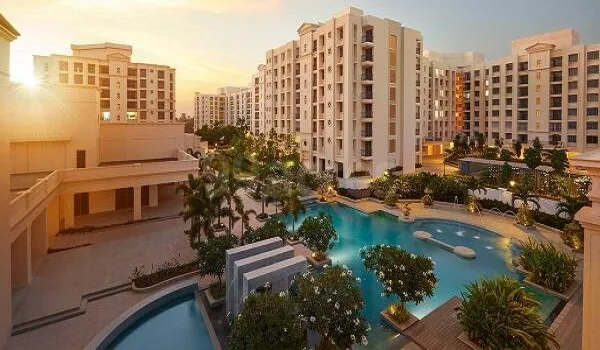
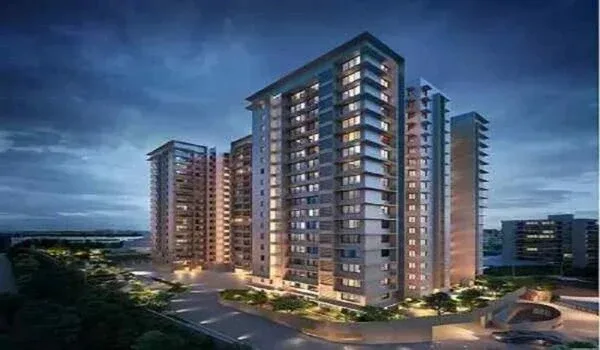
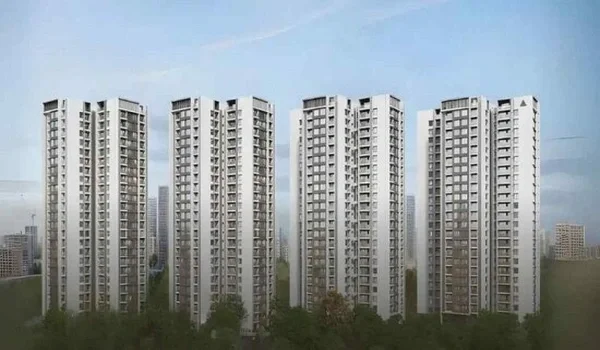
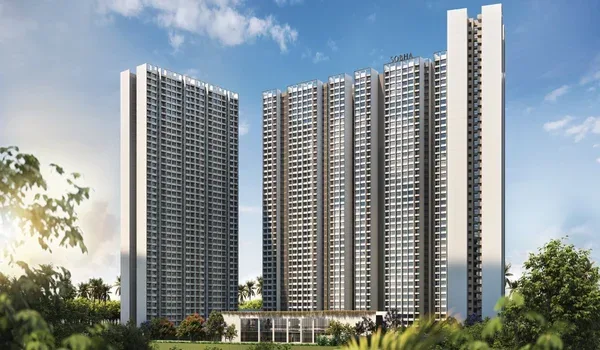
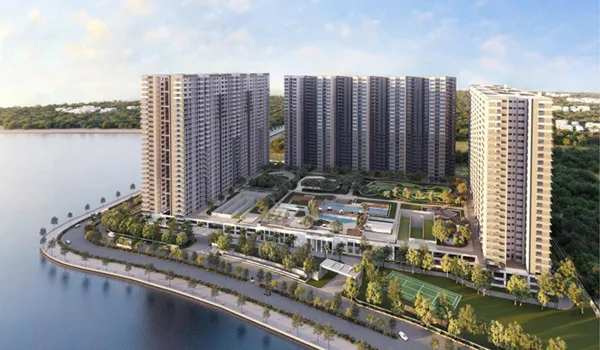
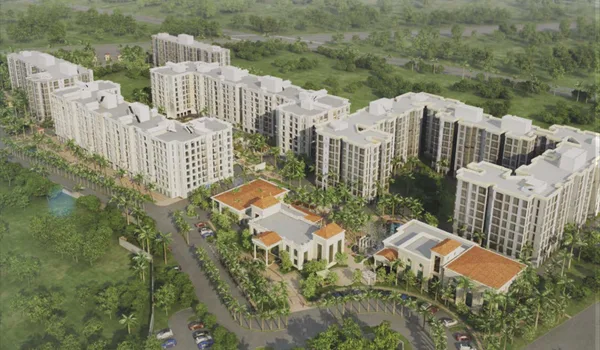
Prestige Devanahalli, by Prestige Group, is a pre-launch project at Poojanahalli on NH-44 offering 1, 2 and 3 BHK apartments from ~₹61.75 L with possession from Dec 2030. K-RERA application is in process - verify on the K-RERA portal. For current pricing, see the price list.
The table below shows the typical cost heads for a Devanahalli apartment purchase. All figures are illustrative - confirm each from the builder's cost sheet, your bank and a CA before budgeting.
| Cost Head | Paid at | Out of Pocket or Loan-able? | Indicative Range |
|---|---|---|---|
| Base price + floor rise + PLC | As per payment schedule | Partially loan-able (75-90% LTV) | The agreement value |
| Car parking | Agreement/demand | Often loan-able if in agreement value | ₹5-15 L (confirm) |
| GST on construction value | As per demand schedule | Generally loan-able if within agreement | ~5% of construction value |
| Stamp duty + registration | At registration | Not loan-able in most cases | ~6-7% of agreement value |
| Home loan processing fee | At sanction | Not loan-able | 0.25-0.5% of loan amount |
| Legal / advocate fee | Before/at agreement | Not loan-able | ₹10,000-50,000 |
| One-time corpus deposit | At possession | Not loan-able | ₹1-3 L (confirm) |
| Interior fit-out | After possession | Not loan-able (separate personal loan if needed) | ₹3-20 L+ (confirm) |
| Shifting and utility charges | At possession | Not loan-able | ₹15,000-60,000 |
As a rule of thumb: budget your down payment and savings to cover at minimum the margin (10-25% of agreement value not covered by the loan) plus stamp duty, registration, loan charges, corpus deposit and at least a basic interior fit-out. For pre-launch buyers at Prestige Devanahalli, possession is from Dec 2030, giving time to plan the interior and corpus amounts well in advance.
Frequently Asked Questions
1. How much more than the base price does a flat actually cost all-in?
The all-in acquisition cost is typically 20-30% above the base agreement value, covering floor rise and PLC, parking, stamp duty and registration, GST, home loan processing fees, maintenance corpus and interior fit-out - confirm each charge with the builder's cost sheet and your bank.
2. Is GST charged on the entire sale value of the flat?
GST on under-construction flats is typically charged on the construction value, which generally excludes the land component - confirm the applicable rate (5% standard or 1% affordable) and the GST-inclusive amount with the builder's cost sheet and a CA.
3. What is the typical one-time maintenance deposit in Devanahalli gated communities?
The one-time corpus and maintenance deposit at possession typically ranges from ₹1-3 L for a 2 BHK, depending on the project's amenity set and the builder or RWA's decision - confirm the exact amount with the builder's possession cost statement.
4. Are stamp duty and registration calculated on the base price or the total agreement value?
Stamp duty and registration are levied on the higher of the total agreement value (which includes floor rise, PLC, parking and other charges) and the government guidance value for the property - confirm with the sub-registrar, Kaveri portal and your lawyer.
5. Can home loan processing fees be included in the loan amount?
Processing fees are generally deducted upfront from the disbursement or paid separately at sanction - most banks do not add them to the principal; confirm the fee structure and any waivers with your specific lender.
6. What is a preferential location charge and when does it apply?
A preferential location charge (PLC) is an additional per-sq-ft charge for units with a preferred view or facing such as park-facing, pool-facing or corner units - confirm which units attract PLC and the rate from the builder's cost sheet before selecting a unit.
Conclusion
A flat's sticker price is the base, not the total cost. Before finalising your budget for a Devanahalli apartment, add the floor rise premium and PLC to the base, include the parking charge in the agreement value, then layer on stamp duty and registration, GST on construction, home loan processing costs, the one-time corpus deposit at possession and the interior fit-out. Together these regularly push the all-in cost 20-30% above the base price.
For pre-launch buyers at Prestige Devanahalli (possession from Dec 2030), you have time to plan each cost head carefully. Request the full cost sheet from the builder at the earliest, confirm the loan-eligible amount with your bank, have a CA compute the GST and stamp duty payable, and plan your out-of-pocket cash requirements separately. Verify the K-RERA application status on the K-RERA portal and have a property lawyer review the agreement to sell before signing.
Prestige Devanahalli Blog